
When it comes to modern kitchen appliances, few debates come up as often as air fryer vs microwave. Both are considered essentials today—but they solve very different problems.
On one hand, you have the microwave: fast, reliable, and almost effortless. It’s the go-to for reheating leftovers, warming drinks, or getting a quick meal ready in minutes. For many households, it’s been a kitchen staple for years.
On the other hand, the air fryer is the newer favorite. It promises something microwaves never could—crispy, golden food with little to no oil. From fries and chicken to vegetables and even baked goods, it’s positioned as a healthier way to enjoy traditionally fried meals.
So naturally, the question comes up:
👉 Air fryer vs microwave — which one is better?
The answer isn’t as simple as picking one over the other. It depends on how you cook, what you eat, and what you expect from your appliance.
Some people care most about health and nutrition, which brings up concerns like:
- Does an air fryer destroy nutrients?
- Is microwave cooking actually safe?
- Which one is better for weight loss?
Others are focused on everyday convenience:
- Which appliance is faster?
- Which one is easier to use?
- Can an air fryer replace a microwave?
Then there’s the question of food quality—something you notice immediately:
- Why does air fryer food taste better?
- Why does microwave food sometimes turn soggy?
This is exactly where most comparisons fall short. They focus on just one factor—usually speed or health—without looking at the full picture.
In this 2026 expert review, we’ll take a practical, real-world approach. Instead of just listing features, we’ll break down:
- A clear air fryer vs microwave health comparison
- The real difference in cooking performance and results
- Honest pros and cons based on everyday use
- And most importantly, which one actually fits your lifestyle
By the end of this guide, you won’t just know the differences—you’ll know exactly which appliance makes more sense for your kitchen.

How an Air Fryer vs Microwave Works
Understanding how each appliance works is what really explains the difference in results. Once you get this part, everything else—health, taste, speed, and overall performance—starts to make sense.
How an Air Fryer Works
At its core, an air fryer is a compact convection oven designed to cook food quickly while creating a crispy outer layer.
Here’s what’s happening inside:
- A heating element generates high heat (usually between 160°C to 200°C)
- A powerful fan circulates hot air rapidly around the food
- This constant airflow cooks the food evenly from all sides
This process is often called rapid air circulation, and it’s what gives air fryers their signature results.
But here’s the key detail most people miss:
👉 An air fryer doesn’t just cook food—it dries the outer layer slightly, which creates that crispy, golden texture.
That’s why foods like:
- Fries
- Chicken wings
- Spring rolls
come out with a fried-like finish, even when you use little or no oil.
Why This Matters
Because of this cooking method, air fryers are ideal for:
- Browning and crisping
- Cooking raw foods from scratch
- Reheating food without making it soggy
However, this also means:
- Cooking takes longer than a microwave
- The appliance uses higher temperatures
👉 This directly affects the air fryer vs microwave health comparison, especially when it comes to nutrient retention and compound formation.
How a Microwave Works
A microwave works in a completely different way—there’s no hot air, no browning, and no crisping.
Instead, it uses electromagnetic waves (microwaves) to heat food.
Here’s how it works:
- The microwave emits waves that target water molecules in food
- These molecules vibrate rapidly
- That vibration produces heat, which cooks the food from the inside out
This is why microwaves are incredibly fast. There’s no need to wait for air or surfaces to heat up—the energy goes straight into the food.
Why This Matters
Because of this method, microwaves are best for:
- Reheating leftovers
- Heating liquids (soups, tea, sauces)
- Cooking simple meals like rice or oatmeal
But there’s a trade-off.
👉 Since there’s no dry heat, microwaves don’t create:
- Crispy textures
- Browning
- Caramelization
That’s why foods often come out:
- Soft
- Moist
- Sometimes unevenly heated
Key Difference (Simple Breakdown)
If you simplify the entire difference between air fryer and microwave, it comes down to this:
- Air fryer = cooks with hot air (outside-in, dry heat)
- Microwave = cooks with waves (inside-out, moisture-based heat)
And that one difference explains everything:
- Why air fryers make food crispy
- Why microwaves are faster
- Why their health effects aren’t exactly the same
Practical Insight (What This Means for You)
If your priority is:
- Texture and flavor → Air fryer
- Speed and convenience → Microwave
Neither method is “better” in isolation—they’re built for different purposes.
And this is why many households end up using both:
- Microwave for quick tasks
- Air fryer for actual cooking
Air Fryer vs Microwave Health Comparison
When people compare these two appliances, this is usually the deciding factor. Everyone wants to know:
👉 Which one is actually healthier?
The truth is, the answer isn’t one-sided. The air fryer vs microwave health comparison depends on what “healthy” means to you—nutrients, fat intake, or overall diet quality.
Let’s break it down properly.
Nutrient Retention: Which Preserves More Vitamins?
One of the biggest concerns is whether cooking methods destroy nutrients.
In this case, the microwave has a slight advantage.
Because microwaves:
- Cook food very quickly
- Use lower overall heat exposure
- Often require little to no water
They tend to preserve more water-soluble vitamins like:
- Vitamin C
- B vitamins
These nutrients are sensitive to heat, and longer cooking times (like in an air fryer) can reduce them.
Air fryers, on the other hand:
- Use higher temperatures
- Cook for longer periods
- Expose food to dry heat
This can lead to some nutrient loss—especially in vegetables.
👉 So in terms of air fryer vs microwave nutrition comparison:
- Microwave = better nutrient preservation
- Air fryer = slightly more nutrient loss (but still healthy overall)
Important note: The difference isn’t extreme. Both methods are far healthier than deep frying or overcooking on a stove.
Oil, Fat & Calories: Which Helps You Eat Healthier?
This is where the air fryer really stands out.
Air fryers are designed to replace traditional frying, which means:
- You can cook with little or no oil
- You still get a crispy texture
- You significantly reduce fat intake
For example:
- Deep-fried chicken → high oil absorption
- Air-fried chicken → much lower fat content
Microwaves don’t use oil either—but they also don’t cook in the same way. You’re not “frying” food in a microwave, so it doesn’t directly replace unhealthy cooking methods.
👉 In terms of air fryer vs microwave fat content:
- Air fryer = better for reducing fat in fried foods
- Microwave = neutral (no added fat, but no crisping either)
If your goal is weight management or cutting calories, the air fryer can make a noticeable difference—especially if you’re replacing deep frying.
Harmful Compounds: Is There Anything to Worry About?
This is where things get a bit more technical—but it’s important.
Air Fryer Concerns
When cooking starchy foods (like potatoes) at high temperatures, air fryers can produce a compound called acrylamide.
This happens when:
- Food is cooked at very high heat
- The surface becomes overly browned or burnt
However:
- This isn’t unique to air fryers
- It also happens in baking, roasting, and frying
👉 The key is simple: avoid overcooking or burning your food
Microwave Safety
Microwaves, on the other hand:
- Don’t use extreme dry heat
- Don’t produce acrylamide in the same way
This makes them lower-risk when it comes to harmful cooking byproducts.
There’s also a long-standing question:
👉 Is microwave cooking healthy?
The answer remains yes.
Modern microwaves are:
- Well-regulated
- Safe when used correctly
- Not linked to harmful radiation exposure in food
Health Impact on Your Diet (What Actually Matters)
Here’s something many comparisons miss:
👉 Your overall diet matters more than the appliance itself
- Using an air fryer to cook processed frozen foods every day? Not ideal.
- Using a microwave to heat vegetables and balanced meals? Very healthy.
But flip it:
- Air fryer for fresh vegetables and lean protein? Excellent choice.
- Microwave for sugary, processed meals? Not so great.
So instead of asking only:
👉 “Which is healthier?”
A better question is:
👉 “How will I actually use it?”
Quick Health Verdict (Simple & Honest)
Let’s simplify the entire air fryer vs microwave health comparison:
- For nutrient retention → Microwave wins
- For reducing fat and improving diet quality → Air fryer wins
- For overall safety → Both are safe when used properly
Note:
If you’re focused on:
- Maximum nutrients and quick meals → Microwave
- Healthier versions of fried foods → Air fryer
Neither appliance is unhealthy. In fact, both can support a healthy lifestyle when used the right way.
Cooking Performance Comparison
Health is important—but in everyday use, performance is what you notice immediately. How fast your food cooks, how it tastes, and how easy the appliance is to use will often matter more than anything else.
This is where the air fryer vs microwave cooking comparison becomes very clear. Each appliance excels in completely different areas.
Speed & Convenience: Which Is Faster?
If speed is your top priority, the microwave is hard to beat.
Microwaves are designed for instant results:
- Reheat leftovers in 1–3 minutes
- Warm drinks in seconds
- Defrost food quickly
There’s no preheating, no setup, and very little waiting. You simply press a button and go.
Air fryers, in comparison:
- Usually require preheating (in some models)
- Take longer to cook (typically 10–25 minutes)
- Work more like an oven than a quick heater
👉 In real-world use:
- Microwave = best for quick tasks and busy schedules
- Air fryer = better for planned cooking
If you’re someone who just wants to heat food and move on, the microwave wins easily.
Taste & Texture: Which Tastes Better?
This is where the air fryer completely changes the game.
Because it uses dry, circulating heat, it creates:
- Crispy edges
- Golden browning
- A more “freshly cooked” taste
Foods that benefit the most include:
- Fries and chips
- Chicken wings
- Breaded snacks
- Roasted vegetables
Microwaves, on the other hand, don’t brown or crisp. Instead, they:
- Retain moisture
- Soften food
- Sometimes make textures uneven
This is why reheated pizza or fries in a microwave often feel:
- Soggy
- Rubbery
- Less appetizing
👉 So in terms of air fryer vs microwave taste difference:
- Air fryer = better flavor and texture
- Microwave = acceptable but not ideal for texture
Cooking Versatility: What Can You Actually Cook?
Another key difference is how much each appliance can do.
Air Fryer Versatility
Air fryers are surprisingly flexible. You can use them to:
- Cook proteins (chicken, fish, steak)
- Roast vegetables
- Reheat leftovers with better texture
- Bake small items (cakes, muffins)
For many people, it becomes a mini oven replacement.
Microwave Versatility
Microwaves are more limited but still useful. They’re best for:
- Reheating meals
- Cooking simple dishes (rice, noodles, oatmeal)
- Heating liquids (soups, tea, sauces)
They’re not designed for:
- Browning
- Crisping
- Complex cooking
👉 In the difference between air fryer and microwave, versatility clearly leans toward the air fryer.
Ease of Use: Which Is Simpler?
Both appliances are user-friendly, but in different ways.
- Microwave:
- Very straightforward
- Minimal settings
- Ideal for beginners
- Air fryer:
- Requires some learning (time, temperature settings)
- May involve shaking or flipping food
- More hands-on
That said, modern air fryers come with presets, making them much easier to use than before.
👉 If simplicity matters most, the microwave has the edge.
Real-World Performance Summary
Here’s a clearer side-by-side view:
| Feature | Air Fryer | Microwave |
|---|---|---|
| Speed | Slower | Very fast |
| Texture | Crispy & golden | Soft & moist |
| Cooking Style | Full cooking | Reheating & simple meals |
| Versatility | High | Moderate |
| Ease of Use | Moderate | Very easy |
Practical Insight (What You’ll Actually Experience)
In daily use, most people naturally split tasks like this:
- Use the microwave when:
- You’re in a hurry
- You’re reheating leftovers
- You want something quick and easy
- Use the air fryer when:
- You care about taste and texture
- You’re cooking from scratch
- You want better-quality meals
This is why many users don’t replace one with the other—they use both together.
Note:
In the air fryer vs microwave cooking comparison:
- Microwave wins for speed and convenience
- Air fryer wins for taste, texture, and versatility
Neither is better at everything—they simply serve different roles in the kitchen.
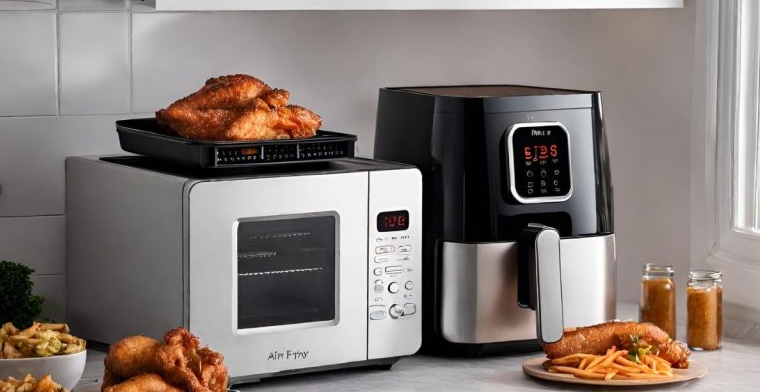
Air Fryer vs Microwave Pros and Cons
At this point, you already understand how both appliances work and how they perform. But in real-world use, what truly matters are the everyday advantages and frustrations you’ll experience.
This is where a deeper look at the air fryer vs microwave pros and cons helps you make a smarter decision—not just based on features, but on actual kitchen habits.
✅Air Fryer Pros (What It Does Really Well)
1. Delivers Crispy, Better-Tasting Food
This is the biggest reason people switch to an air fryer.
Unlike a microwave, it creates:
- Golden, crispy exteriors
- Proper browning
- A “freshly cooked” feel
If you enjoy foods like fries, chicken, or even roasted veggies, the difference is obvious from the first use.
👉 This alone makes it feel like a major upgrade from microwave cooking.
2. Uses Little to No Oil (Health Advantage)
Air fryers are built to reduce oil without sacrificing texture.
You can:
- Cook with just a light spray of oil—or none at all
- Cut down calories compared to deep frying
- Still enjoy crispy meals
For anyone trying to eat healthier without giving up their favorite foods, this is a huge win.
3. More Versatile Than Most People Expect
Many people buy an air fryer for fries—but end up using it for almost everything.
You can:
- Cook proteins (chicken, fish, beef)
- Roast vegetables
- Reheat leftovers (with better texture than a microwave)
- Bake small portions
👉 In many kitchens, it gradually replaces:
- A traditional oven (for small meals)
- A deep fryer
- Even a toaster oven
4. Improves Food Quality Overall
This is something that doesn’t get talked about enough.
Using an air fryer often leads to:
- Eating more home-cooked meals
- Less reliance on fast food
- Better control over ingredients
So beyond features, it can actually improve your overall eating habits.
❌Air Fryer Cons (What You Need to Know)
1. Slower Than a Microwave
Air fryers cook food properly—which means they take more time.
Typical cooking times:
- Fries → 15–20 minutes
- Chicken → 20–25 minutes
Compared to a microwave’s 2–5 minutes, that’s a big difference.
👉 If you’re always in a rush, this can feel inconvenient.
2. Takes Up More Counter Space
Air fryers are bulkier than microwaves (especially basket-style models).
In smaller kitchens, this can be a challenge:
- Requires dedicated counter space
- Not as easy to store away
3. Smaller Cooking Capacity
Most air fryers:
- Cook in batches
- Are better suited for small to medium portions
For large families, this can mean:
- Multiple cooking cycles
- Longer total cooking time
4. Learning Curve (At First)
Unlike a microwave, which is almost instant to use, air fryers require some adjustment:
- Finding the right temperature
- Setting the correct cooking time
- Shaking or flipping food
It’s not difficult—but it’s not completely effortless either.
✅ Microwave Pros (Where It Still Wins)
1. Extremely Fast and Convenient
This is where the microwave dominates.
You can:
- Reheat meals in minutes
- Warm drinks instantly
- Cook simple dishes quickly
No preheating. No waiting. No effort.
👉 For busy schedules, this is unbeatable.
2. Very Easy to Use
Microwaves are designed for simplicity:
- Press a button → food is ready
- Minimal settings to worry about
- Perfect for beginners or quick tasks
There’s almost no learning curve.
3. Great for Reheating and Liquids
Some tasks are simply better suited for microwaves:
- Heating soups and sauces
- Reheating rice or pasta
- Defrosting frozen food
Air fryers can’t handle these as effectively.
4. Compact and Budget-Friendly
Compared to air fryers:
- Microwaves are often cheaper
- More widely available
- Easier to fit into most kitchens
❌ Microwave Cons (Its Limitations)
1. No Crisping or Browning
This is the microwave’s biggest weakness.
It cannot:
- Crisp food
- Brown surfaces
- Recreate fried textures
So while food is hot, it often lacks the texture people want.
2. Can Make Food Soggy or Rubbery
Because microwaves heat moisture, foods can:
- Lose their original texture
- Become soft or uneven
This is especially noticeable with:
- Pizza
- Fries
- Fried snacks
3. Limited Cooking Capabilities
Microwaves are not designed for full cooking.
They struggle with:
- Raw proteins
- Complex recipes
- Achieving layered flavors
👉 They’re more of a support appliance than a main cooking tool.
4. Uneven Heating Issues
You’ve probably experienced this:
- One part of the food is hot
- Another part is still cold
This happens because microwaves don’t always distribute heat evenly.
Honest Comparison Insight
When you look at the air fryer vs microwave pros and cons, a clear pattern appears:
- The air fryer improves food quality but takes more time and effort
- The microwave saves time but sacrifices texture and versatility
Practical Takeaway
Instead of thinking in terms of “which is better,” it’s more useful to think:
- Do you want better food? → Air fryer
- Do you want faster results? → Microwave
And this is why most people who try both end up keeping both—they solve different problems in the kitchen.
Real-Life Use Cases (What Each Is Best For)
This is where everything becomes practical.
You can read about features all day, but what really matters is this:
👉 What will you actually use each appliance for in your daily routine?
When you break it down into real-life scenarios, the air fryer vs microwave decision becomes much clearer. Each one has situations where it performs noticeably better.
Air Fryer vs Microwave for Fries & Snacks
This is one of the easiest comparisons—and honestly, not even a close one.
If you’re cooking or reheating:
- French fries
- Chicken nuggets
- Spring rolls
- Puff-puff or small pastries
The air fryer wins every time.
Why?
Because it:
- Restores crispiness
- Removes excess moisture
- Reheats food evenly
In contrast, a microwave will:
- Make fries soft and soggy
- Lose that crunchy texture
- Heat unevenly
👉 If you enjoy snacks or anything that should be crispy, the air fryer is the clear choice.
Air Fryer vs Microwave for Reheating Food
Now this is where the microwave shines.
For everyday leftovers like:
- Rice
- Soup
- Stews
- Pasta
The microwave is:
- Faster
- More convenient
- Better at retaining moisture
Air fryers can reheat food, but:
- They take longer
- They can dry out certain meals (especially rice or sauces)
👉 For simple reheating, the microwave is still the most practical option.
Air Fryer vs Microwave for Chicken & Meat
If you’re cooking proteins, the difference is huge.
Air fryer:
- Cooks chicken evenly
- Creates a crispy outer layer
- Locks in flavor
Microwave:
- Heats meat quickly
- Often leaves it soft or rubbery
- Doesn’t brown or enhance flavor
👉 For chicken, beef, or fish, the air fryer delivers better texture and taste.
Air Fryer vs Microwave for Vegetables
This one depends on your preference.
Microwave:
- Keeps vegetables soft
- Preserves nutrients well
- Very fast
Air fryer:
- Adds a roasted, slightly crispy finish
- Enhances flavor
- Works well with spices and light oil
👉 If you like:
- Soft veggies → Microwave
- Roasted, flavorful veggies → Air fryer
Air Fryer vs Microwave for Leftovers Like Pizza
This is a common real-life scenario.
Microwave:
- Heats pizza quickly
- But leaves it soft and sometimes soggy
Air fryer:
- Reheats evenly
- Brings back the crispy crust
- Tastes closer to freshly baked
👉 For foods where texture matters, the air fryer is the better option.
Everyday Kitchen Routine (What Most People End Up Doing)
In real kitchens, people naturally split tasks between both appliances.
A typical routine looks like this:
- Morning:
Microwave → warm tea, heat leftovers - Afternoon:
Microwave → quick lunch or reheating - Evening:
Air fryer → cook chicken, fries, or snacks
👉 This balance is why many users say:
- The microwave is for speed
- The air fryer is for better meals
Practical Insight (This Makes the Decision Easy)
If your daily routine is mostly:
- Reheating food
- Cooking quick meals
- Saving time
👉 You’ll rely more on a microwave.
But if you:
- Cook regularly
- Care about taste and texture
- Want healthier versions of fried foods
👉 The air fryer will become your go-to appliance.
Simple Use Case Summary
- Fries & snacks → Air fryer
- Reheating food → Microwave
- Chicken & meat → Air fryer
- Rice & soups → Microwave
- Pizza & crispy leftovers → Air fryer
Note:
The difference between air fryer and microwave becomes obvious in daily use:
- One is built for convenience
- The other is built for better cooking results
And once you start using them this way, you’ll rarely feel like one is replacing the other.
Energy Use & Cost Comparison
When choosing between an air fryer and a microwave, most people focus on health and taste—but running cost and energy usage also matter, especially if you use them daily.
So let’s break down the air fryer vs microwave energy consumption comparison in a practical, real-world way.
Energy Use: Which Uses More Electricity?
At first glance, it may seem like the microwave is always cheaper because it’s faster. But the reality is a bit more balanced.
🔹 Microwave Energy Use
Microwaves typically use:
- Around 600W to 1200W depending on model and power level
- Very short cooking times (usually 1–5 minutes per task)
Because it works quickly, the total energy used per meal is usually low.
👉 Example:
- Heating leftovers: ~3 minutes
- Total energy use: relatively minimal
This makes microwaves one of the most energy-efficient appliances for quick tasks.
🔹 Air Fryer Energy Use
Air fryers generally use:
- Around 1200W to 2000W (higher than microwaves)
- Longer cooking cycles (10–25 minutes or more)
They also may require:
- Preheating time (in some models)
- Continuous heating throughout cooking
👉 Example:
- Cooking chicken: ~20 minutes
- Total energy use: higher per session
So in terms of raw power, the air fryer uses more electricity.
But Here’s the Important Detail Most People Miss
Even though the air fryer uses more power, it doesn’t automatically mean it’s more expensive to run.
Why?
Because cost depends on:
- Power (watts)
- Time used
So the real question is:
👉 Which one uses more energy per meal?
Real-World Energy Comparison (Simple View)
| Factor | Air Fryer | Microwave |
|---|---|---|
| Power Usage | Higher | Lower |
| Cooking Time | Longer | Very short |
| Energy per task | Moderate to high | Low |
| Best for | Full meals | Quick heating |
Cost Per Use: What You Actually Pay
Let’s keep it practical.
Microwave Cost Pattern:
- Very cheap per use
- Ideal for frequent, short tasks
- Costs stay low because of short runtime
👉 This is why microwaves are often called budget-friendly daily appliances
Air Fryer Cost Pattern:
- Higher cost per session
- Still efficient compared to ovens or stovetops
- Best when cooking full meals
👉 But if you replace oven cooking with an air fryer, you may actually save energy overall.
Efficiency Insight (Very Important)
Here’s where the air fryer vs microwave energy comparison gets interesting:
- Microwave = best for small tasks and reheating
- Air fryer = efficient alternative to large ovens
So:
- If you only reheat food → microwave is cheaper
- If you cook full meals regularly → air fryer becomes more practical than an oven
Real Household Example
Let’s look at a typical home scenario:
Microwave usage:
- Reheating breakfast
- Warming lunch
- Heating drinks
👉 Low energy, multiple short bursts
Air fryer usage:
- Cooking dinner (chicken + fries)
- Roasting vegetables
- Reheating food with better texture
👉 Fewer uses, but longer cycles
Practical Insight (What This Means for You)
If your priority is:
Saving electricity daily:
👉 Microwave is more efficient
Cooking full meals at home:
👉 Air fryer is more practical than using an oven
Lastly on Energy Verdict
In the air fryer vs microwave energy consumption comparison:
- Microwave = lower energy use per task
- Air fryer = higher usage but replaces heavier cooking methods
So the winner depends on how you use it:
- Quick heating → microwave wins
- Full meal cooking → air fryer wins in practicality
Note:
Neither appliance is expensive to run in isolation. The real difference is usage style:
- Microwave saves energy through speed
- Air fryer saves cooking effort by replacing larger appliances like ovens
Which One Should You Buy? (Buyer Guide)
After comparing everything—health, performance, cost, and real-life use—this is where it all comes together.
Because the truth is:
👉 The best choice isn’t about which appliance is “better” overall.
👉 It’s about which one fits your lifestyle and cooking habits.
Let’s break it down clearly so you can decide with confidence.
Choose an Air Fryer If…
An air fryer makes the most sense if you actually cook food regularly, not just reheat it.
✅ You Want Crispy, Better-Tasting Food
If texture matters to you, this is a big deal.
You’ll enjoy:
- Crispy fries and snacks
- Juicy chicken with a golden finish
- Roasted vegetables with real flavor
👉 This is something a microwave simply cannot match.
✅ You’re Trying to Eat Healthier (Without Sacrificing Taste)
If you’re cutting back on oil or fried foods, the air fryer helps a lot.
- Uses little to no oil
- Reduces fat compared to deep frying
- Makes healthier versions of your favorite meals
👉 This is why many people prefer it in the air fryer vs microwave health comparison.
✅ You Cook Full Meals at Home
Air fryers are ideal if you:
- Prepare dinner regularly
- Cook proteins like chicken, fish, or meat
- Want a quick alternative to using a full oven
👉 It becomes a main cooking appliance, not just a helper.
✅ You Care About Food Quality
If you notice things like:
- Texture
- Flavor
- Freshness
Then the air fryer will feel like a major upgrade in your kitchen.
Choose a Microwave If…
A microwave is the better option if your focus is speed and simplicity.
✅ You Need Fast, No-Stress Cooking
Microwaves are built for convenience.
- Heat food in minutes
- No setup required
- Minimal effort
👉 Perfect for busy days or quick meals.
✅ You Mostly Reheat Food
If your daily routine looks like:
- Reheating rice or leftovers
- Warming soup or stew
- Heating drinks
Then a microwave is all you really need.
✅ You Prefer Simple Appliances
Microwaves are:
- Easy to use
- Beginner-friendly
- Low maintenance
👉 No learning curve, no guesswork.
✅ You’re on a Budget or Have Limited Space
Microwaves are generally:
- More affordable
- Easier to fit into small kitchens
- Widely available
Air Fryer vs Microwave: Quick Decision Guide
If you’re still unsure, this simple breakdown helps:
- Want better taste and texture → Air fryer
- Want fast and easy meals → Microwave
- Want healthier fried food → Air fryer
- Want quick reheating → Microwave
- Want a main cooking appliance → Air fryer
- Want a support appliance → Microwave
Best Choice for Most Homes
Here’s the honest answer most experts agree on:
👉 The best setup is having both.
Why?
Because they don’t actually compete—they complement each other.
- Use the microwave for:
- Reheating
- Quick meals
- Everyday convenience
- Use the air fryer for:
- Cooking
- Crisping
- Better-tasting meals
This combination gives you:
- Speed when you need it
- Quality when it matters
Last Buying Insight
If you can only choose one, think about your daily habits:
- If your kitchen routine is mostly quick and simple → Microwave
- If you enjoy cooking and better food → Air fryer
There’s no wrong choice—just the one that fits your lifestyle better.
Note: (2026 Expert Review)
So, air fryer vs microwave — which one is better?
Let’s keep it simple and honest:
- For speed and convenience → Microwave wins
- For taste, texture, and healthier cooking → Air fryer wins
- For overall kitchen versatility → Air fryer has the edge
- For everyday ease → Microwave still leads
👉 But the real takeaway is this:
These appliances are not competitors—they’re partners in a modern kitchen.
If you use them the right way, you’ll get:
- Faster meals
- Better food
- And a more efficient cooking routine overall
Frequently Asked Questions
Is an air fryer healthier than a microwave?
It depends. Air fryers reduce oil, while microwaves preserve nutrients better.
Can an air fryer replace a microwave?
Not completely. Air fryers can reheat food, but they’re slower and less convenient.
Is microwave cooking safe in 2026?
Yes, microwave cooking is still considered safe when used correctly.
Which appliance uses less electricity?
Microwaves generally use less energy due to shorter cooking times.
Conclusion:
At the end of the day, the air fryer vs microwave debate isn’t about choosing a winner—it’s about choosing what works best for you.
If your routine is all about speed, convenience, and quick meals, the microwave still holds its place as one of the most practical kitchen tools you can own. It’s fast, reliable, and perfect for everyday use.
But if you care about how your food actually tastes and feels, the air fryer brings something completely different to the table. It transforms simple meals into something crispier, fresher, and more enjoyable—without relying on heavy oil.
When you look at the full picture—from the health comparison to cooking performance and real-life use—the difference becomes clear:
- The microwave makes cooking easier
- The air fryer makes food better
And that’s why, in most modern kitchens, it’s not about replacing one with the other.
👉 It’s about using each for what it does best.
If you want the smartest setup in 2026, combining both gives you:
- Speed when you need it
- Quality when it matters
Simple, practical, and efficient—that’s the real winning choice.