
If you’re shopping for a new kitchen appliance or wondering whether your air fryer can replace your oven, you’re not alone. The debate over air fryer vs oven has become one of the most common questions among home cooks.
At first glance, these appliances seem to do the same job. Both use hot air to cook food, both can roast vegetables, bake desserts, and crisp frozen snacks. But once you start cooking with them, the differences become much more noticeable.
An air fryer is designed to cook food quickly in a compact space using powerful hot air circulation. A traditional oven, on the other hand, offers more cooking space and greater versatility, making it the preferred choice for baking and preparing large meals. While they share similar cooking principles, they excel in different situations. Air fryers generally heat up faster and often use less energy for small portions, whereas ovens remain more practical for larger dishes and batch cooking.
So, which cooks better—an air fryer or an oven?
The answer depends on what you’re cooking, how much you’re preparing, and what matters most to you. If your goal is crispy fries in under 20 minutes, an air fryer usually has the advantage. If you’re baking bread, roasting a turkey, or preparing dinner for a large family, an oven is often the better choice.
In this detailed comparison, we’ll look beyond the marketing claims and compare both appliances across the factors that matter most, including:
- Cooking speed
- Food quality and taste
- Crispiness
- Baking performance
- Energy consumption
- Ease of cleaning
- Cooking capacity
- Running costs
- Versatility
- Overall value
We’ll also compare how each appliance performs with popular foods like chicken, fries, vegetables, pizza, frozen foods, and baked goods so you can decide which one fits your cooking style.
Whether you’re buying your first countertop cooker or deciding if it’s time to upgrade your kitchen, this guide will help you make a confident choice.
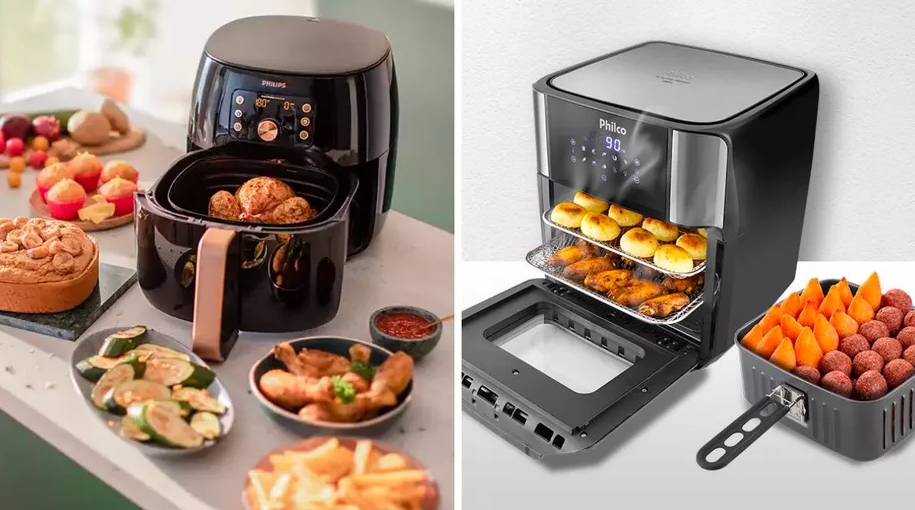
Air Fryer vs Oven at a Glance
If you don’t have time to read the full comparison, here’s a quick overview of how these two appliances stack up.
| Feature | Air Fryer | Oven |
| Cooking Speed | ⭐⭐⭐⭐⭐ Very fast | ⭐⭐⭐ Moderate |
| Preheating Time | 2–5 minutes (sometimes none) | 10–15 minutes |
| Crispiness | Excellent | Good to Excellent (especially convection ovens) |
| Baking | Good for small batches | Excellent |
| Cooking Capacity | Small to medium | Large |
| Energy Efficiency | Excellent for small meals | Better for large meals |
| Cleaning | Usually quick and easy | Can be time-consuming |
| Counter Space | Takes up countertop space | Built into the kitchen |
| Versatility | Great for everyday cooking | Best for baking, roasting, and multiple dishes |
| Best For | Singles, couples, quick meals | Families, meal prep, entertaining |
Quick Verdict
If your priority is cooking everyday meals quickly while using less electricity, an air fryer is hard to beat. Its compact cooking chamber and powerful fan circulate hot air efficiently, helping foods like fries, chicken wings, and vegetables cook faster and develop a crisp exterior with little oil.
However, if you regularly bake cakes, roast large cuts of meat, or cook for several people at once, a traditional ovenremains the more practical option. Its larger capacity and more even heat distribution make it better suited for recipes that need space and consistent temperatures.
The good news is that this isn’t necessarily an either-or decision. Many home cooks find that an air fryer complements their oven rather than replaces it. They use the air fryer for quick weekday meals and the oven for baking, entertaining, and larger family dinners.
What Is an Air Fryer?
An air fryer is a compact countertop appliance that cooks food by circulating very hot air around it at high speed. Instead of immersing food in oil like a deep fryer, it uses a powerful heating element and fan to create a crispy outer layer while cooking the inside thoroughly.
Although it’s called an “air fryer,” it doesn’t actually fry food in the traditional sense. It’s much closer to a small convection oven, but with a more compact cooking chamber and stronger airflow. This combination allows food to cook faster and brown more efficiently than in many standard ovens.
Over the past few years, air fryers have become a staple in many kitchens because they make it easy to prepare everyday meals with less oil and less waiting. Whether you’re cooking frozen fries, chicken wings, vegetables, or reheating leftovers, an air fryer is designed for speed and convenience.
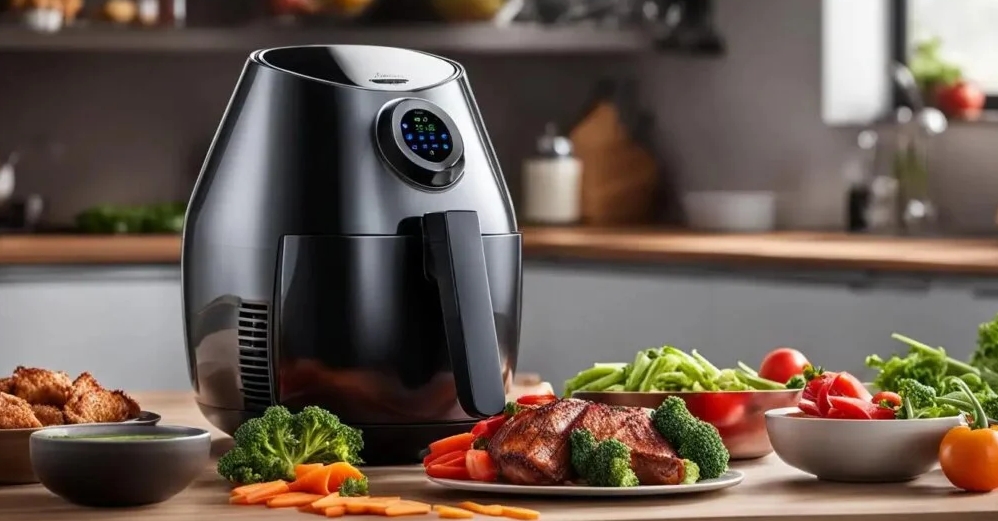
How Does an Air Fryer Work?
The cooking process is surprisingly simple:
- A heating element generates high temperatures.
- A powerful fan circulates the hot air around the food.
- The compact basket allows hot air to reach almost every surface.
- Moisture evaporates quickly, helping food develop a golden, crispy exterior.
Because the cooking chamber is much smaller than a traditional oven, it reaches the desired temperature faster. In many cases, there’s little or no preheating required, which can save valuable time when preparing meals.
Benefits of Using an Air Fryer
When comparing an air fryer vs oven, these are some of the biggest advantages an air fryer offers.
1. Faster Cooking
One of the biggest reasons people buy an air fryer is speed.
Since the appliance heats a smaller space and uses intense air circulation, many foods cook 20–30% faster than they would in a conventional oven. Frozen snacks, chicken tenders, vegetables, and fries can often go from frozen to ready-to-eat in under 20 minutes.
For busy households, that shorter cooking time can make weeknight meals much easier.
2. Crispy Results with Less Oil
If you love crunchy foods, an air fryer is hard to beat.
The rapid airflow browns the outside of food while keeping the inside tender, creating a texture similar to deep frying without using large amounts of oil.
Foods that perform especially well include:
- French fries
- Chicken wings
- Chicken nuggets
- Fish fillets
- Mozzarella sticks
- Roasted potatoes
- Breaded vegetables
This is one reason many people feel an air fryer cooks better than an oven for foods that benefit from a crisp finish.
3. Energy Efficient
Because it cooks smaller portions in a compact chamber, an air fryer generally uses less electricity than heating a full-size oven for the same meal.
If you’re cooking for one or two people, this can help reduce energy use while still producing excellent results.
4. Easy to Clean
Most basket-style air fryers have removable non-stick baskets and trays.
After cooking, many of these parts can simply be washed with warm soapy water, and some models are even dishwasher-safe.
Compared to scrubbing baked-on grease from a large oven, cleanup is usually much quicker.
5. Great for Everyday Meals
An air fryer shines when preparing:
- Breakfast items
- Lunches
- Quick dinners
- Frozen foods
- Side dishes
- Leftovers
For many people, it becomes the appliance they use most because it simplifies everyday cooking.
Limitations of an Air Fryer
Despite its strengths, an air fryer isn’t perfect. Knowing its limitations is important before deciding whether it’s a better choice than an oven.
Small Cooking Capacity
Most basket air fryers hold between 3 and 8 quarts, which is ideal for one to four people but limiting for larger households.
Preparing food for a family may require cooking in multiple batches, increasing the overall cooking time.
Not Ideal for Large Baking Jobs
While many air fryers can bake muffins, cookies, or small cakes, they don’t replace the spacious interior of a traditional oven.
If you regularly bake bread, sheet cakes, casseroles, or large trays of cookies, an oven remains the better tool.
Food Can Cook Unevenly if Overloaded
The hot air needs room to circulate.
If the basket is overcrowded, food may steam instead of crisp, leaving some pieces undercooked while others brown properly.
For the best results, cook food in a single layer whenever possible and shake or turn it halfway through cooking.
Limited Space for Large Foods
An air fryer can struggle with oversized dishes such as:
- Whole turkeys
- Large roasts
- Multiple pizzas
- Large casseroles
- Big baking trays
This is where a traditional oven still has a clear advantage.
Note:
An air fryer is an excellent appliance for anyone who values speed, crispy food, easy cleanup, and lower energy use for everyday meals. It excels at cooking smaller portions quickly and efficiently, making it a practical addition to many kitchens.
However, its compact size also limits how much food you can prepare at once. If you often cook for a large family or enjoy baking sizeable dishes, an oven will still be the more capable option.
What Is an Oven?
An oven is one of the most versatile appliances in any kitchen. Unlike an air fryer, which is designed for smaller portions and faster cooking, an oven offers a spacious cooking chamber that can handle everything from a tray of cookies to a whole roast turkey.
Whether you have a built-in wall oven, a freestanding range, or a countertop convection oven, the basic purpose is the same: to cook food using dry, consistent heat.
Traditional ovens have been the go-to choice for decades because they can bake, roast, broil, and reheat a wide variety of dishes with reliable results. They’re especially valuable for families, home bakers, and anyone who regularly prepares meals in large quantities.
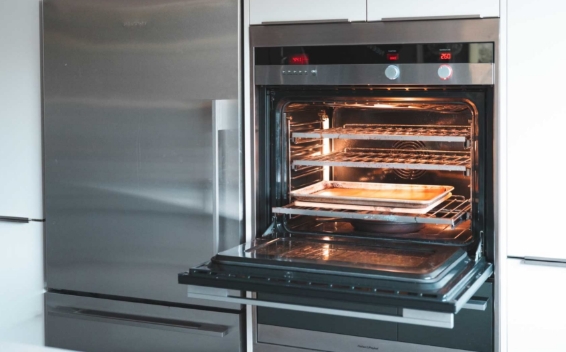
How Does an Oven Work?
A conventional oven cooks food by heating the air inside its large cooking cavity. Heating elements located at the top, bottom, or both raise the temperature, allowing heat to surround the food gradually.
Modern convection ovens add a fan that circulates the hot air throughout the oven. This helps food cook more evenly and can reduce cooking times compared to standard ovens. Air fryers work on a similar principle but use a much smaller chamber and more intense airflow, which is why they often cook faster.
The typical cooking process looks like this:
- The oven preheats to the desired temperature.
- Heating elements warm the air inside.
- Heat surrounds the food from all directions.
- Food cooks evenly over a longer period.
Because the oven has much more interior space than an air fryer, it usually takes longer to reach cooking temperature. However, that extra space is exactly what makes it ideal for baking and preparing larger meals.
Types of Ovens
Understanding the different types of ovens makes the air fryer vs conventional oven comparison much easier.
Conventional Oven
A conventional oven uses heating elements without a circulation fan.
It is ideal for:
- Baking cakes
- Roasting meats
- Cooking casseroles
- Preparing family meals
While reliable, it may cook less evenly than a convection model, especially on multiple racks.
Convection Oven
A convection oven includes a fan that circulates hot air throughout the cavity.
Benefits include:
- Faster cooking
- More even browning
- Better roasting
- Improved baking consistency
This is the oven most similar to an air fryer because both rely on circulating hot air. The biggest difference is that an air fryer concentrates that airflow inside a much smaller cooking space.
Electric Oven
Electric ovens provide consistent, even heating and are commonly found in modern homes.
They are excellent for:
- Baking
- Roasting
- Broiling
- Slow cooking
Many air fryer vs electric oven comparisons focus on energy use and cooking speed, as electric ovens generally require more time to preheat and more energy for small meals.
Gas Oven
Gas ovens heat quickly and are often preferred by cooks who like precise temperature adjustments.
They’re especially popular in professional kitchens and homes with natural gas connections.
Benefits of Using an Oven
Although air fryers receive much of the attention today, ovens remain an essential appliance because they offer capabilities that an air fryer simply can’t match.
1. Large Cooking Capacity
This is where an oven clearly wins.
A full-size oven can easily cook:
- A whole chicken
- A large turkey
- Several trays of cookies
- Multiple pizzas
- Large casseroles
- Family-sized lasagna
- Multiple dishes at the same time
If you’re cooking for four or more people regularly, an oven is far more practical than preparing several batches in an air fryer.
2. Better for Baking
If baking is part of your routine, an oven is still the better choice.
It provides the consistent, gentle heat needed for recipes such as:
- Cakes
- Bread
- Muffins
- Brownies
- Cookies
- Cheesecakes
- Pastries
While many air fryers include a bake function, their compact size and stronger airflow can make delicate baked goods brown too quickly if you’re not careful.
3. Greater Versatility
An oven can handle almost every cooking method, including:
- Baking
- Roasting
- Broiling
- Slow roasting
- Warming
- Batch cooking
- Multi-rack cooking
This versatility makes it the centerpiece of most kitchens.
4. Ideal for Meal Prep
If you prepare meals for the week, an oven saves time.
You can roast vegetables on one tray while cooking chicken on another, allowing you to prepare several meals in a single session.
An air fryer usually requires multiple batches for the same amount of food.
5. Better for Entertaining
Hosting friends or preparing holiday dinners?
An oven is built for exactly these situations.
Its generous capacity makes it possible to cook:
- Roast beef
- Turkey
- Ham
- Large side dishes
- Desserts
without worrying about running out of space.
Limitations of an Oven
Despite its many strengths, an oven isn’t always the most convenient option.
Longer Preheating Time
Most ovens need 10–15 minutes to preheat before cooking begins.
An air fryer, by comparison, often needs only a few minutes—or none at all—which can make a noticeable difference on busy weeknights.
Higher Energy Use for Small Meals
Heating a large oven just to cook a few chicken nuggets or a single baked potato isn’t very efficient.
For smaller portions, an air fryer generally uses less energy because it heats a much smaller cooking chamber.
Slower Cooking
Even after preheating, ovens usually take longer to cook foods like:
- French fries
- Chicken wings
- Frozen snacks
- Breaded fish
- Vegetables
The larger cooking space means heat isn’t concentrated as intensely as it is in an air fryer.
More Time-Consuming to Clean
Cleaning an oven can be one of the least enjoyable kitchen tasks.
Grease, baked-on spills, and food residue often require:
- Oven cleaners
- Self-cleaning cycles
- Extended scrubbing
By contrast, most air fryer baskets can be removed and washed separately, making cleanup much quicker after everyday cooking.
Note:
A traditional oven remains the most versatile cooking appliance for baking, roasting, and preparing meals for families or gatherings. Its spacious interior and ability to cook multiple dishes at once make it indispensable for many kitchens.
However, that versatility comes with trade-offs. Ovens generally take longer to preheat, use more energy for small portions, and require more effort to clean. For quick weekday meals or smaller servings, an air fryer often has the edge in speed and convenience.
Air Fryer vs Oven: What’s the Main Difference?
At first glance, an air fryer and an oven seem very similar. Both cook food using hot air rather than direct contact with a flame or hot oil. In fact, an air fryer is essentially a compact convection oven with a more powerful fan and a much smaller cooking chamber.
However, their design differences have a significant impact on cooking speed, texture, energy use, and the types of meals they’re best suited for.
Let’s look at the biggest differences.
Heating Technology
The biggest distinction in the air fryer vs oven comparison is how each appliance moves heat around the food.
An air fryer uses:
- A heating element positioned above the food
- A high-speed fan
- A compact cooking chamber
This setup forces hot air to circulate rapidly around the food, creating intense convection heat that browns and crisps the surface quickly.
A traditional oven works differently.
A conventional oven relies mainly on heating elements at the top and bottom to warm the entire oven cavity. A convection oven adds a fan to circulate the heated air, but because the cooking chamber is much larger, the airflow is generally less concentrated than in an air fryer.
Winner: Air Fryer
For small meals and foods that benefit from rapid browning, the air fryer’s concentrated heat gives it the advantage.
Air Circulation
Air circulation is one of the main reasons these appliances produce different results.
An air fryer moves hot air at a much higher speed through a smaller space. The food is also placed in a perforated basket, allowing air to circulate underneath as well as around it.
This design helps create:
- Crispier fries
- Crunchier chicken wings
- Better browning
- More even cooking on small portions
An oven also circulates hot air—especially if it’s a convection model—but the larger cavity means the airflow is spread over a much bigger area. That makes it gentler and better suited for baking or roasting than for creating maximum crispiness.
Winner: Air Fryer
Cooking Speed
If speed is your priority, the answer is clear.
An air fryer usually cooks faster because:
- It heats a much smaller space.
- It often requires little or no preheating.
- The powerful fan transfers heat to the food more efficiently.
Many everyday foods cook noticeably faster in an air fryer, including:
- Frozen fries
- Chicken nuggets
- Fish fillets
- Vegetables
- Chicken wings
A conventional oven may take 10–15 minutes just to preheat before cooking even begins, while many air fryers are ready in just a few minutes.
Winner: Air Fryer
Cooking Capacity
This is where the oven takes the lead.
A full-size oven can cook:
- An entire roast chicken
- A turkey
- Several trays of cookies
- Large casseroles
- Multiple pizzas
- Family-sized meals
Most basket-style air fryers are best suited to one to four servings at a time. Cooking for a larger group often means preparing food in several batches.
If you regularly host guests or cook for a family, an oven offers much more flexibility.
Winner: Oven
Temperature Control
Both appliances provide a wide range of cooking temperatures, but ovens generally offer more consistent heat for recipes that require precision.
That’s especially important when baking:
- Cakes
- Bread
- Pastries
- Soufflés
- Cheesecakes
Air fryers can bake many of these foods, but their intense airflow may require lower temperatures or shorter cooking times to avoid over-browning.
Winner: Oven
Preheating Time
Preheating may not seem like a big deal until you’re trying to prepare a quick lunch.
Most air fryers reach cooking temperature within a few minutes, and some recipes don’t require preheating at all.
Traditional ovens usually need more time because they’re heating a much larger cavity before cooking can begin.
If you’re making a quick snack after work, those saved minutes can make an air fryer feel much more convenient.
Winner: Air Fryer
Energy Efficiency
One of the biggest reasons many households invest in an air fryer is its lower energy use for smaller meals.
Because it heats a compact space and cooks food faster, it generally uses less electricity than running a full-size oven for a single serving or a small batch.
However, if you’re preparing several dishes at once, an oven can become the more efficient option because it cooks everything in a single cycle rather than requiring multiple air fryer batches.
Winner: Air Fryer for small meals; Oven for large family cooking.
Cleaning and Maintenance
Cleaning is another area where the two appliances differ.
Most air fryers have:
- A removable basket
- A removable crisper tray
- Non-stick surfaces
- Dishwasher-safe parts on many models
Cleaning usually takes just a few minutes after cooking.
An oven, on the other hand, often requires dealing with baked-on grease, spills, and stubborn food residue. Even models with self-cleaning cycles typically need occasional manual scrubbing.
For busy households, the easier cleanup is a major reason an air fryer becomes the go-to appliance for everyday cooking.
Winner: Air Fryer
Quick Comparison Summary
| Feature | Air Fryer | Oven |
| Heating Speed | ⭐⭐⭐⭐⭐ | ⭐⭐⭐ |
| Air Circulation | ⭐⭐⭐⭐⭐ | ⭐⭐⭐⭐ |
| Crispiness | ⭐⭐⭐⭐⭐ | ⭐⭐⭐⭐ |
| Baking | ⭐⭐⭐ | ⭐⭐⭐⭐⭐ |
| Large Meals | ⭐⭐ | ⭐⭐⭐⭐⭐ |
| Energy Efficiency | ⭐⭐⭐⭐⭐ | ⭐⭐⭐ |
| Cleaning | ⭐⭐⭐⭐⭐ | ⭐⭐⭐ |
| Everyday Convenience | ⭐⭐⭐⭐⭐ | ⭐⭐⭐⭐ |
Overall Verdict
The difference between an air fryer and an oven isn’t that one is universally better than the other—it’s that each excels in different situations.
Choose an air fryer if you want faster cooking, crispier results, lower energy use for smaller portions, and easy cleanup.
Choose an oven if you frequently bake, roast large cuts of meat, prepare meals for several people, or need the flexibility to cook multiple dishes at once.
Air Fryer vs Oven Cooking Performance
Now that you understand how each appliance works, it’s time to answer the biggest question:
Which actually cooks better?
The answer depends on what you value most. If you’re looking for speed and crispy textures, an air fryer usually comes out ahead. If your priority is baking, roasting large meals, or achieving consistent results with delicate recipes, an oven is often the better choice. Independent testing consistently shows that basket-style air fryers tend to cook faster and produce crispier results than larger oven-style appliances because of their compact design and stronger airflow.
Let’s compare them in the areas that matter most.
Which Cooks Faster?
When it comes to cooking speed, the air fryer is the clear winner.
Its compact cooking chamber heats quickly, and the powerful fan circulates hot air directly around the food. This reduces both preheating time and overall cooking time.
For many everyday foods, an air fryer can cook 20–30% faster than a conventional oven.
Examples include:
| Food | Air Fryer | Oven |
| Frozen Fries | 15–18 minutes | 20–30 minutes |
| Chicken Wings | 20–25 minutes | 35–45 minutes |
| Chicken Nuggets | 10–12 minutes | 15–20 minutes |
| Roasted Vegetables | 12–18 minutes | 25–35 minutes |
| Frozen Pizza (small) | 8–12 minutes | 12–18 minutes |
These times vary by model and recipe, but they illustrate why air fryers are popular for quick weekday meals.
Why Is an Air Fryer Faster?
Several factors contribute to the speed advantage:
- Smaller cooking chamber
- Faster preheating
- More concentrated heat
- High-speed air circulation
- Food positioned closer to the heating element
Because of this design, less heat is wasted warming empty space.
Winner: ⭐ Air Fryer
Which Produces Crispier Food?
If crispiness is your goal, an air fryer has a noticeable edge.
Its rapid airflow removes moisture from the food’s surface more efficiently, creating a golden, crunchy exterior without deep frying. Tests comparing basket-style air fryers with oven-style alternatives have found basket models generally achieve crispier results in less time.
Foods where the difference is most noticeable include:
- French fries
- Chicken wings
- Onion rings
- Fish fingers
- Mozzarella sticks
- Potato wedges
- Breaded chicken
An oven can also produce crispy food, especially if it’s a convection model, but it usually takes longer and may require flipping the food or using extra oil to achieve a similar finish.
Best Foods for Air Fryer Crispiness
The air fryer excels with:
- Frozen snacks
- Breaded foods
- Chicken skin
- Roasted potatoes
- Brussels sprouts
- Cauliflower
These foods benefit from the intense airflow that an air fryer provides.
Winner: ⭐ Air Fryer
Which Tastes Better?
Taste is more subjective than speed or crispiness.
Neither appliance automatically makes food more flavorful. Instead, the cooking method influences texture, moisture retention, and browning.
Air Fryer Taste
An air fryer typically delivers:
- Crispier exteriors
- Richer browning
- Toastier texture
- Less greasy finish
This makes foods like fries, wings, and nuggets especially satisfying.
Oven Taste
An oven often produces:
- Better caramelization on larger roasts
- Juicier large cuts of meat
- More even baking
- Softer interiors for baked goods
For foods that need gentle, steady heat—such as cakes, breads, or casseroles—the oven usually provides a better overall eating experience.
Winner: Depends on the recipe.
Which Cooks More Evenly?
Even cooking is another important factor.
Air Fryer
Because hot air circulates so aggressively, small foods generally cook evenly.
However, if you overcrowd the basket, airflow is blocked, leading to uneven browning.
To get the best results:
- Cook in a single layer
- Shake the basket halfway through
- Avoid stacking food
Oven
A traditional oven offers more space between foods.
Convection models, in particular, distribute heat more evenly across multiple trays.
This makes ovens ideal for:
- Cookies
- Cakes
- Lasagna
- Roasts
- Large vegetables
Winner: ⭐ Oven
Which Keeps Food Juicier?
This category depends on the size and type of food.
Air Fryer
Smaller foods often remain juicy because they cook quickly.
Examples include:
- Chicken thighs
- Salmon
- Shrimp
- Pork chops
However, because the airflow is intense, it’s easier to overcook lean meats if you leave them in too long.
Oven
An oven generally performs better with:
- Whole chickens
- Turkey
- Beef roasts
- Pork loin
- Lamb
The gentler cooking environment helps larger cuts retain moisture during longer cooking times.
Winner: ⭐ Oven
Which Is Better for Baking?
This is one area where ovens remain difficult to beat.
An oven offers:
- More stable temperatures
- Better heat distribution
- Larger baking space
- Room for rising dough
It’s the preferred appliance for:
- Cakes
- Bread
- Muffins
- Brownies
- Cheesecakes
- Pies
- Cookies
Air fryers can certainly bake, but recipes often need reduced temperatures or shorter cooking times because the stronger airflow browns the outside more quickly.
Winner: ⭐ Oven
Overall Cooking Performance
Here’s how the two appliances compare across the most important cooking categories.
| Cooking Category | Winner |
| Speed | Air Fryer |
| Crispiness | Air Fryer |
| Frozen Foods | Air Fryer |
| Everyday Meals | Air Fryer |
| Small Portions | Air Fryer |
| Baking | Oven |
| Large Roasts | Oven |
| Family Meals | Oven |
| Multi-Dish Cooking | Oven |
| Consistent Baking | Oven |
Note:
If your everyday meals consist of frozen foods, chicken, vegetables, potatoes, or quick dinners for one to four people, the air fryer generally cooks faster and delivers crispier results with less waiting.
If you regularly bake bread, make cakes, roast large cuts of meat, or prepare meals for a family, the oven remains the more capable and versatile appliance.
The reality is that both appliances excel in different situations. Many home cooks find the best setup is to use an air fryer for quick weekday meals and an oven for baking, entertaining, and larger recipes.
Best Appliance for Different Foods
One of the biggest factors in the air fryer vs oven debate is the type of food you’re cooking.
While both appliances can prepare many of the same meals, they don’t always produce the same results. Some foods become crispier and cook faster in an air fryer, while others benefit from the larger cooking space and gentler heat of a traditional oven. Experts generally recommend air fryers for smaller, crisp-focused foods and ovens for baking and larger family meals.
Here’s how they compare across some of the most popular foods.
Air Fryer vs Oven for Chicken
Chicken is one of the best foods to compare because different cuts respond differently to each appliance.
Air Fryer
An air fryer is excellent for:
- Chicken wings
- Chicken thighs
- Chicken drumsticks
- Chicken tenders
- Chicken nuggets
- Chicken breasts
The rapid air circulation creates crispy skin while keeping the meat juicy, provided you don’t overcook it.
Chicken wings, in particular, are one of the air fryer’s biggest strengths. They develop a crunchy exterior without requiring deep frying or large amounts of oil.
Oven
An oven performs better when cooking:
- Whole chickens
- Large trays of chicken
- Multiple portions at once
- Stuffed chicken recipes
Its larger cooking space allows heat to circulate around bigger cuts more evenly.
Winner
- Small portions → Air Fryer
- Whole chicken or family meals → Oven
Air Fryer vs Oven for French Fries
French fries are often the first food people try in a new air fryer—and for good reason.
Air Fryer
Air fryers produce:
- Crispier fries
- Better browning
- Faster cooking
- Less oil usage
The constant circulation of hot air removes moisture quickly, giving fries a crunchy outside and fluffy inside.
Oven
Oven fries are still delicious but usually require:
- Longer cooking
- More oil
- Flipping halfway through
Without strong airflow, they often don’t become quite as crispy.
Winner: ⭐ Air Fryer
Air Fryer vs Oven for Frozen Foods
Frozen foods are where the air fryer really shines.
Examples include:
- Chicken nuggets
- Fish fingers
- Mozzarella sticks
- Spring rolls
- Onion rings
- Tater tots
The smaller cooking chamber helps frozen foods crisp quickly without becoming soggy.
An oven still works well, especially for larger quantities, but it usually takes longer and may not deliver the same crisp texture.
Winner: ⭐ Air Fryer
Air Fryer vs Oven for Vegetables
Both appliances roast vegetables well, but the results are slightly different.
Air Fryer
Ideal for:
- Brussels sprouts
- Broccoli
- Cauliflower
- Carrots
- Zucchini
- Bell peppers
The vegetables develop caramelized edges while remaining tender inside.
Oven
Better for:
- Large trays of vegetables
- Meal prep
- Holiday side dishes
If you’re roasting vegetables for an entire family, an oven’s larger capacity makes the process much easier.
Winner
- Small servings → Air Fryer
- Large batches → Oven
Air Fryer vs Oven for Fish
Fish cooks exceptionally well in both appliances.
Air Fryer
Excellent for:
- Salmon fillets
- Cod
- Tilapia
- Fish sticks
- Breaded fish
The quick cooking helps maintain moisture while crisping the outside.
Oven
Better suited for:
- Whole fish
- Large fillets
- Multiple portions
The gentler heat reduces the risk of drying out delicate fish.
Winner: Tie
Air Fryer vs Oven for Steak
Steak lovers often wonder which appliance delivers the best results.
Air Fryer
An air fryer can cook:
- Sirloin
- Ribeye
- New York strip
It creates a nicely browned crust while keeping the interior juicy.
Oven
An oven is better when:
- Reverse searing
- Cooking thick steaks
- Preparing several steaks together
Many cooks also finish oven-cooked steaks in a hot skillet for maximum flavor.
Winner
- One or two steaks → Air Fryer
- Thick cuts or multiple steaks → Oven
Air Fryer vs Oven for Pizza
Pizza performance depends largely on size.
Air Fryer
Great for:
- Frozen personal pizzas
- Leftover slices
- Mini pizzas
The crust becomes crisp without drying out the toppings.
Oven
Still the best option for:
- Large pizzas
- Homemade pizza
- Deep-dish pizza
- Multiple pizzas
It provides enough space for even cooking and proper crust development.
Winner
- Personal pizza → Air Fryer
- Family-size pizza → Oven
Air Fryer vs Oven for Cookies
Both appliances can bake cookies, but capacity makes a big difference.
Air Fryer
Good for:
- Small batches
- Quick desserts
- Ready-to-bake cookie dough
Oven
Better for:
- Multiple trays
- Even baking
- Large batches
- Holiday baking
If you’re baking dozens of cookies, the oven saves both time and effort.
Winner: ⭐ Oven
Air Fryer vs Oven for Cakes
Although many air fryers include a bake function, ovens remain the preferred choice.
An oven offers:
- More even heat
- Better rise
- Consistent browning
- Space for standard cake pans
Air fryers can successfully bake small cakes, but recipes often need adjustments to temperature and cooking time because the stronger airflow can brown the top more quickly.
Winner: ⭐ Oven
Air Fryer vs Oven for Bread
Bread baking requires stable temperatures and plenty of room for dough to rise.
Traditional ovens provide both.
They are ideal for:
- Sandwich bread
- Artisan loaves
- Dinner rolls
- Sourdough
- Focaccia
Air fryers can bake smaller loaves, but the limited space restricts the size and shape of the bread.
Winner: ⭐ Oven
Air Fryer vs Oven for Casseroles
Casseroles are another category where ovens dominate.
Large dishes such as:
- Lasagna
- Mac and cheese
- Shepherd’s pie
- Baked pasta
- Potato gratin
need plenty of space and even heat over a longer cooking time.
Most basket-style air fryers simply don’t have enough room for these recipes.
Winner: ⭐ Oven
Overall Food Comparison
| Food | Best Appliance | Why? |
| Chicken Wings | Air Fryer | Crispier skin and faster cooking |
| Whole Chicken | Oven | More space and even roasting |
| French Fries | Air Fryer | Crunchier texture with less oil |
| Frozen Foods | Air Fryer | Faster and crispier results |
| Vegetables | Air Fryer (small batches) | Better caramelization |
| Large Vegetable Trays | Oven | Greater capacity |
| Fish Fillets | Air Fryer | Quick cooking and crisp finish |
| Whole Fish | Oven | More even cooking |
| Steak | Tie | Depends on size and quantity |
| Pizza | Air Fryer (small), Oven (large) | Capacity matters |
| Cookies | Oven | More even baking and larger batches |
| Cakes | Oven | Better rise and texture |
| Bread | Oven | Stable heat and more space |
| Casseroles | Oven | Designed for large baking dishes |
Note:
When comparing air fryer vs oven cooking, there isn’t one appliance that wins every category.
The air fryer is the better choice for quick meals, frozen foods, crispy snacks, chicken wings, fries, vegetables, and reheating leftovers.
The oven remains the better option for baking, roasting whole chickens, cooking family-sized meals, making casseroles, baking bread, and preparing multiple dishes at the same time.
Understanding these strengths helps you choose the right appliance for each recipe instead of expecting one to handle every cooking task equally well.
Air Fryer vs Oven for Healthy Cooking
Many people buy an air fryer because they believe it’s the healthier option. While there is some truth to that, the full picture is a little more nuanced.
Both an air fryer and an oven are healthier cooking methods than deep frying because they don’t require food to be submerged in hot oil. The main health differences come down to how much oil you use, how long the food cooks, and what you’re preparing.
So, is an air fryer healthier than an oven?
For many everyday meals, yes—but not because of the appliance itself. It’s mainly because an air fryer often needs less oil and cooks food more quickly.
Oil Usage
The biggest health advantage of an air fryer is its ability to produce crispy food with very little oil.
Air Fryer
Most recipes only require:
- A light cooking spray
- About one teaspoon of oil
- Or no added oil at all for naturally fatty foods like salmon or chicken wings
The circulating hot air creates a crisp exterior without relying on large amounts of fat.
Oven
An oven can also cook with little oil, but many roasted recipes call for more oil to encourage browning and prevent food from drying out.
For example:
- Oven-roasted potatoes often need one or two tablespoons of oil.
- Air-fried potatoes usually become crisp with much less.
If you’re trying to reduce calories from added fats, the air fryer can make that easier.
Winner: ⭐ Air Fryer
Fat and Calorie Content
When you use less oil, you naturally reduce the fat and calorie content of your meals.
For instance:
- Air-fried fries generally contain fewer calories than fries cooked with larger amounts of oil.
- Breaded chicken can become crispy without soaking up extra fat.
That said, the ingredients you choose still matter.
Cooking frozen mozzarella sticks or heavily processed chicken nuggets in an air fryer doesn’t automatically make them healthy. Likewise, oven-baked vegetables with a light coating of olive oil can be an excellent nutritious meal.
The appliance helps, but your food choices have the biggest impact on overall nutrition.
Nutrient Retention
People often wonder whether one appliance preserves more nutrients than the other.
In reality, both methods retain nutrients well because they use dry heat rather than boiling, where water-soluble vitamins can leach into the cooking water.
Air fryers may have a slight advantage for some vegetables because they cook faster, reducing the time that heat-sensitive nutrients are exposed to high temperatures. However, the difference is generally modest and depends on the specific food and cooking time.
For example, these vegetables cook particularly well in an air fryer:
- Broccoli
- Brussels sprouts
- Cauliflower
- Bell peppers
- Green beans
The key is to avoid overcooking, regardless of which appliance you use.
Winner: Slight edge to Air Fryer
Healthy Cooking for Different Foods
Different foods benefit from different cooking methods.
Best in an Air Fryer
- Fresh vegetables
- Chicken breast
- Salmon fillets
- Sweet potato fries
- Chickpeas
- Tofu
- Homemade potato wedges
These foods become nicely browned while requiring little or no additional oil.
Best in an Oven
- Whole chicken
- Turkey
- Roasted vegetables for a crowd
- Baked fish
- Whole-grain bread
- Vegetable casseroles
- Large baked dishes
An oven is especially useful when preparing balanced family meals in a single cooking session.
Which Is Better for Weight Management?
If you’re trying to lose weight or reduce calorie intake, both appliances can support a healthy eating plan.
An air fryer may make it easier to stick with healthier habits because it:
- Uses less oil
- Cooks quickly
- Makes vegetables more appealing
- Produces crispy textures without deep frying
However, it’s important to remember that an air fryer isn’t a weight-loss machine.
Portion sizes and ingredient choices remain far more important than the appliance itself.
For example:
- Air-fried vegetables are nutritious.
- Air-fried doughnuts are still high in sugar and calories.
- Air-fried frozen snacks should still be enjoyed in moderation.
Can High Heat Make Food Less Healthy?
Both air fryers and ovens use high temperatures, which can create browning.
While browning adds flavor, cooking food at excessively high temperatures or for too long can also increase the formation of certain compounds. The best approach is to cook food until it’s properly done without heavily charring it.
Simple tips include:
- Avoid burning food.
- Follow recommended cooking times.
- Turn food halfway through cooking when needed.
- Use a food thermometer for meat instead of guessing.
These habits help you get the best balance of flavor and nutrition.
Tips for Healthier Cooking
Whether you use an air fryer or an oven, these practices can make your meals healthier:
- Use heart-healthy oils, such as olive or avocado oil, when a recipe calls for added fat.
- Season with herbs, spices, garlic, lemon juice, or pepper instead of relying on excess salt.
- Fill at least half your plate with vegetables.
- Choose lean proteins like chicken breast, fish, beans, or tofu.
- Limit highly processed frozen foods and breaded snacks.
- Avoid overcooking or charring foods.
These simple habits usually have a greater impact on health than the choice between an air fryer and an oven.
Healthy Cooking Comparison
| Health Factor | Air Fryer | Oven |
| Oil Needed | ⭐⭐⭐⭐⭐ Very little | ⭐⭐⭐ Usually more |
| Lower Calories | ⭐⭐⭐⭐⭐ | ⭐⭐⭐⭐ |
| Nutrient Retention | ⭐⭐⭐⭐⭐ | ⭐⭐⭐⭐ |
| Healthy Vegetables | ⭐⭐⭐⭐⭐ | ⭐⭐⭐⭐⭐ |
| Healthy Family Meals | ⭐⭐⭐⭐ | ⭐⭐⭐⭐⭐ |
| Weight-Loss Friendly | ⭐⭐⭐⭐⭐ | ⭐⭐⭐⭐ |
Note:
When comparing air fryer vs oven for healthy cooking, the air fryer has a slight advantage because it can deliver crispy results with less added oil and shorter cooking times. That can help reduce calories from fat while making healthy foods like vegetables and lean proteins more enjoyable.
That said, an oven is also an excellent tool for healthy cooking. It handles larger meals, baked dishes, and family-sized portions with ease, making it ideal for meal prep and balanced home cooking.
Ultimately, the healthiest choice isn’t determined by the appliance—it’s determined by the ingredients you use and how you prepare them.
Air Fryer vs Oven Energy Consumption
If you’re trying to lower your electricity bill, you’re probably wondering which appliance is cheaper to run.
In most cases, the air fryer uses less electricity than a traditional oven when cooking small to medium-sized meals. That’s because it heats a much smaller cooking space, reaches temperature faster, and often finishes cooking in less time. Independent testing has found that air fryers can use less than half the energy of a built-in oven for many single-meal cooking tasks, although the advantage decreases when you need to cook multiple batches.
However, that doesn’t automatically mean an air fryer is always the most economical choice.
The amount of electricity you use depends on:
- The size of your meal
- Cooking time
- The appliance’s wattage
- Whether you’re cooking one batch or several
- Your local electricity rates
Let’s break it down.
Which Uses Less Electricity?
An air fryer generally has a lower overall energy consumption because it combines:
- Faster preheating
- Shorter cooking times
- A smaller cooking chamber
A conventional electric oven, by comparison, needs to heat a much larger space before it begins cooking your food.
For example, independent tests comparing roast chicken, jacket potatoes, fries, and cakes found that the air fryer consistently used significantly less electricity for smaller portions while delivering similar or even better cooking results.
Winner: ⭐ Air Fryer
Typical Power Consumption
Although every model is different, these are common power ranges.
| Appliance | Typical Wattage |
| Compact Air Fryer | 900–1,200W |
| Standard Air Fryer | 1,400–1,800W |
| Large Dual-Basket Air Fryer | 1,700–2,400W |
| Electric Oven | 2,000–5,000W |
It’s important to remember that higher wattage doesn’t always mean higher running costs.
For example:
- A 1,700W air fryer cooking for 18 minutes may use less electricity overall than
- A 2,500W oven running for 45 minutes.
The total energy used depends on both power and cooking time.
Running Cost Comparison
Here’s a simple comparison for common cooking situations.
| Cooking Task | Air Fryer | Oven | Better Choice |
| Frozen Fries | Lower cost | Higher cost | Air Fryer |
| Chicken Wings | Lower cost | Higher cost | Air Fryer |
| Jacket Potato | Lower cost | Higher cost | Air Fryer |
| Small Pizza | Lower cost | Higher cost | Air Fryer |
| Whole Chicken | Often lower cost for one bird | Higher cost | Air Fryer |
| Large Roast Dinner | Multiple batches may be needed | One cooking cycle | Oven |
| Several Dishes Together | Less efficient if cooked separately | More efficient | Oven |
The key takeaway is that meal size matters.
Why Air Fryers Save Energy
Several factors make air fryers more energy efficient for everyday cooking.
1. Smaller Cooking Chamber
An air fryer only heats a compact basket instead of a large oven cavity.
Less empty space means:
- Faster heating
- Less wasted energy
- Quicker cooking
2. Shorter Preheating Time
Many recipes require little or no preheating.
An oven may spend 10–15 minutes preheating before the food even starts cooking.
That extra time increases electricity use.
3. Faster Cooking
Because the fan circulates hot air so efficiently, many meals finish much sooner.
Examples include:
- Chicken nuggets
- French fries
- Vegetables
- Fish fillets
- Frozen snacks
The shorter cooking time contributes to lower overall electricity consumption.
When an Oven Can Be More Efficient
This is where many comparisons oversimplify the story.
If you’re preparing:
- A roast chicken
- Roast potatoes
- Vegetables
- Garlic bread
- Dessert
all at the same time, an oven may actually use energy more efficiently than running several air fryer cycles. Which? testing notes that the air fryer’s energy advantage shrinks when you have to cook in batches, making the oven a better option for larger households or entertaining.
Air Fryer vs Oven for Families
Consider these two examples.
Cooking for One or Two People
You’re making:
- Two chicken breasts
- Fries
- Vegetables
The air fryer is usually:
- Faster
- Cheaper to run
- Easier to clean
Cooking for Six People
Now imagine preparing:
- Roast chicken
- Potatoes
- Vegetables
- Yorkshire puddings
- Dessert
Trying to fit all of this into an air fryer would likely require several batches.
A single oven can cook much of it at once, making it the more practical—and sometimes more economical—choice.
Tips to Reduce Electricity Usage
Whether you choose an air fryer or an oven, these simple habits can help lower energy consumption.
Air Fryer Tips
- Don’t overcrowd the basket.
- Cook similar foods together.
- Clean the basket regularly for efficient airflow.
- Skip preheating when the recipe doesn’t require it.
- Choose the right basket size for your household.
Oven Tips
- Cook multiple dishes at the same time.
- Avoid opening the oven door unnecessarily.
- Use convection mode if available.
- Turn the oven off a few minutes early and let residual heat finish the cooking.
- Batch-cook meals for later use.
Energy Consumption Comparison
| Category | Air Fryer | Oven |
| Preheating | ⭐⭐⭐⭐⭐ | ⭐⭐⭐ |
| Small Meals | ⭐⭐⭐⭐⭐ | ⭐⭐⭐ |
| Family Meals | ⭐⭐⭐ | ⭐⭐⭐⭐⭐ |
| Batch Cooking | ⭐⭐ | ⭐⭐⭐⭐⭐ |
| Electricity Savings | ⭐⭐⭐⭐⭐ | ⭐⭐⭐ |
| Overall Efficiency | ⭐⭐⭐⭐⭐ | ⭐⭐⭐⭐ |
Note:
When comparing air fryer vs oven electricity usage, the air fryer is generally the more energy-efficient option for everyday cooking, especially if you’re preparing meals for one to four people. Its compact size, rapid heating, and shorter cooking times help reduce overall electricity consumption.
That said, an oven shouldn’t be overlooked. If you’re cooking large family meals, roasting multiple dishes, or meal-prepping for the week, using one oven cycle can be more efficient than running an air fryer several times.
Ultimately, the most economical choice depends on how much food you’re cooking—not just which appliance you’re using.
Air Fryer vs Oven Cooking Capacity
When comparing an air fryer vs oven, cooking capacity is one of the biggest differences you’ll notice in everyday use.
While an air fryer is perfect for preparing quick meals for one or two people, a traditional oven is designed to handle much larger quantities of food in a single cooking session. If you regularly cook for a family or enjoy meal prepping, capacity can be just as important as cooking speed.
Let’s see how each appliance performs for different household sizes.
Cooking for One Person
If you live alone, an air fryer is often the better choice.
Most meals fit comfortably in a standard basket, including:
- Chicken breast with vegetables
- Fish and roasted potatoes
- Burgers and fries
- Frozen meals
- Breakfast foods
Because the basket is small, food cooks quickly without wasting electricity heating a large oven.
An oven still works well, but for a single serving, it usually takes longer to preheat and uses more energy.
Winner: ⭐ Air Fryer
Cooking for Couples
For two people, both appliances work well, but the air fryer still has a slight advantage for everyday meals.
You can easily prepare:
- Two chicken breasts
- Salmon with vegetables
- Pork chops and potatoes
- Small pizzas
- Frozen appetizers
Many 4- to 6-quart air fryers are designed with couples in mind and can cook a complete meal in one batch.
If you’re cooking something larger, such as a roast or homemade pizza, the oven offers more flexibility.
Winner: ⭐ Air Fryer
Cooking for Families
As household size increases, the balance begins to shift.
A standard air fryer can still prepare delicious meals, but its limited basket size often means cooking in multiple batches.
For example, feeding a family of five with:
- Chicken pieces
- Fries
- Roasted vegetables
may require two or three cooking cycles.
An oven, on the other hand, can often cook everything together on separate trays or racks, saving time and reducing the need for batch cooking.
Winner: ⭐ Oven
Cooking for Large Gatherings
If you’re hosting guests or preparing holiday meals, an oven is the clear winner.
Its larger cavity easily accommodates:
- Whole turkey
- Large roast beef
- Multiple casseroles
- Several baking trays
- Large desserts
- Side dishes cooked simultaneously
Even the largest dual-basket air fryers have limits when compared to a full-size oven.
Trying to cook an entire holiday dinner in an air fryer would likely require several rounds of cooking.
Winner: ⭐ Oven
Meal Prep
Meal prepping usually involves cooking several portions at once.
Air Fryer
An air fryer works well for:
- Cooking chicken in batches
- Roasting vegetables
- Preparing healthy lunches
- Reheating pre-cooked meals
However, if you’re making meals for an entire week, you’ll probably need multiple batches.
Oven
An oven makes meal prep much easier because it can handle:
- Several trays of vegetables
- Multiple chicken breasts
- Large pans of roasted potatoes
- Family-sized casseroles
You can cook everything at once and portion it afterward.
Winner: ⭐ Oven
Batch Cooking
Batch cooking is where oven capacity really shines.
Imagine you’re preparing:
- Two trays of roasted vegetables
- A tray of chicken thighs
- Garlic bread
- A baked pasta dish
A full-size oven can often cook all of these during one session.
With an air fryer, you’d usually need to cook one item, remove it, then cook the next.
That doesn’t mean the air fryer is ineffective—it simply isn’t designed for high-volume cooking.
Winner: ⭐ Oven
Air Fryer Basket Sizes
Choosing the right air fryer size makes a big difference.
Here’s a general guide:
| Air Fryer Capacity | Best For |
| 2–3 quarts | 1 person |
| 3–5 quarts | 1–2 people |
| 5–6 quarts | 3–4 people |
| 7–8 quarts | 4–5 people |
| 8+ quarts or Dual Basket | Large families and meal prep |
If you regularly cook for four or more people, a dual-basket or larger-capacity air fryer is usually a better fit than a compact model.
Oven Capacity
A standard kitchen oven can usually cook:
- Several baking trays
- A whole turkey
- A large roast
- Family-sized casseroles
- Multiple pizzas
- Dozens of cookies
Many ovens also include multiple rack positions, allowing different foods to cook at the same time.
This versatility is difficult for even the largest countertop air fryers to match.
Which Appliance Fits Your Household?
Choose an Air Fryer If:
- You live alone.
- You’re part of a two-person household.
- You cook mostly fresh or frozen meals.
- You prefer quick weekday dinners.
- You don’t mind cooking in batches occasionally.
Choose an Oven If:
- You have a family of four or more.
- You entertain guests regularly.
- You enjoy baking.
- You meal prep every week.
- You often cook several dishes at the same time.
Consider Owning Both If:
Many households find that the two appliances complement each other well.
For example:
- Use the air fryer for quick lunches, snacks, frozen foods, and side dishes.
- Use the oven for baking, holiday meals, large roasts, and batch cooking.
This approach gives you the convenience of fast everyday cooking without giving up the capacity of a full-size oven.
Capacity Comparison Table
| Category | Air Fryer | Oven |
| Single Person | ⭐⭐⭐⭐⭐ | ⭐⭐⭐ |
| Couples | ⭐⭐⭐⭐⭐ | ⭐⭐⭐⭐ |
| Family of Four | ⭐⭐⭐ | ⭐⭐⭐⭐⭐ |
| Large Families | ⭐⭐ | ⭐⭐⭐⭐⭐ |
| Meal Prep | ⭐⭐⭐ | ⭐⭐⭐⭐⭐ |
| Holiday Meals | ⭐ | ⭐⭐⭐⭐⭐ |
| Batch Cooking | ⭐⭐ | ⭐⭐⭐⭐⭐ |
| Multiple Dishes at Once | ⭐⭐ | ⭐⭐⭐⭐⭐ |
Note:
When it comes to cooking capacity, the winner depends entirely on your household size and cooking habits.
An air fryer is an excellent choice for individuals, couples, and small households. It delivers quick, efficient cooking for everyday meals while using less energy.
A traditional oven remains the better option for larger families, meal prep, entertaining, and recipes that require plenty of space. Its ability to cook multiple dishes at once makes it difficult to replace for high-volume cooking.
Ease of Cleaning
Cleaning is one of those factors you may not think about before buying a kitchen appliance, but it can make a big difference in how often you actually use it.
When comparing air fryer vs oven, the air fryer is generally easier to clean because it has fewer surfaces, removable parts, and a much smaller cooking area. However, it also needs more frequent cleaning—ideally after every use—to prevent grease and food residue from building up. Ovens don’t usually require cleaning after each meal, but when they do need attention, the job is often more time-consuming.
Let’s compare both appliances.
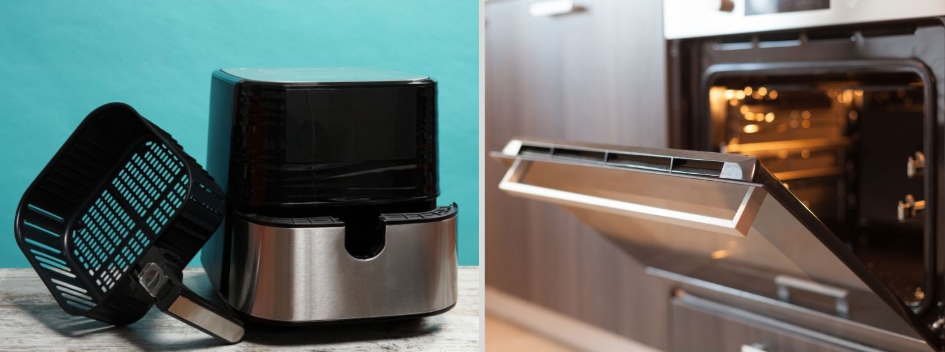
Cleaning an Air Fryer
One of the biggest advantages of an air fryer is that cleanup is usually quick.
Most basket-style air fryers include:
- A removable basket
- A crisper plate or tray
- A non-stick cooking surface
- Dishwasher-safe parts on many models
Once the appliance has cooled, you simply remove the basket and wash it with warm water, mild dish soap, and a soft sponge.
Typical Cleaning Routine
For everyday maintenance:
- Unplug the air fryer and allow it to cool.
- Remove the basket and crisper plate.
- Wash them with warm, soapy water.
- Wipe the inside of the appliance with a damp cloth.
- Dry all parts completely before reassembling.
Cleaning after each use helps prevent burnt-on grease, lingering odors, and smoke during future cooking. It can also help maintain cooking performance over time.
Deep Cleaning an Air Fryer
Even with regular cleaning, grease can slowly build up around the heating element and inside the cooking chamber.
Every few weeks—or more often if you cook greasy foods—it’s worth giving the appliance a deeper clean.
Focus on:
- The heating element
- Interior walls
- Air vents
- Basket corners
- Crisper plate
Always follow the manufacturer’s cleaning instructions, and avoid abrasive scrubbers that could damage the non-stick coating.
Common Air Fryer Cleaning Mistakes
To help your air fryer last longer, avoid these common mistakes:
- Using metal scouring pads
- Soaking the main appliance in water
- Cleaning while it’s still hot
- Using harsh chemicals on non-stick surfaces
- Ignoring grease buildup around the heating element
A little routine maintenance goes a long way toward keeping your air fryer working efficiently.
Cleaning an Oven
An oven doesn’t need cleaning after every meal, but when grease and spills build up, the task becomes much more demanding.
Food splatters from roasting meat, bubbling casseroles, or baked desserts can harden over time, making them more difficult to remove.
Typical areas that need attention include:
- Oven racks
- Interior walls
- Oven floor
- Door glass
- Door seals
Unlike an air fryer, these surfaces are much larger, which means cleaning often takes considerably longer.
How Often Should You Clean an Oven?
The answer depends on how often you cook.
As a general guide:
- Wipe away fresh spills as soon as the oven has cooled.
- Spot-clean grease whenever you notice buildup.
- Give the oven a thorough deep clean every few months, or sooner if you frequently roast meats or bake dishes that splatter. Regular maintenance helps prevent stubborn residue from becoming much harder to remove.
Self-Cleaning Ovens
Many modern ovens include a self-cleaning function.
During this cycle, the oven reaches extremely high temperatures that turn food residue into ash, making it easier to wipe away afterward.
While convenient, you’ll still need to:
- Remove the ash
- Clean the racks if required
- Wipe the oven door and glass
The self-cleaning feature reduces effort but doesn’t eliminate maintenance completely.
Which Appliance Is Easier to Maintain?
Air Fryer
Pros
- Quick daily cleaning
- Smaller cooking area
- Removable basket
- Less grease buildup
- Many dishwasher-safe components
Cons
- Needs cleaning after most uses
- Heating element requires occasional attention
Oven
Pros
- Doesn’t require cleaning after every meal
- Self-cleaning feature on many models
- Better for messy, large-scale cooking
Cons
- Larger interior to scrub
- Grease can become baked on
- Deep cleaning takes longer
- Cleaning racks and door glass can be labor-intensive
Tips to Make Cleaning Easier
Air Fryer
- Clean the basket after every use.
- Wipe away excess grease before it hardens.
- Avoid overcrowding the basket, which can lead to more splatter.
- Use parchment liners designed for air fryers when appropriate, ensuring they don’t block airflow.
Oven
- Place a baking tray under dishes that may bubble over.
- Wipe up spills once the oven has cooled.
- Clean grease before it becomes baked on.
- Remove and wash racks separately during deep cleaning.
These simple habits reduce the amount of heavy scrubbing needed later.
Cleaning Comparison Table
| Cleaning Feature | Air Fryer | Oven |
| Daily Cleaning Time | ⭐⭐⭐⭐⭐ | ⭐⭐⭐⭐ |
| Deep Cleaning | ⭐⭐⭐⭐ | ⭐⭐ |
| Dishwasher-Safe Parts | ⭐⭐⭐⭐⭐ (many models) | ⭐⭐ |
| Grease Buildup | ⭐⭐⭐⭐ | ⭐⭐ |
| Maintenance Effort | ⭐⭐⭐⭐⭐ | ⭐⭐⭐ |
| Overall Ease of Cleaning | ⭐⭐⭐⭐⭐ | ⭐⭐⭐ |
Note:
When it comes to ease of cleaning, the air fryer is the clear winner. Although it should be cleaned after most uses, the process is usually quick thanks to its compact size and removable components. Many models even include dishwasher-safe baskets and trays, making cleanup even simpler.
A traditional oven requires less frequent cleaning, but each deep-cleaning session is typically more time-consuming because of its larger interior and the tendency for grease and food residue to bake onto surfaces.
If convenience and low-maintenance cooking are high on your priority list, an air fryer has the advantage.
Ease of Use
For many people, the best kitchen appliance isn’t necessarily the one with the most features—it’s the one that’s easiest to use every day.
When comparing air fryer vs oven, both appliances are beginner-friendly, but they offer different user experiences.
An air fryer is designed for quick, straightforward cooking with simple controls, short preheating times, and minimal monitoring. A traditional oven provides greater flexibility and precision, but it often requires more planning and a longer cooking process.
Let’s compare them in more detail.
Controls and Settings
Modern versions of both appliances include digital controls, timers, and temperature adjustments.
Air Fryer
Most air fryers feature:
- Digital touchscreen controls
- Temperature adjustment
- Built-in timer
- Automatic shut-off
- Cooking presets
- Shake reminders on some models
Many recipes only require you to:
- Place the food in the basket.
- Set the temperature.
- Set the timer.
- Press Start.
The appliance does the rest.
Because cooking times are shorter, it’s also easier to make quick adjustments if food is browning too quickly.
Advantage: Air Fryer
Oven
Modern ovens usually include:
- Temperature controls
- Bake mode
- Roast mode
- Broil function
- Convection mode (on many models)
- Timer
- Interior light
Some premium ovens also include:
- Air fry mode
- Steam cooking
- Food probes
- Smart app controls
Although ovens offer more cooking options, they also require a little more familiarity to get the best results.
Advantage: Oven for versatility
Cooking Presets
One feature many people appreciate in an air fryer is its preset cooking programs.
Common presets include:
- Fries
- Chicken
- Fish
- Vegetables
- Steak
- Shrimp
- Bake
- Reheat
These presets provide a useful starting point, especially for beginners. However, experienced users often rely on manual temperature and time settings instead, since different foods and portion sizes still require adjustments.
Ovens generally offer cooking modes rather than food-specific presets, giving you more flexibility but requiring you to select the appropriate temperature and cooking time yourself.
Learning Curve
Air Fryer
Most people become comfortable using an air fryer after just a few meals.
That’s because:
- There are fewer settings.
- Recipes are simple.
- Cooking times are shorter.
- Mistakes are easy to correct.
Even if you accidentally overcook something, you’ve usually only lost 15–20 minutes instead of an hour.
Learning Curve: Very Easy
Oven
Ovens aren’t difficult to use, but mastering them takes more experience.
You’ll learn things like:
- Rack placement
- When to use convection
- Baking temperatures
- Roasting techniques
- Broiling safely
- How different recipes behave
If you enjoy cooking and baking, this extra control is an advantage.
For someone who simply wants dinner on the table quickly, it can feel like more work.
Learning Curve: Moderate
Convenience for Everyday Cooking
This is where the air fryer really stands out.
Imagine arriving home after work.
You want dinner in under 30 minutes.
With an air fryer, you can often:
- Add the food to the basket.
- Set the timer.
- Walk away.
- Shake halfway through if needed.
- Serve.
Minimal preparation.
Minimal cleanup.
Minimal waiting.
An oven usually involves:
- Preheating
- Waiting longer for food to cook
- Using baking trays or pans
- More cleanup afterward
For quick weekday meals, the air fryer removes several steps from the process.
Monitoring Food While Cooking
Both appliances require occasional checks, but the process is slightly different.
Air Fryer
Checking food is simple.
Just:
- Pull out the basket.
- Shake or flip the food.
- Return the basket.
Many recipes recommend shaking halfway through to promote even browning.
Oven
With an oven, you often need to:
- Open the door
- Pull out the rack
- Rotate trays
- Flip food with tongs
- Close the door quickly to avoid heat loss
For larger meals, this may need to be repeated several times.
Convenience Features
Air Fryer
Many models include:
- Automatic shut-off
- Audible alerts
- Digital displays
- Shake reminders
- Delay start (on some models)
- Reheat mode
- Dehydrate mode
- Roast and bake functions
These features make everyday cooking straightforward and help reduce guesswork.
Oven
Modern ovens may offer:
- Convection cooking
- Self-cleaning cycles
- Delay start
- Food temperature probes
- Steam functions
- Wi-Fi connectivity
- Air fry mode on some newer models
While these features add flexibility, many home cooks use only a handful of them on a regular basis.
Which Is Better for Beginners?
If you’ve never cooked before, an air fryer is often the easiest appliance to start with.
It’s especially well suited to:
- Students
- Busy professionals
- Seniors
- Small households
- Anyone learning basic cooking
Its simple controls and forgiving cooking process help build confidence in the kitchen.
An oven is still beginner-friendly, but it rewards practice and becomes especially valuable once you begin baking or preparing more complex meals.
Ease of Use Comparison
| Feature | Air Fryer | Oven |
| Beginner-Friendly | ⭐⭐⭐⭐⭐ | ⭐⭐⭐⭐ |
| Cooking Presets | ⭐⭐⭐⭐⭐ | ⭐⭐⭐ |
| Everyday Convenience | ⭐⭐⭐⭐⭐ | ⭐⭐⭐⭐ |
| Versatility | ⭐⭐⭐⭐ | ⭐⭐⭐⭐⭐ |
| Learning Curve | ⭐⭐⭐⭐⭐ | ⭐⭐⭐⭐ |
| Quick Meals | ⭐⭐⭐⭐⭐ | ⭐⭐⭐ |
| Large Meal Preparation | ⭐⭐⭐ | ⭐⭐⭐⭐⭐ |
Note:
When it comes to ease of use, the air fryer has the advantage for everyday cooking. Its quick setup, intuitive controls, shorter cooking times, and simple cleanup make it especially appealing for busy households and beginners.
A traditional oven, however, offers greater versatility and control. If you enjoy baking, roasting, or experimenting with different cooking techniques, the extra features and larger capacity are well worth the slightly steeper learning curve.
Air Fryer vs Oven Noise Levels
Noise may not be the first thing you consider when buying a cooking appliance, but it can make a noticeable difference—especially if you have an open-plan kitchen, cook early in the morning, or prepare meals while others are sleeping.
In the air fryer vs oven comparison, traditional ovens are generally quieter because they rely mainly on heating elements. Air fryers, on the other hand, use a high-speed fan throughout the cooking process, which creates a constant humming or whooshing sound. Most air fryers operate at roughly 50–70 decibels, depending on the model and cooking mode.
Let’s compare them.
How Noisy Is an Air Fryer?
Every air fryer makes some noise while it’s running.
The sound usually comes from:
- The circulation fan
- Air moving through the cooking chamber
- The cooling fan after cooking
- Occasional timer or alert beeps
The fan is what gives an air fryer its signature cooking performance, so some level of noise is completely normal.
Many users describe the sound as similar to:
- A kitchen extractor fan
- A countertop convection oven
- A running dishwasher
- A steady conversation
Higher cooking temperatures often require faster fan speeds, which can make the appliance slightly louder.
Is Air Fryer Noise a Problem?
For most households, no.
The sound is generally consistent rather than disruptive, and because many meals cook quickly, the noise doesn’t last very long.
However, you may notice it more if:
- You have a very quiet home.
- Your kitchen is open to the living room.
- You’re working from home nearby.
- You frequently cook while watching television.
Premium models often include better insulation and smoother fan designs that help reduce operating noise.
How Noisy Is an Oven?
A traditional oven is much quieter during normal cooking.
Most conventional ovens produce very little sound because there are no high-speed fans constantly moving air.
You might hear:
- A soft clicking sound as the thermostat cycles.
- The occasional expansion and contraction of metal as it heats and cools.
- A cooling fan after cooking on some modern models.
If you own a convection oven, you’ll hear the circulation fan while it’s running, but it’s generally less noticeable than the fan in a countertop air fryer because it’s moving air through a much larger cavity at a lower intensity.
Winner: ⭐ Oven
Why Air Fryers Are Louder
The extra noise isn’t a flaw—it’s part of the design.
An air fryer depends on rapid airflow to:
- Crisp food
- Cook quickly
- Remove moisture from the surface
- Brown food evenly
Without that powerful fan, it wouldn’t produce the crispy texture that makes it so popular.
In other words, the fan noise is closely linked to the appliance’s cooking performance.
Does Noise Affect Cooking Performance?
Not directly.
A louder air fryer doesn’t automatically cook better.
Cooking performance depends on factors such as:
- Airflow design
- Heating element efficiency
- Basket design
- Temperature control
- Overall build quality
Some quiet models perform exceptionally well, while some louder models may simply have less insulation around the fan.
Tips to Reduce Air Fryer Noise
Although you can’t eliminate fan noise completely, you can make it less noticeable.
Here are a few practical tips:
- Place the air fryer on a stable, level countertop.
- Keep it away from walls or objects that may vibrate.
- Clean the fan area and air vents regularly to prevent airflow restrictions.
- Avoid overloading the basket, which can affect airflow.
- Check that the basket is fully inserted before starting.
If your air fryer suddenly becomes much louder than usual, inspect it for loose parts or accumulated grease, and consult the manufacturer’s troubleshooting guide if the noise persists.
Which Appliance Is Better for Quiet Kitchens?
If keeping noise to a minimum is important, consider how you typically cook.
Choose an Air Fryer If:
- You prioritize speed over silence.
- Most meals take less than 20–30 minutes.
- The moderate fan noise doesn’t bother you.
Choose an Oven If:
- You prefer a quieter cooking environment.
- You bake frequently.
- Your kitchen is close to living or sleeping areas.
- You often cook for long periods.
Noise Level Comparison
| Feature | Air Fryer | Oven |
| Fan Noise | ⭐⭐⭐ | ⭐⭐⭐⭐⭐ |
| Quiet Operation | ⭐⭐⭐ | ⭐⭐⭐⭐⭐ |
| Cooking Speed | ⭐⭐⭐⭐⭐ | ⭐⭐⭐ |
| Noise During Long Cooking | ⭐⭐⭐ | ⭐⭐⭐⭐⭐ |
| Overall Comfort | ⭐⭐⭐⭐ | ⭐⭐⭐⭐⭐ |
Note:
When comparing air fryer vs oven noise levels, the oven is the quieter appliance. Conventional ovens operate with very little noise, while air fryers produce a steady fan sound as they circulate hot air around the food.
For most people, however, the extra noise isn’t a major drawback. The fan is what allows an air fryer to cook food quickly and produce the crispy texture it’s known for. Unless you’re particularly sensitive to sound, the convenience and speed usually outweigh the modest increase in noise.
Counter Space and Kitchen Size
If your kitchen is short on space, choosing between an air fryer vs oven isn’t just about cooking performance—it’s also about where the appliance will fit.
A traditional oven is built into your kitchen, so it doesn’t take up any countertop space. An air fryer, however, sits on the counter or needs to be stored in a cupboard when it’s not in use. For some households, that alone can influence the buying decision. At the same time, many people find the convenience of a countertop air fryer outweighs the space it occupies.
Let’s compare the space requirements of each appliance.
Air Fryer Footprint
Air fryers are available in a wide range of sizes.
Typical dimensions include:
| Air Fryer Size | Best For |
| 2–3 Quart | One person |
| 4–6 Quart | Couples |
| 7–8 Quart | Families |
| Dual-Basket Models | Larger households |
Smaller air fryers fit comfortably on most countertops.
Larger dual-basket models can occupy as much space as a microwave, so it’s worth measuring your available counter area before buying.
If you don’t cook with it every day, you can also store it in:
- A kitchen cabinet
- A pantry shelf
- A utility cupboard
Keep in mind that larger models are heavier and may not be convenient to move frequently.
Oven Space Requirements
A traditional oven is built into your kitchen layout.
Because it’s installed permanently, it:
- Doesn’t reduce countertop workspace
- Doesn’t require storage after use
- Can always remain ready for cooking
This is one reason ovens work so well in busy kitchens where countertop space is reserved for food preparation.
However, if you’re furnishing a small apartment without a built-in oven, adding a full-size oven may not be practical or affordable.
Winner: ⭐ Oven
Which Is Better for Small Kitchens?
The answer depends on your current setup.
If You Already Have a Built-In Oven
Adding an air fryer gives you another cooking option without replacing your oven.
The only downside is sacrificing a portion of your countertop.
If you cook with the air fryer almost every day, many people feel the space trade-off is worthwhile.
If You Don’t Have an Oven
For:
- Studio apartments
- Dorm rooms
- Small rental properties
- Kitchenettes
a compact air fryer can serve as the primary cooking appliance for many everyday meals.
It won’t replace a full-size oven for baking or holiday cooking, but it can comfortably handle:
- Chicken
- Vegetables
- Frozen foods
- Fish
- Small pizzas
- Reheating leftovers
For one or two people, this may be all that’s needed.
Storage Considerations
Unlike an oven, an air fryer needs somewhere to live when you’re not using it.
Before buying one, ask yourself:
- Do I have enough countertop space?
- Will I store it after every use?
- Can I easily lift it if needed?
- Is there enough clearance above the appliance for ventilation?
Manufacturers generally recommend leaving space around an air fryer so hot air can circulate safely during operation.
Portability
One advantage of an air fryer is portability.
You can easily move it between locations, such as:
- Kitchen countertop
- Holiday home
- RV or camper
- Student accommodation
- Outdoor kitchen (with a suitable power source)
An oven, by contrast, is permanently installed.
If flexibility matters, the air fryer clearly has the advantage.
Winner: ⭐ Air Fryer
Which Appliance Is Better for Apartments?
For apartment living, the choice often comes down to available space and cooking habits.
Air Fryer Is Best If You:
- Cook for one or two people.
- Want quick weekday meals.
- Don’t bake very often.
- Prefer a portable appliance.
- Need an efficient solution for limited kitchen space.
Oven Is Best If You:
- Already have one installed.
- Cook large meals regularly.
- Bake frequently.
- Entertain guests.
- Need maximum cooking capacity.
For many apartment dwellers, keeping both appliances provides the most flexibility: the oven for larger meals and the air fryer for fast everyday cooking.
Counter Space Comparison
| Feature | Air Fryer | Oven |
| Countertop Required | ⭐⭐ | ⭐⭐⭐⭐⭐ |
| Portability | ⭐⭐⭐⭐⭐ | ⭐ |
| Storage Flexibility | ⭐⭐⭐⭐ | ⭐⭐⭐⭐⭐ (built-in) |
| Best for Small Meals | ⭐⭐⭐⭐⭐ | ⭐⭐⭐ |
| Best for Large Kitchens | ⭐⭐⭐⭐ | ⭐⭐⭐⭐⭐ |
| Best for Apartments | ⭐⭐⭐⭐⭐ | ⭐⭐⭐⭐ |
Note:
When comparing air fryer vs oven for counter space and kitchen size, there isn’t a single winner.
If you already have a built-in oven, adding an air fryer means giving up some countertop space, but many people find the faster cooking and convenience worth it. Compact air fryers are especially well suited to apartments and small households, while larger dual-basket models need more dedicated space.
A traditional oven remains the better option if preserving countertop space is your priority because it’s built into the kitchen and offers far greater cooking capacity.
Ultimately, your kitchen layout and cooking habits should guide your decision. A small household with limited cooking needs may be perfectly served by an air fryer, while a larger family will likely benefit from keeping both appliances.
Safety Comparison
Safety is an important consideration when choosing any kitchen appliance. Both air fryers and ovens are designed with built-in safety features, but they also reach high temperatures and should be used carefully.
In the air fryer vs oven comparison, neither appliance is inherently unsafe when used according to the manufacturer’s instructions. However, they present different types of risks. Air fryers have hot exterior areas and powerful rear vents, while ovens expose users to larger hot surfaces and a greater risk of burns when reaching inside.
Let’s compare the key safety factors.
Exterior Heat
One of the first things you’ll notice is how hot the outside of each appliance becomes.
Air Fryer
Many modern air fryers feature:
- Cool-touch handles
- Insulated housing
- Automatic cooling fans
However, not every part stays cool.
Safety testing has shown that areas around the basket and the rear vent can become hot enough to cause burns if touched during or immediately after cooking. That’s why it’s important to avoid touching anything except the handle while the appliance is operating.
Oven
An oven also becomes very hot during use.
Common hot areas include:
- Oven door
- Door glass
- Interior racks
- Heating elements
- Baking trays
Opening the oven door can also release a burst of hot air or steam.
Winner: ⭐ Air Fryer (for generally cooler touch points, though caution is still required)
Burn Risks
Burns are the most common kitchen injury associated with both appliances.
Air Fryer Burn Risks
Potential hazards include:
- Touching the hot basket
- Contact with the rear air vent
- Steam escaping when opening the basket
- Removing food without heat-resistant utensils
Fortunately, because the cooking chamber is small and the basket pulls out like a drawer, many people find it easier to access food safely.
Oven Burn Risks
With an oven, burns may occur when:
- Reaching into the hot cavity
- Touching oven racks
- Removing heavy baking trays
- Brushing against the hot door or heating elements
Because ovens are larger, there’s often more reaching and lifting involved, especially when cooking on upper or lower racks.
Winner: Slight advantage to Air Fryer
Automatic Shut-Off Features
One of the biggest convenience and safety advantages of modern air fryers is automatic shut-off.
Air Fryer
Most current air fryers include:
- Automatic shut-off when the timer ends
- Pause cooking when the basket is removed
- Overheat protection
- Timer alerts
These features reduce the chance of accidentally leaving the appliance running after cooking has finished.
Oven
Many modern ovens also include:
- Timers
- Automatic shut-off after timed cooking
- Child lock features on some models
- Temperature protection systems
However, not every oven automatically turns itself off unless you specifically use a timed cooking program.
Winner: ⭐ Air Fryer
Child Safety
If you have young children, it’s worth considering how each appliance fits into your kitchen.
Air Fryer
Advantages:
- Shorter cooking times
- Automatic shut-off
- Cool-touch handles on many models
Things to watch for:
- Hot basket after cooking
- Hot rear air vent
- Power cord placement
- Countertop accessibility
Place the air fryer toward the back of the counter and keep the cord out of reach to reduce the risk of accidental pulling.
Oven
Advantages:
- Permanently installed
- No exposed power cord
- Out of reach of very young children in many kitchens
Potential risks:
- Hot oven door
- Hot glass
- Pulling on an open oven door
- Hot trays when removing food
Many newer ovens include child-lock functions for the controls, which can help prevent accidental operation.
Fire Safety
Both appliances generate high heat, so good safety habits are essential.
Air Fryer
To reduce fire risk:
- Keep space around the appliance for ventilation.
- Don’t block the rear vent.
- Avoid placing it under cabinets with poor clearance.
- Clean away grease buildup regularly.
- Don’t overload electrical outlets with multiple high-wattage appliances.
Oven
For safe oven use:
- Clean grease spills regularly.
- Keep flammable items away from the oven.
- Never leave food unattended for long periods if you’re broiling.
- Use oven-safe cookware only.
Good maintenance helps reduce smoke, unpleasant odors, and the chance of grease fires.
Safe Operating Tips
Whether you use an air fryer or an oven, following a few simple practices will help keep your kitchen safer.
Air Fryer Safety Tips
- Place it on a flat, heat-resistant surface.
- Leave enough space around the vents.
- Never cover the air vents.
- Use oven mitts when handling hot accessories.
- Allow the appliance to cool before cleaning.
- Unplug it after use if recommended by the manufacturer.
Oven Safety Tips
- Preheat only when necessary.
- Use oven mitts for hot cookware.
- Keep children away while cooking.
- Close the door gently to avoid accidents.
- Never store flammable items inside the oven.
Safety Comparison Table
| Safety Feature | Air Fryer | Oven |
| Cool-Touch Handles | ⭐⭐⭐⭐⭐ | ⭐⭐⭐ |
| Automatic Shut-Off | ⭐⭐⭐⭐⭐ | ⭐⭐⭐⭐ |
| Child-Friendly Features | ⭐⭐⭐⭐ | ⭐⭐⭐⭐ |
| Burn Protection | ⭐⭐⭐⭐ | ⭐⭐⭐ |
| Fire Safety (with proper use) | ⭐⭐⭐⭐ | ⭐⭐⭐⭐ |
| Overall Everyday Safety | ⭐⭐⭐⭐⭐ | ⭐⭐⭐⭐ |
Note:
When comparing air fryer vs oven safety, both appliances are safe when used correctly, but the air fryer has a slight advantage for everyday use thanks to features like automatic shut-off, shorter cooking times, and cool-touch handles on many models. These features can reduce the likelihood of common user errors, although the basket, interior, and rear vent still become extremely hot during operation.
A traditional oven is equally safe when used properly, but its larger hot surfaces, heavier cookware, and longer cooking times require extra care.
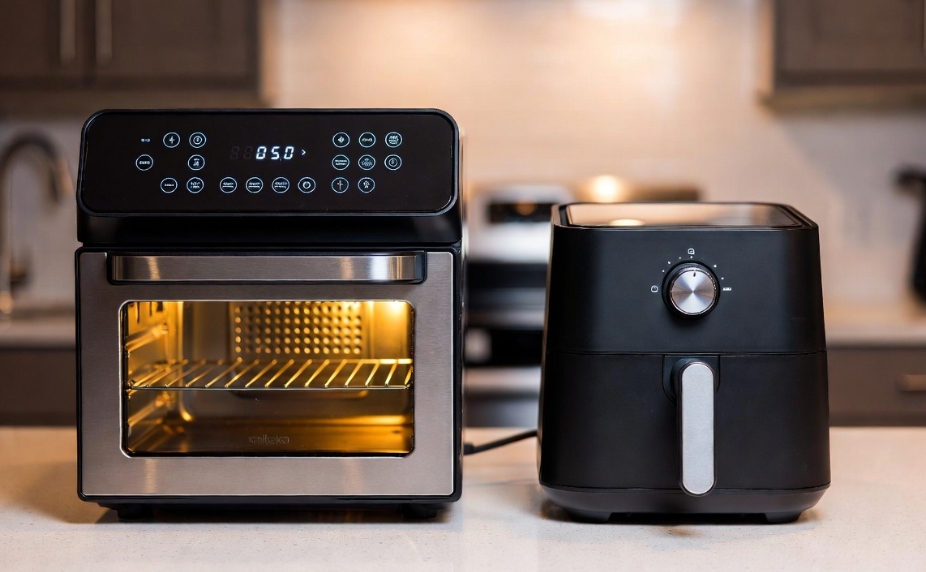
Durability and Lifespan
If you’re investing in a new kitchen appliance, you’ll want to know how long it will last. While both air fryers and ovens are built for years of regular use, their expected lifespan is very different.
In general, traditional ovens last much longer than air fryers because they are larger, more robust appliances with fewer constantly moving parts. Air fryers, although reliable, have high-speed fans and compact heating systems that experience more wear from frequent daily use. The actual lifespan of either appliance depends on build quality, usage, and maintenance.
Average Lifespan
Air Fryer
A well-maintained air fryer typically lasts 3 to 6 years with regular household use.
Factors that affect its lifespan include:
- Frequency of use
- Build quality
- Cleaning habits
- Proper ventilation
- Avoiding overheating
Premium models often last longer than budget models because they use higher-quality components and more durable non-stick coatings.
Oven
A traditional electric oven generally lasts 13 to 15 years, and many continue working well beyond that with proper maintenance.
Their longer lifespan is largely due to:
- Heavy-duty construction
- Replaceable heating elements
- Durable interiors
- Less strain on moving components
Because ovens are built into the kitchen, manufacturers also design them for long-term daily use. (consumerreports.org)
Winner: ⭐ Oven
Common Wear and Tear
Every appliance experiences wear over time.
Air Fryer
The most common issues include:
- Worn non-stick basket coating
- Fan motor wear
- Heating element problems
- Loose basket mechanisms
- Damaged power cords
- Sticky control buttons
Most of these problems develop gradually after years of frequent cooking.
Oven
Typical oven issues include:
- Heating element failure
- Faulty thermostat
- Door seal wear
- Broken oven light
- Control panel issues
- Worn door hinges
Many of these parts can be repaired or replaced without replacing the entire appliance.
Maintenance Requirements
Proper maintenance can significantly extend the life of either appliance.
Air Fryer
To keep an air fryer in good condition:
- Clean the basket after each use.
- Remove grease buildup regularly.
- Wipe the heating element occasionally.
- Avoid using metal utensils on non-stick surfaces.
- Ensure vents remain unobstructed.
- Don’t overload the basket.
Simple habits like these help maintain airflow and reduce strain on the appliance.
Oven
An oven benefits from:
- Regular interior cleaning.
- Inspecting door seals for damage.
- Replacing worn heating elements when necessary.
- Cleaning racks and grease buildup.
- Using the self-cleaning cycle correctly if available.
Because ovens are built for long-term use, routine maintenance often restores performance without major expense.
Which Appliance Is Easier to Repair?
Air Fryer
Most countertop air fryers are relatively inexpensive compared with built-in ovens.
As a result, once a major component such as the fan motor or electronic control board fails outside the warranty period, replacing the appliance is often more practical than repairing it.
Oven
Ovens are much more repair-friendly.
Many common components can be replaced individually, including:
- Heating elements
- Temperature sensors
- Door seals
- Igniters (gas models)
- Interior lights
- Control knobs
Because ovens represent a larger investment, professional repairs are often worthwhile.
Winner: ⭐ Oven
Signs Your Air Fryer Needs Replacing
You may want to replace your air fryer if you notice:
- Food no longer cooks evenly.
- The fan makes unusually loud noises.
- The basket coating is peeling.
- The appliance won’t heat properly.
- Persistent burning smells remain after cleaning.
- Controls stop responding.
If several of these issues occur together and the appliance is several years old, replacement is often the most cost-effective solution.
Signs Your Oven Needs Repair
An oven may need servicing if:
- It struggles to reach the correct temperature.
- Food cooks unevenly.
- The door no longer seals properly.
- Heating elements stop working.
- Error codes appear on the display.
- The oven trips the circuit breaker repeatedly.
Many of these issues can be repaired without replacing the entire appliance.
Which Offers Better Long-Term Value?
The answer depends on how you use it.
Air Fryer
Offers excellent value if you:
- Cook quick meals daily.
- Want lower energy costs.
- Prefer convenience.
- Don’t mind replacing the appliance after several years.
Oven
Offers better value if you:
- Cook for a family.
- Bake regularly.
- Want an appliance that can last over a decade.
- Prefer equipment that can be repaired rather than replaced.
For many households, the oven remains the long-term workhorse, while the air fryer serves as a convenient everyday companion.
Durability Comparison
| Feature | Air Fryer | Oven |
| Average Lifespan | 3–6 years | 13–15+ years |
| Repairability | ⭐⭐⭐ | ⭐⭐⭐⭐⭐ |
| Daily Convenience | ⭐⭐⭐⭐⭐ | ⭐⭐⭐⭐ |
| Long-Term Durability | ⭐⭐⭐ | ⭐⭐⭐⭐⭐ |
| Maintenance Simplicity | ⭐⭐⭐⭐⭐ | ⭐⭐⭐⭐ |
| Overall Value | ⭐⭐⭐⭐ | ⭐⭐⭐⭐⭐ |
Final Verdict: Air Fryer vs Oven – Which Cooks Better?
After comparing every major category, it’s clear that there isn’t a single winner for everyone. The best choice depends on your cooking style, household size, and the types of meals you prepare most often.
Choose an Air Fryer If You:
- Want faster cooking times.
- Love crispy foods with less oil.
- Mostly cook for one to three people.
- Want to reduce electricity use for everyday meals.
- Prefer quick cleanup and simple operation.
- Frequently cook frozen foods, fries, chicken wings, vegetables, and leftovers.
Choose an Oven If You:
- Cook for a large family.
- Bake cakes, cookies, bread, or pastries regularly.
- Prepare whole chickens, roasts, or casseroles.
- Meal prep in large batches.
- Need to cook several dishes at the same time.
- Want an appliance with a longer lifespan and greater repairability.
The Best Choice for Many Homes
If your budget and kitchen space allow, owning both appliances offers the greatest flexibility.
Use the air fryer for quick weekday meals, snacks, reheating leftovers, and crispy side dishes.
Use the oven for baking, entertaining, holiday meals, large roasts, and batch cooking.
Instead of replacing one another, these appliances complement each other. Each excels in different situations, and using the right one for the task can save time, energy, and effort.
Frequently Asked Questions
Is an air fryer better than an oven?
It depends on what you’re cooking. An air fryer is generally better for small portions, frozen foods, and crispy meals, while an oven is better for baking, roasting large cuts of meat, and cooking for families.
Does an air fryer cook faster than an oven?
Yes. Most air fryers heat up quickly and cook food faster because they circulate hot air in a compact cooking chamber.
Which is cheaper to run: an air fryer or an oven?
For small meals, an air fryer is usually cheaper to run because it uses less energy and has shorter cooking times. For large meals prepared in one session, an oven can be just as efficient.
Can an air fryer replace an oven?
For some households, yes. If you mainly cook for one or two people and rarely bake, an air fryer may handle most of your daily cooking. However, it can’t fully replace an oven for large meals, baking, or holiday cooking.
Which appliance is healthier?
Both appliances support healthy cooking. An air fryer often uses less added oil, while an oven is equally capable of preparing nutritious meals. The ingredients and cooking methods you choose have a greater impact on health than the appliance itself.
Conclusion
So, air fryer vs oven: which cooks better?
The answer depends on your priorities.
If you value speed, crispiness, energy efficiency, and convenience, the air fryer is hard to beat. It’s an excellent choice for everyday cooking and delivers impressive results with minimal effort.
If you need capacity, versatility, and long-term durability, the oven remains an essential kitchen appliance. It’s still the best option for baking, roasting, and preparing large family meals.
Rather than viewing them as competitors, think of them as complementary tools. Using each appliance for the jobs it does best will help you enjoy better cooking results and get the most value from your kitchen.