
Choosing between a Philips vs Ninja air fryer can feel surprisingly complicated, especially if you’re buying your first air fryer or upgrading from an older model. Both brands are widely trusted, both show up in expert recommendations, and both promise crispy, oil-free cooking—but they don’t deliver the same experience.
At first glance, it’s easy to assume they’re interchangeable. After all, they both air fry, roast, and reheat. But once you start using them in a real kitchen—cooking different types of meals, handling busy evenings, or preparing food for a family—the differences become much more obvious.
This is where a proper Ninja vs Philips air fryer review matters.
Philips tends to focus on controlled, even cooking. Their machines are designed to deliver consistent results with minimal effort. You don’t have to constantly check or shake your food, and meals come out evenly cooked without hot spots. It’s a more relaxed, predictable cooking experience.
Ninja, on the other hand, is built for speed and flexibility. These air fryers push hotter air, cook faster, and often come with larger baskets or even dual compartments. That makes them especially useful when you’re cooking multiple items at once or trying to get dinner on the table quickly.
So when people ask, “which is better Philips or Ninja air fryer?”, the real answer depends on how you actually cook:
- Do you value speed and crispiness, or consistency and control?
- Are you cooking for one or two people, or a full household?
- Do you want something simple, or something with more features and flexibility?
This Philips vs Ninja air fryer comparison is based on real usage—not just specs on paper. We’ll walk through cooking performance, speed, capacity, ease of use, and long-term value so you can clearly see where each brand stands.
By the end, you’ll know exactly:
- Which air fryer cooks better for your style
- Which one fits your kitchen space
- And most importantly, which one is actually worth your money in 2026
Philips vs Ninja Air Fryer Comparison (Quick Overview)
If you don’t want to read the full breakdown right away, this Philips vs Ninja air fryer comparison gives you a quick, real-world snapshot of how both brands stack up.
| Feature | Philips Air Fryer | Ninja Air Fryer |
| Cooking Style | Even, controlled heat | Fast, high-power airflow |
| Crispiness | Light to medium crisp | Deep, crunchy crisp |
| Cooking Speed | Moderate | Fast |
| Capacity | Small to mid-size | Medium to large |
| Basket Type | Single basket | Single or dual basket |
| Ease of Use | Very simple | Feature-rich |
| Noise Level | Quiet | Slightly louder |
| Best For | Daily simple cooking | Batch cooking & families |
What These Differences Actually Mean in Real Use
A table is helpful—but it doesn’t always show what happens in a real kitchen. Let’s break down the Ninja vs Philips air fryer differences in a more practical way.
#1. Cooking Style: Controlled vs Aggressive Heat
Philips air fryers are designed to cook food evenly from all sides. You’re less likely to get burnt edges or undercooked centers. This makes a big difference when cooking foods like:
- Fish
- Chicken breasts
- Vegetables
Ninja air fryers use a more aggressive airflow system. The heat hits food harder and faster, which leads to:
- Better browning
- Faster cooking
- Crispier textures
In simple terms:
- Philips = steady and controlled
- Ninja = fast and powerful
#2. Crispiness: Subtle vs Deep Crunch
One of the biggest talking points in any Philips vs Ninja air fryer comparison is texture.
- Ninja produces a deeper, crunchier finish—especially on fries and wings
- Philips gives a lighter crisp that feels more balanced and less dry
If your priority is that golden, crunchy finish, Ninja has a clear edge. But if you prefer food that stays tender inside without over-drying, Philips does a better job.
#3. Speed: Noticeable in Everyday Cooking
In daily use, speed isn’t just about numbers—it’s about convenience.
- Ninja air fryers heat up quickly and cook meals faster
- Philips takes a bit longer but keeps results consistent
For example:
- Frozen fries cook quicker in Ninja
- Chicken cooks more evenly in Philips
So when comparing Ninja vs Philips air fryer cooking speed, Ninja is faster—but Philips is more controlled.
#4. Capacity: Who Are You Cooking For?
This is where the difference becomes very practical.
- Ninja offers larger baskets and even dual compartments
- Philips focuses more on compact, space-saving designs
If you’re cooking:
- For a family → Ninja is more convenient
- For 1–2 people → Philips feels easier to manage
This is why many buyers searching for the best air fryer for family Ninja vs Philips often end up choosing Ninja.
#5. Features: Simple vs Flexible
Philips keeps things minimal:
- Basic presets
- Straightforward controls
- Less setup time
Ninja adds more flexibility:
- Multiple cooking modes
- Dual-basket syncing
- More control over how you cook
So in a Ninja vs Philips air fryer features comparison:
- Philips = simple and reliable
- Ninja = versatile and feature-packed
Quick Verdict from This Comparison
If you had to decide based only on this section:
- Choose Ninja if you want speed, crispiness, and larger capacity
- Choose Philips if you want simplicity, consistency, and quieter operation
But this is just the surface.
Brand Overview – Philips vs Ninja
When comparing a Philips vs Ninja air fryer, you’re not just choosing between two appliances—you’re choosing between two very different design philosophies.
One focuses on precision and long-term reliability, while the other leans into performance and flexibility. That difference shows up in everything from cooking results to daily usability.
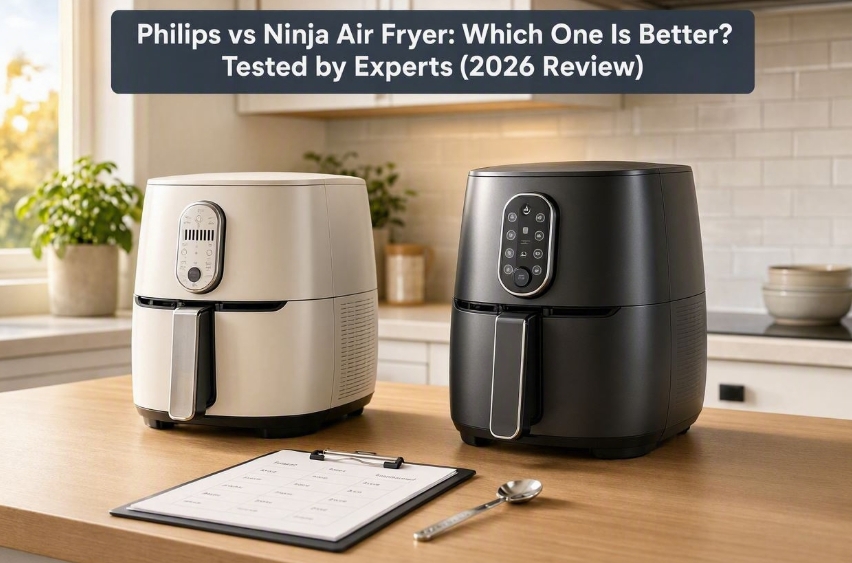
Philips Air Fryer Brand
Philips is often credited with bringing air fryers into the mainstream. Because of that, their approach has always been more refined and controlled rather than experimental.
What Philips Does Well
The biggest strength of Philips is consistency.
Their air fryers are designed to:
- Circulate heat evenly around food
- Maintain stable temperatures
- Reduce the chances of uneven cooking
This matters more than it sounds. In real use, it means:
- You don’t have to constantly shake or flip food
- Meals come out evenly cooked on all sides
- You get predictable results every time
Philips also focuses heavily on build quality. The materials feel more solid, and the non-stick coatings tend to last longer with proper care. Over time, this gives Philips an edge in durability.
Another key advantage is simplicity:
- Controls are straightforward
- Presets are easy to understand
- There’s very little learning curve
For many users, a Philips air fryer feels easier to live with day-to-day.
Where Philips Falls Short
That same focus on simplicity can also be a limitation.
- Fewer advanced features compared to competitors
- Smaller basket sizes on most models
- Slower cooking compared to high-powered units
If you’re someone who wants more control, more cooking modes, or faster results, Philips can feel a bit too basic.
Ninja Air Fryer Brand
Ninja approaches kitchen appliances very differently. Instead of focusing on just one strength, they try to combine speed, capacity, and versatility into a single product.
What Ninja Does Well
Ninja’s biggest advantage is performance.
Their air fryers are built to:
- Cook faster
- Reach higher temperatures
- Deliver crispier textures
In real kitchens, that translates to:
- Faster weeknight meals
- Better results with frozen foods
- More noticeable crisp on fries and meats
But where Ninja really stands out is flexibility.
Many models include:
- Dual-basket cooking (cook two foods at once)
- Smart syncing features
- Multiple cooking modes beyond air frying
This makes Ninja especially appealing for:
- Families
- Batch cooking
- People who want more control over their meals
A Ninja air fryer feels more like a multi-purpose cooking tool than a simple appliance.
Where Ninja Falls Short
That extra power and flexibility comes with trade-offs.
- Larger size (takes up more counter space)
- Slightly louder operation
- More complex controls for beginners
Some users also find that the aggressive heat can:
- Over-crisp food if not monitored
- Dry out certain meals
So while Ninja gives you more control, it also requires a bit more attention.
Philips vs Ninja: Brand Philosophy in One Line
If you had to sum up the Ninja vs Philips air fryer comparison at the brand level:
- Philips = dependable, simple, and consistent
- Ninja = powerful, flexible, and fast
Why This Matters Before You Buy
Most people focus only on features or price—but brand approach affects your daily experience much more than you might expect.
- If you want something that “just works” every time → Philips fits better
- If you want more control and faster cooking → Ninja makes more sense
Understanding this difference makes the rest of the comparison much easier, because every section that follows—performance, speed, capacity—builds on this foundation.
Cooking Performance – Which Air Fryer Cooks Better?
When people search for a Philips vs Ninja air fryer, what they really want to know is simple: which one cooks better?
Not on paper. Not in specs.
But in real meals—fries, chicken, vegetables, leftovers.
This is where the Ninja vs Philips air fryer performance comparison becomes very clear, because both brands take completely different approaches to cooking.
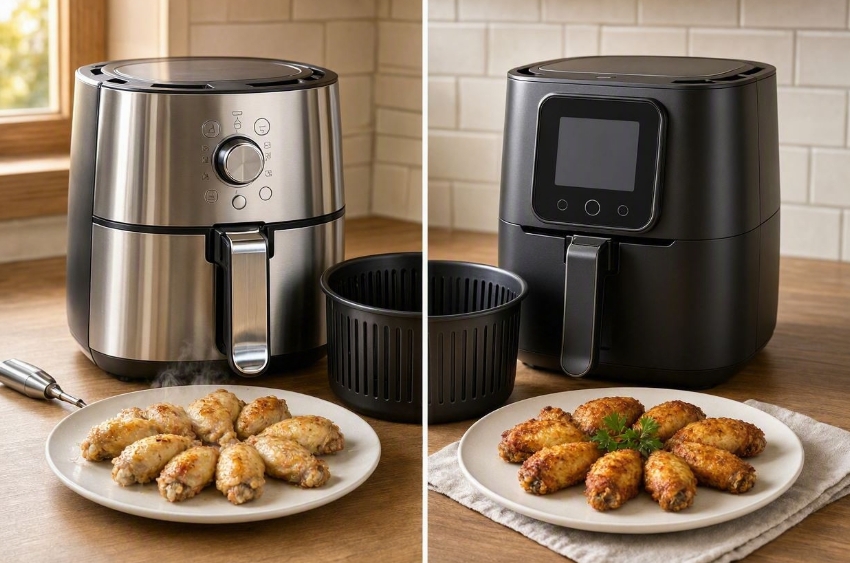
Ninja – Crispier and Faster Results
If your goal is crispy, golden, slightly crunchy food, Ninja has a clear advantage.
How Ninja Achieves This
Ninja air fryers use:
- Stronger, more aggressive airflow
- Higher heat intensity
- Faster heat circulation
This combination pushes hot air harder against the food surface, which leads to:
- Faster browning
- More caramelization
- A deeper, crunchier texture
What This Means in Real Cooking
With a Ninja air fryer, you’ll notice:
- French fries come out crispier on the outside
- Chicken wings develop a better crust
- Frozen snacks cook faster and don’t feel soggy
Even without flipping food as often, you still get that “fried-like” finish.
This is why in most Ninja vs Philips air fryer crispiness comparisons, Ninja consistently comes out ahead.
Where Ninja Can Struggle
That aggressive cooking style isn’t perfect for everything.
- Lean meats can dry out faster
- Delicate foods may overcook on the edges
- You sometimes need to monitor food more closely
So while Ninja excels at crisping, it can be a bit unforgiving if you’re not paying attention.
Philips – Even and Consistent Cooking
Philips takes a completely different approach. Instead of pushing heat aggressively, it focuses on balanced airflow and temperature control.
How Philips Achieves This
Philips air fryers use their signature airflow design to:
- Distribute heat evenly around the food
- Maintain stable temperatures
- Reduce hot spots inside the basket
The goal isn’t maximum crisp—it’s uniform cooking from all sides.
What This Means in Real Cooking
With a Philips air fryer, you’ll notice:
- Chicken breasts cook evenly without drying out
- Fish and vegetables retain moisture and texture
- Reheated food doesn’t become overly crispy or burnt
You also don’t need to:
- Shake the basket as often
- Rotate food constantly
In terms of Philips vs Ninja air fryer performance comparison, Philips wins for consistency.
Where Philips Can Feel Limited
- Food doesn’t get as deeply crispy as Ninja
- Cooking can take slightly longer
- Results may feel “softer” for users who prefer crunch
So while Philips is more forgiving, it may not satisfy someone chasing that extra crisp.
Side-by-Side Real Cooking Examples
To make this clearer, here’s how both brands handle common foods:
French Fries
- Ninja: Faster, crispier, more golden
- Philips: Evenly cooked, slightly softer
Chicken Wings
- Ninja: Crunchy skin, restaurant-style finish
- Philips: Juicy inside, lightly crisp outside
Vegetables
- Ninja: More roasted, slightly charred edges
- Philips: Even texture, less risk of burning
Reheating Food
- Ninja: Can over-crisp if not careful
- Philips: More controlled and gentle
So, Which Air Fryer Cooks Better?
If you’re asking “which air fryer cooks better Ninja or Philips?”, the honest answer is:
- For crispiness and speed → Ninja wins
- For even cooking and consistency → Philips wins
Performance Verdict (Simple Breakdown)
Choose Ninja if:
- You love crispy, crunchy textures
- You cook a lot of frozen foods
- You want fast results
Choose Philips if:
- You want evenly cooked meals
- You cook delicate or fresh foods often
- You prefer a more forgiving cooking process
This section alone usually decides it for most people—but there’s more to consider.
Cooking Speed – Which Air Fryer Is Faster?
When comparing a Philips vs Ninja air fryer, speed isn’t just a nice bonus—it can completely change how often you use the appliance.
If an air fryer saves you time on busy days, it becomes part of your routine. If it feels slow, you’ll end up going back to your stove or oven.
So in this Ninja vs Philips air fryer cooking speed comparison, the difference is worth paying attention to.
Ninja Air Fryer: Built for Speed
Ninja air fryers are designed to cook quickly, and you’ll notice it almost immediately.
Why Ninja Is Faster
- More powerful heating elements
- Stronger fan circulation
- Faster preheating time
These three factors work together to reduce overall cooking time—not just by a few seconds, but in a way that actually feels noticeable.
Real-Life Speed Examples
Here’s what that looks like in everyday cooking:
- Frozen fries:
Ninja finishes faster and still delivers a crisp texture - Chicken wings:
Shorter cook time with better browning - Leftovers:
Heat up quickly without waiting long for preheat
In many cases, Ninja can be 10–20% faster than Philips, especially for high-heat foods.
👉 If you often cook in a hurry, this advantage adds up quickly.
Philips Air Fryer: Slower but More Controlled
Philips air fryers aren’t slow—but they don’t prioritize speed the same way Ninja does.
Why Philips Takes More Time
- More controlled airflow
- Focus on even heat distribution
- Less aggressive heating
Instead of rushing the cooking process, Philips aims to maintain steady, even temperatures throughout.
What This Means in Real Use
- Food cooks more evenly from start to finish
- Less chance of undercooked centers
- No need to rush or constantly adjust settings
For example:
- Chicken cooks thoroughly without drying out
- Vegetables don’t burn on the edges before the inside is done
👉 So while it’s slower, it’s also more predictable.
Preheating: A Small Detail That Matters
Preheating often gets overlooked, but it plays a big role in perceived speed.
- Ninja: Heats up quickly, sometimes almost instantly usable
- Philips: May take a bit longer before reaching optimal temperature
Over time, this difference makes Ninja feel more responsive—especially when you’re cooking multiple meals a day.
Does Faster Always Mean Better?
Not necessarily.
Speed is great, but it comes with trade-offs:
With Ninja
- Faster cooking can lead to over-crisping
- You may need to check food more often
With Philips
- Slower cooking gives more control
- Less risk of burning or uneven results
So the better choice depends on your cooking habits.
Speed Verdict (Simple Breakdown)
If you’re deciding based on which air fryer is faster Ninja or Philips, here’s the clear answer:
- Ninja = faster, more efficient for quick meals
- Philips = slower, but more controlled and consistent
Who Benefits Most from Each?
Choose Ninja if:
- You cook on tight schedules
- You want quick weeknight meals
- You reheat food often
Choose Philips if:
- You don’t mind a slightly longer cook time
- You prefer accuracy over speed
- You want “set it and relax” cooking
Speed is important—but it’s only one part of the decision.
Capacity and Size – Which One Fits Your Kitchen?
When comparing a Philips vs Ninja air fryer, capacity isn’t just about how much food fits inside. It directly affects:
- How many people you can cook for
- How often you need to cook in batches
- How much counter space you’ll lose
This is where the Ninja vs Philips air fryer capacity difference becomes very practical.
Ninja – Best for Families and Batch Cooking
Ninja clearly leans toward larger, more flexible cooking space, and it shows in most of their models.
What You Get with Ninja
- Bigger baskets overall
- Options for dual-basket cooking
- Ability to cook multiple foods at once
Some Ninja models even let you:
- Cook fries in one basket and chicken in another
- Sync cooking times so both finish together
What This Means in Real Life
If you’re cooking for:
- A family of 3–6 people
- Guests or gatherings
- Meal prep for the week
Ninja becomes much more convenient.
You won’t have to:
- Cook in multiple rounds
- Wait between batches
- Reheat food while the rest finishes
👉 This is why, in most cases, the best air fryer for family Ninja vs Philips comparison favors Ninja.
But There’s a Trade-Off
That extra space comes with a few downsides:
- Takes up more counter space
- Heavier and harder to move
- Requires more storage if not left out
So while Ninja is great for capacity, it’s not ideal for tight kitchens.
Philips – Best for Small Kitchens and Everyday Use
Philips takes a different approach, focusing on compact and efficient design.
What You Get with Philips
- Smaller footprint
- Lighter build
- Easier to store in cabinets
Most Philips air fryers are designed for:
- Individuals
- Couples
- Small households
What This Means in Real Life
If you’re:
- Cooking for 1–3 people
- Using limited kitchen space
- Looking for something easy to handle
Philips feels much more manageable.
You can:
- Keep it on the counter without clutter
- Store it away easily after use
- Cook quick meals without dealing with a large basket
👉 That’s why Philips vs Ninja air fryer for small kitchens usually points toward Philips.
The Limitation You’ll Notice
- Smaller basket means less food per cycle
- You may need to cook in batches for larger meals
- Not ideal for big portions or entertaining
So while it’s convenient, it’s not built for heavy-duty cooking.
Single Basket vs Dual Basket: Does It Matter?
This is one of the biggest differences in the Ninja vs Philips air fryer comparison.
Ninja (Dual Basket Models)
- Cook two different foods at once
- Set different temperatures and times
- Sync both sides to finish together
Philips
- Mostly single-basket designs
- Focus on simplicity over multitasking
Real Cooking Example
Let’s say you’re making dinner:
- With Ninja:
Fries in one basket, chicken in the other—done at the same time - With Philips:
You cook one first, then the other
That difference alone can save a lot of time in busy households.
How to Choose the Right Size for You
Here’s a simple way to decide:
Choose Ninja If:
- You cook for more than 3 people regularly
- You want to cook full meals in one go
- You value flexibility and multitasking
Choose Philips If:
- You cook smaller portions
- You have limited kitchen space
- You want something lightweight and easy to handle
Capacity Verdict (Simple Breakdown)
- Ninja = larger, more flexible, better for families
- Philips = compact, simple, better for small homes
This is one of those decisions that affects your daily experience more than you expect—so it’s worth getting right.
Ease of Use and Cleaning
A lot of people focus on performance and features when comparing a Philips vs Ninja air fryer, but in reality, ease of use is what determines whether you enjoy using it daily—or get frustrated over time.
Both brands are user-friendly, but they take very different approaches. In this Ninja vs Philips air fryer ease of use comparison, it comes down to simplicity vs flexibility.
Philips – Simple, Straightforward, and Beginner-Friendly
Philips air fryers are designed to be as intuitive as possible. You don’t need to spend time figuring things out—it just works.
What Makes Philips Easy to Use
- Clear, minimal controls
- Easy-to-understand presets
- Fewer settings to manage
- Consistent results without constant adjustments
Most models follow a simple pattern:
- Set temperature
- Set time
- Start cooking
That’s it.
What This Feels Like in Daily Use
With Philips, cooking feels more relaxed:
- You don’t need to check food constantly
- You don’t need to tweak settings often
- You can rely on repeatable results
It’s especially helpful if:
- You’re new to air fryers
- You don’t want to experiment too much
- You prefer a “set it and forget it” approach
👉 This is why many people consider Philips the easier option in a Philips vs Ninja air fryer comparison.
Where Philips Can Feel Limited
- Fewer cooking modes
- Less customization
- Not ideal if you like experimenting with recipes
So while it’s simple, it may feel restrictive for more advanced users.
Ninja – Feature-Rich but Slightly More Involved
Ninja air fryers give you more control—but that comes with a bit of a learning curve.
What You Get with Ninja
- Multiple cooking functions (air fry, roast, bake, reheat, etc.)
- Digital controls with more options
- Dual-basket syncing (on certain models)
At first glance, this can feel like a lot—but it also gives you more flexibility.
What This Feels Like in Daily Use
With Ninja, you’ll notice:
- More control over how your food cooks
- Ability to handle more complex meals
- Better flexibility for different recipes
For example:
- You can cook two foods at different temperatures
- You can adjust settings mid-cook for better results
👉 In a Ninja vs Philips air fryer ease of use comparison, Ninja is more powerful—but slightly less straightforward.
Where Ninja Can Be Challenging
- More buttons and settings to learn
- Slightly steeper learning curve for beginners
- You may need to experiment to get the best results
Once you get used to it, it becomes second nature—but it’s not as instantly intuitive as Philips.
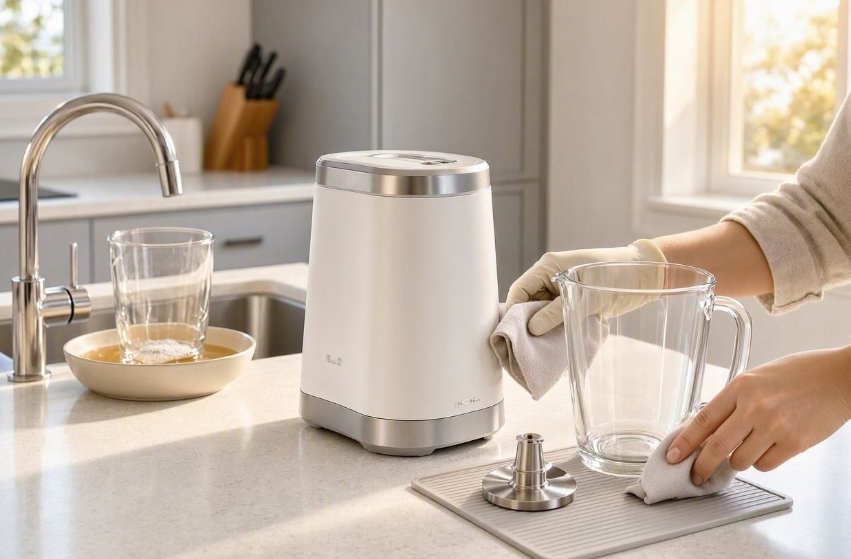
Cleaning – Which One Is Easier to Maintain?
Cleaning is something you’ll deal with after every use, so it matters more than most people think.
Philips Cleaning Experience
- Smaller basket = quicker to clean
- Non-stick coating holds up well over time
- Less surface area for grease buildup
For light daily cooking, Philips is very convenient.
Ninja Cleaning Experience
- Larger baskets require more effort
- Dual baskets mean double the cleaning (on some models)
- Most parts are dishwasher-safe
If you cook large meals often, expect slightly more cleanup time.
Real-World Cleaning Example
After cooking something like chicken wings:
- Philips:
Quick rinse and wipe, done in minutes - Ninja:
More grease spread across a larger basket (or two), takes longer
Ease of Use & Cleaning Verdict
When comparing a Philips vs Ninja air fryer, noise might not seem like a big deal—but in daily use, it can quickly become noticeable, especially in smaller kitchens or open living spaces.
Air fryers rely on powerful fans to circulate hot air, so some level of noise is unavoidable. The real question is: how loud, and how often will you notice it?
Philips Air Fryer – Quieter and Smoother Operation
Philips air fryers are generally known for quieter, more controlled operation.
Why Philips Is Quieter
- More balanced airflow system
- Slightly lower fan intensity
- Focus on steady heat distribution rather than aggressive circulation
What This Feels Like in Real Use
With a Philips air fryer:
- The sound is softer and more consistent
- It blends into the background more easily
- You can comfortably hold a conversation nearby
It’s not silent—but it’s less intrusive, especially during longer cooking sessions.
👉 In a Philips vs Ninja air fryer noise level comparison, Philips usually feels more refined.
Ninja Air Fryer – Louder but More Powerful
Ninja air fryers tend to be slightly louder, and there’s a reason for that.
Why Ninja Is Louder
- Stronger fan for faster airflow
- Higher cooking power
- More aggressive heat circulation
That extra performance comes with a bit more sound.
What This Feels Like in Real Use
With a Ninja air fryer:
- You’ll hear a stronger fan noise
- It’s more noticeable in quiet environments
- It can sound similar to a small convection oven
It’s not excessively loud—but it’s definitely more present than Philips.
Does Noise Really Matter?
It depends on your kitchen setup and habits.
Noise Matters More If:
- You have a small kitchen
- Your kitchen is close to your living room
- You cook early in the morning or late at night
- You prefer a quieter environment
Noise Matters Less If:
- You’re used to kitchen appliances (blenders, ovens, etc.)
- You prioritize performance over comfort
- You cook in a busy or noisy space
Side-by-Side Experience
- Philips:
Feels quieter, smoother, less distracting - Ninja:
Slightly louder, but also more powerful
Noise Verdict (Simple Breakdown)
- Philips = quieter and more comfortable for everyday use
- Ninja = louder, but not a dealbreaker for most users
Which Should You Choose Based on Noise?
Choose Philips if:
- You want a quieter kitchen
- You’re sensitive to appliance noise
- You cook frequently throughout the day
Choose Ninja if:
- Noise isn’t a concern
- You prioritize speed and performance
- You’re okay with a stronger fan sound
Noise might seem like a small detail, but over time, it can influence how enjoyable your cooking experience feels.
Who Should Choose What?
Choose Philips if:
- You want something simple and stress-free
- You don’t want to deal with too many settings
- You prefer quick cleanup
Choose Ninja if:
- You want more control over cooking
- You don’t mind learning the system
- You cook larger or more complex meals
Ease of use might not seem like a big deal at first—but over time, it’s one of the biggest factors in satisfaction.
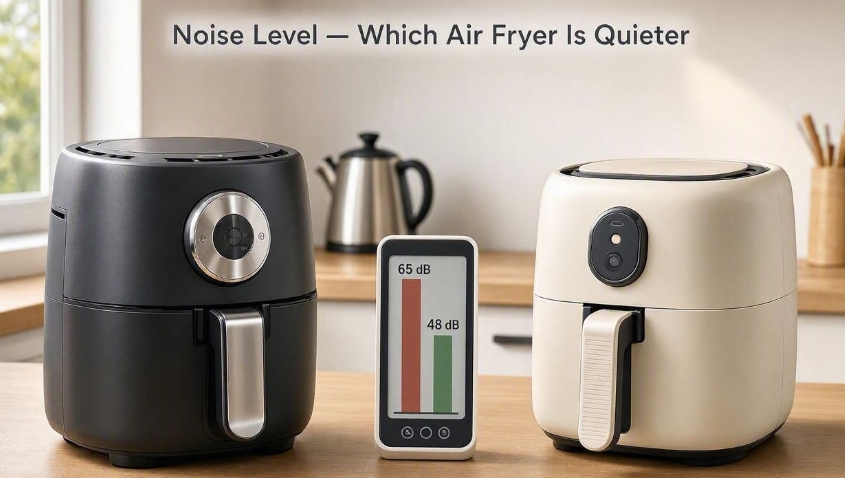
Noise Level – Which Air Fryer Is Quieter?
When comparing a Philips vs Ninja air fryer, noise might not seem like a big deal—but in daily use, it can quickly become noticeable, especially in smaller kitchens or open living spaces.
Air fryers rely on powerful fans to circulate hot air, so some level of noise is unavoidable. The real question is: how loud, and how often will you notice it?
Philips Air Fryer – Quieter and Smoother Operation
Philips air fryers are generally known for quieter, more controlled operation.
Why Philips Is Quieter
- More balanced airflow system
- Slightly lower fan intensity
- Focus on steady heat distribution rather than aggressive circulation
What This Feels Like in Real Use
With a Philips air fryer:
- The sound is softer and more consistent
- It blends into the background more easily
- You can comfortably hold a conversation nearby
It’s not silent—but it’s less intrusive, especially during longer cooking sessions.
👉 In a Philips vs Ninja air fryer noise level comparison, Philips usually feels more refined.
Ninja Air Fryer – Louder but More Powerful
Ninja air fryers tend to be slightly louder, and there’s a reason for that.
Why Ninja Is Louder
- Stronger fan for faster airflow
- Higher cooking power
- More aggressive heat circulation
That extra performance comes with a bit more sound.
What This Feels Like in Real Use
With a Ninja air fryer:
- You’ll hear a stronger fan noise
- It’s more noticeable in quiet environments
- It can sound similar to a small convection oven
It’s not excessively loud—but it’s definitely more present than Philips.
Does Noise Really Matter?
It depends on your kitchen setup and habits.
Noise Matters More If:
- You have a small kitchen
- Your kitchen is close to your living room
- You cook early in the morning or late at night
- You prefer a quieter environment
Noise Matters Less If:
- You’re used to kitchen appliances (blenders, ovens, etc.)
- You prioritize performance over comfort
- You cook in a busy or noisy space
Side-by-Side Experience
- Philips:
Feels quieter, smoother, less distracting - Ninja:
Slightly louder, but also more powerful
Noise Verdict (Simple Breakdown)
- Philips = quieter and more comfortable for everyday use
- Ninja = louder, but not a dealbreaker for most users
Which Should You Choose Based on Noise?
Choose Philips if:
- You want a quieter kitchen
- You’re sensitive to appliance noise
- You cook frequently throughout the day
Choose Ninja if:
- Noise isn’t a concern
- You prioritize speed and performance
- You’re okay with a stronger fan sound
Noise might seem like a small detail, but over time, it can influence how enjoyable your cooking experience feels.
Features and Technology
When comparing a Philips vs Ninja air fryer, performance and cooking results only tell part of the story. The technology and features inside each machine define how you use it, what you can cook, and how satisfying the overall experience feels.
In this section, we’ll break down the technology philosophy behind both brands — what they offer, how it affects everyday use, and why Ninja’s feature set often feels more versatile while Philips keeps things elegantly simple.
How Features Affect Your Cooking Experience
Features aren’t just bells and whistles — they determine:
- How many types of foods you can cook well
- How much control you have over the process
- Whether you need extra appliances in the kitchen
- How often you need to monitor your food
So let’s unpack both brands in a practical way.
Ninja Features: Packed for Flexibility and Kitchen Power
Ninja air fryers often feel more like mini cooking stations than simple appliances. Their technology is built to do more than just air fry — and in many cases, it replaces the need for other countertop devices.
1. Dual‑Basket Cooking (on Select Models)
One of Ninja’s most practical innovations.
What it does:
- Two independent cooking baskets
- Each basket can run different temperatures and times
- Finish both foods together with sync‑play features
Why it matters:
- Cook fries in one side and chicken in the other
- Reheat different foods without flavor transfer
- Perfect for family meals or mix‑and‑match dinners
No more cooking in two batches — that’s real time savings.
2. Smart Sync and Match Cook Technologies
These features take the guesswork out of multi‑dish cooking.
Smart Sync
Automatically adjusts the second basket’s time so both baskets finish together — no monitoring required.
Match Cook
Copies the same settings to both baskets with one touch — helpful when cooking two large portions of the same food.
Why it matters:
Meals finish together without timing headaches — especially useful for complex dinners.
3. Multiple Cooking Functions Built‑In
Ninja often adds more functions than just air frying.
Typical modes include:
- Air fry
- Roast
- Bake
- Reheat
- Dehydrate (on some models)
- Broil / grill (on some models)
Why it matters:
You don’t need an air fryer plus a toaster oven plus a dehydrate rack — Ninja covers them in one device.
4. High‑Power Airflow and Rapid Crisp Technology
Ninja’s internal design pushes hot air harder and faster.
Results you’ll notice:
- Shorter cook times
- Deep, golden crispiness
- Better browning on frozen foods
The trade‑off is that heat is aggressive — and some foods may need monitoring to avoid over‑crisping.
5. Intuitive Digital Controls With Text Display
Unlike simple dials, many Ninja models feature:
- Full digital screens
- Clear text menus
- Preset options for different foods
This makes it easier to:
- Select a cooking style
- Adjust the time without guesswork
- Know exactly what mode you’re in
6. Advanced Safety and Cooling Design
Good airflow management results not only in faster cooking — it also helps:
- Reduce heat buildup around the unit
- Keep exterior surfaces slightly cooler
- Avoid hot spots that stress components
This improves longevity and daily safety.
Philips Features: Simple, Focused, and Effective
Philips takes a different route. Instead of packing in every feature possible, they focus on doing a few things extremely well.
Their philosophy is “less, but better” — and in many kitchens, that’s exactly what users want.
1. Rapid Air Technology
Philips’ signature tech.
How it works:
- Circular airflow system
- Even distribution of heat
- Gentle yet consistent circulation
Why it matters:
You get:
- Uniform results
- Less hot‑spot cooking
- Predictable outcomes on every cycle
It’s not about being the fastest — it’s about being even and dependable.
2. Straightforward Preset Options
Philips keeps usability simple with presets that are:
- Easy to understand
- Clearly labeled
- Designed around common foods
This means less reading, less fiddling, and fewer mistakes.
3. Minimalist Control Panel
Most Philips air fryers use:
- Simple knobs
- Basic digital timers
- Minimal button clutter
This makes them a great choice for users who:
- Don’t enjoy complex control layouts
- Just want reliable performance without a learning curve
4. Durable Build Quality
Philips focuses on solid construction:
- Sturdy baskets
- Long‑lasting coatings
- Stable temperature control over time
Many owners find their Philips units still perform well after years of regular use — and continue to feel like new.
5. Focus on Core Cooking, Not Extras
Instead of layering features, Philips prioritizes excellence in the essentials:
- Even heat distribution
- Predictable results
- No overhyped functions users rarely use
This makes Philips ideal for cooks who:
- Don’t need advanced operations
- Cook simple daily meals
- Want consistency over variety
Feature Comparison: At a Glance
| Feature | Ninja Air Fryer | Philips Air Fryer |
| Dual Basket | ✔️ (select models) | ❌ |
| Smart Sync / Match Cook | ✔️ | ❌ |
| Multiple Functions | ✔️ | Basic |
| Rapid Crisping | ✔️ | Mild |
| Presets | Advanced | Simple |
| Controls | Digital, feature‑rich | Simple and intuitive |
| Build Focus | Flexible cooking | Consistent performance |
How to Choose Based on Features
Choose Ninja If You Want…
✔ Advanced cooking modes
✔ Multi‑dish capability
✔ Faster, crispier results
✔ High‑flexibility kitchen tool
✔ Built‑in features that replace other appliances
Ninja doesn’t just air fry — it extends your kitchen’s capabilities.
Choose Philips If You Want…
✔ Predictability over complexity
✔ A straightforward air fryer you can trust
✔ Easy learning curve for beginners
✔ Quiet, consistent performance
✔ Less cluttered control panel
Philips is perfect if you want reliability without the noise of extra features.
Why These Differences Matter
Features define more than convenience — they define:
- Your daily cooking habits
- How you handle meals under time pressure
- Whether the air fryer feels helpful or frustrating
- How much you use the appliance over time
At the end of the day, the best air fryer isn’t the one with the most features — it’s the one that fits your cooking style.
Durability and Long-Term Value
If you’re thinking long-term, this matters.
- Philips models are known for lasting longer
- Better coating durability
- Stable performance over time
Ninja is still reliable, but more focused on performance than longevity.
👉 So in terms of Philips vs Ninja air fryer worth it, Philips often wins for long-term use.
Price and Value for Money
Price often drives the final decision in a Philips vs Ninja air fryer comparison. Both brands are respected, but they approach pricing differently based on features, technology, and target users.
Understanding value for money means looking beyond the sticker price — considering capacity, durability, versatility, and how often you’ll use it.
Ninja Air Fryer – Premium Features, Higher Price
Ninja air fryers tend to sit in the mid-to-high price range, and here’s why:
What You’re Paying For
- Larger baskets or dual-basket models
- Multi-functionality (air fry, roast, bake, dehydrate, etc.)
- Faster cooking and crispier results
- Digital controls with advanced presets
Value in Real Life
If you cook frequently or for a family, Ninja’s higher price is justified. Features like dual-basket cooking and faster performance can save time and reduce the need for extra appliances.
Who Gets the Best Value from Ninja
- Busy families who cook multiple meals per day
- Users who want crispier results or high-speed cooking
- Cooks who like experimenting with recipes and using multiple functions
Even though the initial cost is higher, the time saved and versatility gained can outweigh the price difference over time.
Philips Air Fryer – Simplicity at a Lower Price
Philips offers models in the mid-range to slightly lower price points. While they may lack Ninja’s extra features, they provide consistent and reliable cooking, which many users value more than bells and whistles.
What You’re Paying For
- Proven build quality and longevity
- Rapid Air technology for even cooking
- Easy-to-use presets and controls
Value in Real Life
Philips is perfect for smaller households or beginners, where simplicity and reliability are more important than large capacity or multi-functionality.
Who Gets the Best Value from Philips
- Individuals or couples who cook small meals regularly
- Users who prioritize predictability and ease of use
- Those who want an appliance that lasts without a steep learning curve
The lower price plus durability often makes Philips a smart, cost-effective choice.
Price Comparison Table (2026 Average Pricing)
| Brand | Typical Price Range | What You Get | Best For |
| Ninja | $130–$250+ | Large baskets, dual-basket models, multiple cooking functions | Families, frequent cooks, advanced users |
| Philips | $110–$200 | Compact, consistent cooking, beginner-friendly presets | Individuals, small households, simple meals |
Tip: Always consider your daily usage and meal prep needs. A more expensive model may save you time and effort, which is a type of hidden value.
Bottom Line on Value
- Ninja = higher upfront cost, more features, better for versatile cooking and large meals
- Philips = lower cost, simpler, reliable, better for predictable everyday use
In other words, the right choice depends on your cooking habits, household size, and how much value you place on extra features versus simplicity.
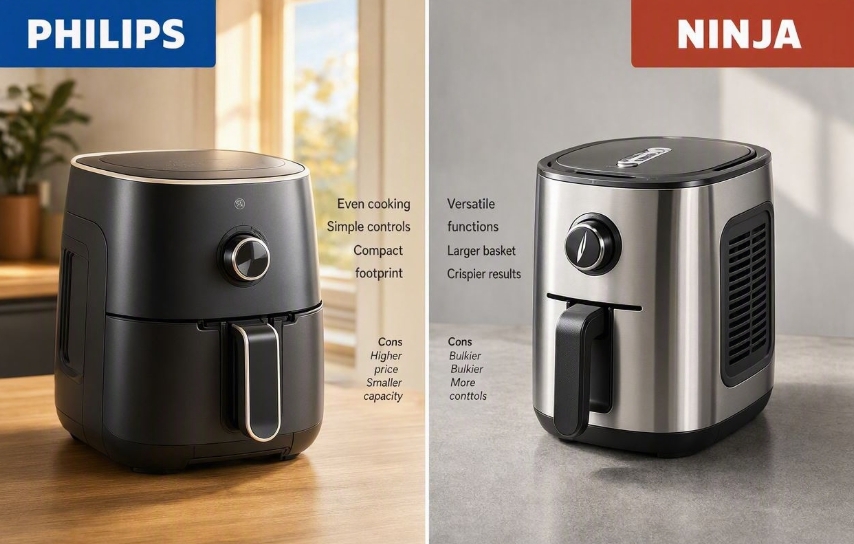
Pros and Cons of Philips vs Ninja Air Fryer
By this point, you’ve seen how both brands perform. But when it comes down to making a decision, a clear pros and cons breakdown helps you quickly see which one fits your needs.
This section simplifies the entire Philips vs Ninja air fryer comparison into practical strengths and weaknesses—based on real everyday use, not just features on paper.
Philips Air Fryer
Pros
1. Consistent and Even Cooking
One of the biggest advantages of a Philips air fryer is how evenly it cooks food.
- Heat circulates in a balanced way
- Food cooks through without hot spots
- Less risk of burnt edges and raw centers
This makes it especially reliable for:
- Chicken breasts
- Fish
- Vegetables
👉 If you care about predictable results, Philips stands out.
2. Easy to Use (Beginner-Friendly)
Philips keeps things simple—and that’s a big win for many users.
- Straightforward controls
- Minimal settings to adjust
- No steep learning curve
You don’t need to experiment much to get good results. It’s ideal if you just want something that works without effort.
3. Quieter Operation
Compared to Ninja, Philips runs more quietly.
- Less aggressive fan noise
- More comfortable for daily use
- Better for small or open kitchens
Over time, this makes a noticeable difference.
4. Durable Build Quality
Philips air fryers are known for lasting longer.
- Stronger materials
- Better non-stick coating durability
- Stable performance over time
This adds long-term value, especially if you use your air fryer frequently.
5. Compact and Space-Saving
Most Philips models are easier to fit into smaller kitchens.
- Takes up less counter space
- Easier to store
- Lighter and easier to move
👉 Great for apartments or limited kitchen setups.
Cons
1. Smaller Capacity
Philips air fryers are not built for large meals.
- Limited basket size
- Not ideal for families
- May require batch cooking
If you cook for multiple people, this can become inconvenient.
2. Slower Cooking Speed
Compared to Ninja, Philips is less aggressive with heat.
- Longer cooking times
- Slower preheating
It’s not slow—but it’s not built for speed.
3. Less Crispiness
While food cooks evenly, it doesn’t get as crunchy.
- Fries may be softer
- Less “deep-fried” texture
If you’re chasing crispiness, this can feel like a limitation.
4. Fewer Features
Philips focuses on simplicity, which means:
- Fewer cooking modes
- Less customization
- No dual-basket options
For advanced users, it may feel too basic.
Ninja Air Fryer
Pros
1. Faster Cooking Performance
Ninja air fryers are built for speed.
- Stronger airflow
- Faster cooking times
- Quick preheating
This is a big advantage for busy households.
2. Crispier Results
If texture matters to you, Ninja delivers.
- Better browning
- Crunchier fries and wings
- More “fried-like” finish
👉 In most Ninja vs Philips air fryer crispiness comparisons, Ninja clearly wins.
3. Larger Capacity
Ninja models are designed for bigger portions.
- Larger baskets
- Dual-basket options
- Ideal for families
You can cook more food at once without splitting meals into batches.
4. More Features and Flexibility
Ninja gives you more ways to cook.
- Multiple cooking modes
- Dual-zone cooking
- Smart syncing features
This makes it more versatile for different recipes.
5. Great for Batch Cooking
Because of the size and flexibility:
- You can cook full meals in one go
- You save time on multiple dishes
- Perfect for meal prep
Cons
1. Noisier Operation
Ninja air fryers are louder due to stronger fans.
- More noticeable during use
- Can be distracting in quiet spaces
Not a dealbreaker—but definitely noticeable.
2. Bulkier Design
With larger capacity comes more size.
- Takes up more counter space
- Harder to store
- Heavier to move
This can be a problem in smaller kitchens.
3. Slight Learning Curve
More features mean more complexity.
- More buttons and settings
- Takes time to learn
- Not as beginner-friendly
Once you get used to it, it’s fine—but it’s not as simple as Philips.
4. Can Overcook Food
Because of the aggressive heat:
- Food can dry out if not monitored
- Edges may over-crisp
You’ll need to pay more attention while cooking.
Final Pros & Cons Verdict
When you step back and look at the full Philips vs Ninja air fryer pros and cons, the difference is very clear:
- Philips = simple, reliable, and consistent
- Ninja = powerful, fast, and versatile
Quick Decision Guide
- Choose Philips if you want:
- Easy, stress-free cooking
- Even results every time
- A quieter, compact appliance
- Choose Ninja if you want:
- Faster meals
- Crispier food
- Larger capacity and more features
Real User Opinions and Feedback
Looking at real-world Ninja vs Philips air fryer review trends:
- Many users love Ninja for its speed and dual-basket convenience
- Philips users often highlight consistency and reliability
A common pattern:
- Ninja feels exciting and powerful
- Philips feels steady and dependable
Who Should Buy Philips vs Ninja Air Fryer?
When it comes down to choosing between a Philips air fryer and a Ninja air fryer, the answer isn’t just about “which one is better”—it’s about what kind of cook you are, how you use your kitchen, and what you want out of your air fryer.
Below, we break it down into clear buyer profiles so you can match your needs with the right choice.
Choose Philips Air Fryer If…
⭐ You Want Simple, Predictable Cooking
Philips air fryers are built to be easy to use with straightforward controls and reliable results. If you want something that works well without much tweaking, Philips is ideal.
Best for you if:
- You’re new to air fryers
- You don’t enjoy fiddling with settings
- You want set‑and‑forget meals
🧑🍳 You Cook Delicate Foods Often
Because Philips emphasizes even heat distribution, it’s great for foods that need stable, gentle cooking:
- Fish and seafood
- Vegetables
- Reheated meals
These tend to cook more evenly in Philips models, with less risk of drying out or uneven browning.
🏡 You Have a Small Kitchen or Limited Space
Philips air fryers are usually compact and lighter. If storage and counter space matter, Philips gives you reliable performance without dominating your kitchen.
Perfect if you:
- Live in an apartment
- Have limited counter space
- Prefer lightweight, easy‑to‑store appliances
🔇 You Prefer a Quieter Kitchen
Philips models are generally quieter in daily operation compared to Ninja, which makes them a comfortable choice for open‑plan living or small spaces.
💡 You Want Proven Long‑Term Reliability
Philips air fryers are known for solid build quality and lasting performance. If you want something that becomes a trusty kitchen tool, this is a strong point.
Summary: Philips Is Best If You Want
✔ Easy everyday cooking
✔ Consistency over speed
✔ Quiet and compact design
✔ Minimal learning curve
Choose Ninja Air Fryer If…
🔥 You Prioritize Speed and Performance
Ninja air fryers cook food faster and crisper, thanks to powerful airflow and higher heat intensity. If speed matters in your kitchen, Ninja delivers results more quickly without sacrificing texture.
Perfect if you:
- Want crispier fries and wings
- Cook frozen foods often
- Like high‑heat results
🍽 You Cook for a Family or Larger Group
Many Ninja models come with larger baskets and dual‑basket options, making it easy to cook bigger portions or two foods at once — ideal for:
- Weeknight family dinners
- Preparing multiple dishes
- Meal prepping for several days
💪 You Want More Control and Flexibility
Ninja air fryers tend to include multiple cooking functions and settings, giving you more options for different types of meals.
Useful if you:
- Like experimenting with recipes
- Cook a variety of foods regularly
- Want the ability to adjust settings mid‑cook
🧠 You Don’t Mind a Learning Curve
With more features comes a bit more complexity. Ninja’s controls and options may feel overwhelming at first — but once you get used to them, they reward you with better performance and flexibility.
🍳 You Want Multi‑Purpose Cooking Power
Many Ninja models support functions beyond basic air frying — things like:
- Roast
- Bake
- Reheat
- Dual‑zone cooking
👉 This means you can replace or supplement other appliances in your kitchen.
Summary: Ninja Is Best If You Want
✔ Fast cooking and crispier food
✔ Large capacity for families
✔ Flexibility and advanced features
✔ Dual‑zone cooking and multi‑function use
Quick Buyer Decision Chart
| Need / Priority | Best Choice |
| Beginner – easy to use | Philips |
| Quiet operation | Philips |
| Even, controlled heat | Philips |
| Large meals for family | Ninja |
| Crispy, quick cooking | Ninja |
| Dual‑basket flexibility | Ninja |
| More cooking modes | Ninja |
Practical Examples
Scenario #1: Small Household, Simple Meals
You live alone or with 1–2 people. You cook basic meals, vegetables, and reheated leftovers.
➡ Philips air fryer fits your lifestyle.
Scenario #2: Family With Busy Weeknights
You have kids, limited time, and need quick, bigger‑batch cooking.
➡ Ninja air fryer gives you the capacity and speed you need.
Scenario #3: You Love Trying New Recipes
You like experimenting with different foods and cooking styles.
➡ Ninja air fryer gives you more flexibility.
Scenario #4: You Prefer Hassle‑Free Kitchen Tools
You want something that “just works” with minimal fuss.
➡ Philips air fryer makes daily cooking effortless.
FAQs
Is Ninja better than Philips air fryer?
Ninja is better for speed and crispiness, while Philips is better for even cooking and durability.
Which air fryer lasts longer?
Philips air fryers generally last longer due to stronger build quality.
Is Philips worth the higher price?
Yes, if you value consistency, quieter operation, and long-term reliability.
Which air fryer is best for beginners?
Philips is easier to use, making it better for beginners.
Can Ninja and Philips cook frozen foods well?
Yes, but Ninja usually delivers crispier results faster.
Conclusion – Which Air Fryer Is Better?
So, after breaking down performance, speed, size, ease of use, and real-world pros and cons…
Philips vs Ninja air fryer: which one is better?
The honest answer is: it depends on how you cook—but there is a clear winner for different types of users.
If You Want the Best Overall Performance → Choose Ninja
Ninja takes the lead when it comes to raw performance.
- Faster cooking times
- Crispier, more golden results
- Larger capacity for full meals
- More flexibility with features like dual baskets
In a real kitchen, this means:
- You can cook quicker meals after a long day
- You get that satisfying crunch on fries and chicken
- You can prepare multiple foods at once
👉 If your priority is speed, crispiness, and convenience, Ninja is the better choice.
If You Want Reliability and Simplicity → Choose Philips
Philips wins in a different way—through consistency and ease.
- Even, controlled cooking
- Quieter operation
- Simple, no-stress controls
- Strong long-term durability
In daily use, this means:
- You don’t have to babysit your food
- Meals come out the same every time
- The appliance feels easy and predictable
👉 If your priority is consistent results and a hassle-free experience, Philips is the better choice.
Side-by-Side Final Comparison
- Best for crispiness: Ninja
- Best for even cooking: Philips
- Best for speed: Ninja
- Best for ease of use: Philips
- Best for families: Ninja
- Best for small kitchens: Philips
- Best long-term durability: Philips
- Best overall versatility: Ninja
The Real Decision Comes Down to This
Instead of asking “which air fryer is better Ninja or Philips?”, ask yourself:
- Do you want fast and powerful, or steady and reliable?
- Do you cook in large batches, or smaller daily meals?
- Do you prefer features and flexibility, or simplicity and control?
Your answers will point you to the right choice immediately.
Recommendation
- Go with Ninja if you want a more powerful, modern air fryer that can handle anything you throw at it
- Go with Philips if you want a dependable, easy-to-use air fryer that delivers consistent results every time
There’s no universal winner in this Philips vs Ninja air fryer comparison—but there is a perfect match for your kitchen.
- Ninja feels faster and more capable
- Philips feels easier and more dependable
Choose the one that fits how you actually cook, and you won’t regret it.