
Air fryer liners seem like a simple accessory, but they can make a noticeable difference in how you use your air fryer. Their main attraction is easy to understand: place a liner in the basket, cook your food, and spend less time scrubbing away grease, crumbs, and stuck-on residue afterward. For anyone who uses an air fryer regularly, that convenience can be hard to ignore.
But convenience raises another question that is just as important: do air fryer liners affect cooking performance? After all, an air fryer depends on hot air circulating around the food. If you place another layer between the food and the basket, it is reasonable to wonder whether that layer changes airflow, browning, crispiness, or cooking time.
The answer isn’t simply yes or no. Air fryer liners can affect cooking performance, but the extent of the effect depends on the type of liner, its design, how much of the basket it covers, and the food you’re preparing. A perforated parchment liner, for example, behaves differently from a solid silicone liner. Likewise, the difference may be barely noticeable when reheating a soft food but much more obvious when you’re trying to get crispy chicken wings or French fries.
That doesn’t mean you need to avoid liners altogether. In many kitchens, they are genuinely useful. The key is knowing when a liner helps, when it can work against you, and which type makes the most sense for the food you’re cooking.
In this guide, we’ll look at how liners affect airflow, heat circulation, crispiness, browning, and cooking time. We’ll also compare parchment and silicone options, explain perforated versus non-perforated designs, and look at what to consider if you’re ready to buy one.
What Are Air Fryer Liners?
Air fryer liners are accessories designed to sit inside the cooking basket or tray, creating a protective layer between your food and the cooking surface. They are mainly used to reduce sticking and make cleanup easier, particularly when preparing foods that release grease, sauces, crumbs, or marinades during cooking.
There are two main types you’ll come across: parchment air fryer liners and silicone air fryer liners.
Parchment liners are usually disposable and are available in different shapes and sizes to fit common air fryer baskets. Some are completely solid, while others are perforated with small holes. Those holes aren’t just a cosmetic feature. They are intended to allow more hot air to move through the bottom of the liner and around the food.
Silicone liners are different. Instead of being a thin sheet, they are typically thicker and shaped like a small basket or tray. Because silicone is reusable, you can wash the liner after cooking and use it again. Some designs also include perforations, raised ridges, or drainage channels intended to improve circulation and allow excess grease to move away from the food.
Why Do People Use Air Fryer Liners?
The biggest reason is cleanup.
Imagine cooking chicken thighs coated in a sticky honey-garlic sauce. As the sauce heats up, some of it can drip onto the basket and become difficult to remove once it cools and hardens. A suitable liner can catch much of that residue, meaning you may only need to wash the liner instead of spending extra time scrubbing the basket.
Liners can also help when cooking foods that tend to stick. Fish, cheese-filled foods, marinated vegetables, and certain breaded foods can leave behind stubborn pieces that are frustrating to clean from a perforated basket.
There is another benefit that is easy to overlook: liners can help reduce food residue getting into small basket openings. That can make routine maintenance easier, particularly if you use your air fryer several times a week.
However, these benefits don’t mean every food should automatically be cooked on a liner.
An air fryer basket is deliberately designed with openings that allow hot air to move around the food. Covering some of those openings changes the cooking environment. That’s where the question of performance becomes important.

Do Air Fryer Liners Affect Cooking Performance?
Yes, they can, but the effect varies considerably.
An air fryer works by circulating hot air around the food. The moving air transfers heat to the surface while helping remove moisture. This combination is what allows foods such as potatoes, chicken skin, and breaded coatings to develop a browned, crisp exterior.
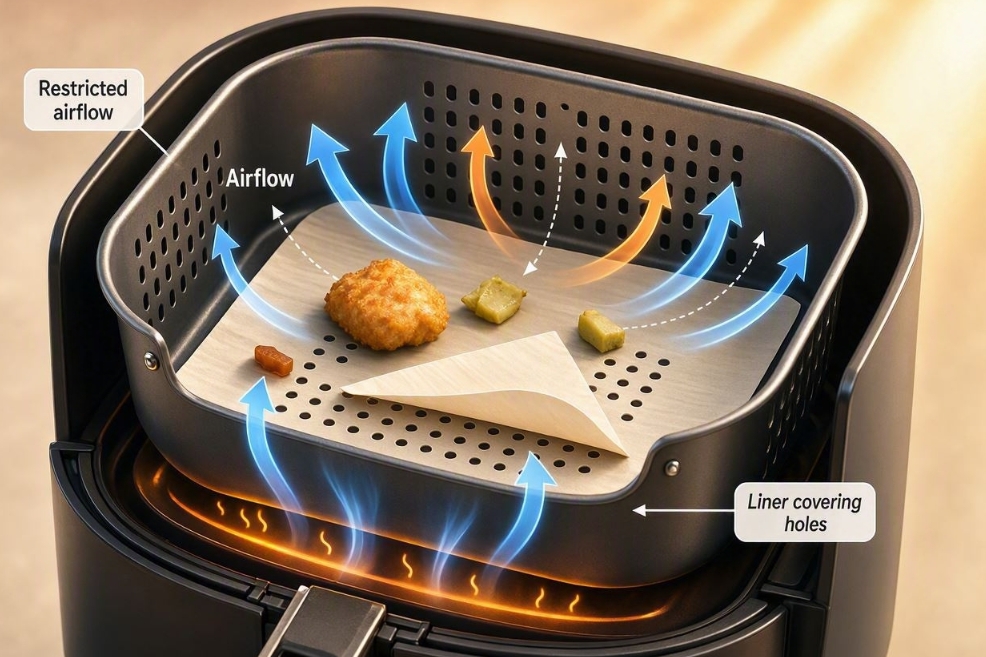
When you place a liner in the basket, you’re introducing another layer between the food and the perforated cooking surface. If that liner blocks a significant portion of the basket’s openings, less air may be able to move directly underneath the food.
This doesn’t mean the air fryer suddenly stops circulating air. Hot air can still move around the sides and top of the food. But the pattern and amount of airflow reaching the underside can change, and that can influence the final texture.
For some foods, you may barely notice the difference.
For example, suppose you’re reheating a slice of pizza. You’re probably more concerned about warming the cheese and crisping the crust slightly than achieving maximum airflow underneath every part of the food. A liner may have little practical impact.
Now consider a basket filled with French fries. Here, airflow becomes much more important because you want moisture to escape from the surface while the exterior develops a crisp texture. If a solid liner blocks much of the airflow underneath the fries, the bottom may not brown as effectively.
The same principle applies to chicken wings. The upper portions can still receive plenty of hot air, but the side sitting directly against a solid liner may not brown or crisp in exactly the same way as it would against an open basket.
So, rather than asking whether liners are good or bad, a better question is:
Does this particular liner make sense for the food I’m cooking?
That small change in thinking can help you get the convenience of a liner without unnecessarily sacrificing cooking performance.
The Four Ways a Liner Can Change Your Cooking Results
When people say a liner “affects cooking,” they are usually talking about several different things. Understanding each one makes it easier to decide whether a liner is worthwhile.
1. Airflow
This is usually the biggest consideration.
A solid liner can cover some of the holes in the air fryer basket, reducing the amount of air that reaches the food from underneath. Perforated designs allow more air to pass through, which is why they’re often preferred when cooking foods that need a crisp exterior.
2. Crispiness
Reduced airflow can sometimes mean less crisping on the underside of the food.
This doesn’t necessarily make the entire meal soft or soggy. You might simply notice that one side isn’t as browned or crunchy as the other.
3. Browning
Browning is closely related to heat exposure and moisture removal. If the underside receives less hot-air circulation, it may brown more slowly.
This is particularly noticeable with foods where appearance matters as much as texture.
4. Cooking Time
A liner may sometimes mean that a food needs a little longer to reach the texture you’re looking for. But this isn’t something you should treat as a fixed rule.
For example, if a recipe normally takes 15 minutes, you shouldn’t automatically add five minutes just because you used a liner. Instead, check the food near the end of the normal cooking time and decide whether it needs additional cooking.
The liner is only one variable. Food quantity, thickness, moisture, temperature, and how crowded the basket is can have an equally large—or larger—effect.
How Air Fryer Liners Affect Airflow and Heat Circulation
To understand why liners can influence cooking, it helps to understand what is happening inside the air fryer.
The heating element warms the air, while the fan continuously moves that hot air through the cooking chamber. The air travels around the food, transferring heat to its surface. As moisture leaves the food, the exterior can become drier and eventually crisp and brown.
The holes in an air fryer basket are part of this design. They help hot air reach different areas of the food rather than forcing the air to travel only around the top and sides.
When a liner covers those openings, the airflow pattern changes.
Do Solid Air Fryer Liners Restrict Airflow?
They can, particularly when they cover most or all of the perforated basket surface.
A solid parchment liner isn’t necessarily a problem. Hot air can still circulate around the food, and many people use these liners successfully every day.
The issue is that the air doesn’t have the same direct path underneath the food.
Consider cooking a handful of chicken wings directly in the basket. Air can move through the openings beneath the wings, around their sides, and across their upper surfaces.
Now place the same wings on a solid liner. Air can still reach the top and sides, but the liner acts as a barrier underneath them.
That difference may be small in some air fryers and more noticeable in others.
The amount of food matters too. A lightly loaded basket with plenty of space around each piece will usually have better overall circulation than a tightly packed basket, regardless of whether a liner is being used.
So if you use a liner and notice that your food isn’t crisping as well, don’t immediately assume the liner is solely responsible. Check whether the basket is overcrowded as well.
Are Perforated Air Fryer Liners Better for Air Circulation?
For foods where airflow is important, perforated liners are generally the more sensible option.
The small holes provide pathways for hot air to move through the liner. This doesn’t make the liner completely invisible to the cooking process, but it reduces the amount of solid material blocking the basket.
For example, if you’re cooking breaded chicken and want the coating to crisp on both sides, a perforated liner gives you a better chance of maintaining airflow underneath the food than a completely solid sheet.
The same applies to frozen fries, potato wedges, and other foods where you want a dry, browned exterior.
Still, there’s an important distinction: perforated doesn’t mean unlimited airflow.
The holes can improve circulation, but the liner is still present. If your only goal is maximum airflow and maximum crispiness, cooking directly on the basket remains the simplest option.
That’s why I see perforated liners as more of a compromise between performance and convenience rather than a replacement for the basket itself.
Do Air Fryer Liners Make Food Less Crispy?
They can, but the difference depends largely on the liner and the food you’re cooking. This is one of the most important things to understand before deciding whether an air fryer liner belongs in every recipe.
Crispiness comes from more than simply setting a high temperature. The hot circulating air needs to reach the food’s surface and help remove moisture. At the same time, the food needs enough exposure to heat for its exterior to brown and develop the texture you’re looking for.
When food sits directly on a perforated air fryer basket, air can reach more of its surface from underneath. Add a solid liner, and that direct path is partially removed. The food can still crisp, but the underside may not receive the same level of airflow.
For example, imagine making chicken wings. The exposed upper surface may become nicely browned and crisp while the part touching a solid liner remains slightly softer. If you were to cook the same wings directly on the basket, the underside would have more opportunity to receive circulating hot air.
The difference can be even easier to notice with French fries. Fries contain a considerable amount of moisture, and their crisp exterior depends heavily on good air circulation. If the basket is crowded and a solid liner is covering the bottom, you’re creating two obstacles to airflow at the same time.
That said, using a liner doesn’t automatically mean your food will become soft.
A properly sized perforated air fryer liner, combined with a reasonably spaced layer of food, can still produce very good results. The holes allow some air to move underneath the food, while the liner provides the cleanup benefit many people want.
When Does the Difference Matter Most?
The effect is most noticeable with foods where crispiness is the main goal.
These include:
- French fries
- Potato wedges
- Chicken wings
- Tater tots
- Breaded chicken
- Breaded fish
- Frozen appetizers
- Crispy vegetables
With these foods, you may prefer cooking directly on the basket or using a perforated liner.
On the other hand, if you’re reheating pizza, warming pastries, cooking a saucy dish, or preparing food where a crisp underside isn’t particularly important, the difference may be much less noticeable.
This is why there isn’t a universal rule that says you should always use or never use an air fryer liner.
Do Air Fryer Liners Increase Cooking Time?
A liner can sometimes affect cooking time, but it’s important not to exaggerate this effect.
Adding a liner doesn’t automatically mean your food will take several extra minutes to cook. In many cases, the difference may be small enough that you won’t notice it.
What can happen is that restricted airflow changes how quickly certain parts of the food brown or crisp. The food may be fully heated internally but still need a little additional time to develop the texture you want.
For example, suppose you’re cooking frozen potato wedges. Without a liner, the underside has direct access to the perforated basket. With a solid liner, that airflow is reduced. You might find that the wedges need a little longer to develop the same level of browning.
But don’t assume the solution is simply to increase the temperature.
A better approach is to check the food during the final few minutes of cooking. If it is cooked through but not as crisp as you’d like, continue cooking in short increments until you reach the desired texture.
This gives you much more control than blindly adding extra time.
What Else Can Affect Cooking Time?
It’s easy to blame the liner when an air fryer recipe takes longer than expected, but several other factors can be responsible.
Food quantity is one of the biggest.
If you put a small handful of fries into the basket, hot air has plenty of room to move around them. Fill the basket to the top, and the fries can block one another from the circulating air.
Food thickness matters too. A thick chicken breast will naturally take longer to cook than a thin one, whether you use a liner or not.
Your air fryer model also plays a role. Different appliances use different heating elements, fans, basket designs, and cooking chamber sizes, so two air fryers set to the same temperature may not produce identical results.
Even the starting temperature of the food matters. Frozen food obviously begins at a different point from food that has been sitting at room temperature.
So if you notice a slight increase in cooking time while using a liner, don’t assume the liner is the only reason.
The Best Air Fryer Liners for Cooking Performance
Once you understand how liners can affect airflow and crispiness, choosing one becomes much easier.
The goal isn’t necessarily to find the liner with the most features or the cheapest price. Instead, look for a product that matches the way you actually use your air fryer.
Someone who cooks crispy fries and wings several times a week has different priorities from someone who mainly cooks saucy chicken and wants to avoid scrubbing the basket.
Here are the main options worth considering.
Best Overall Air Fryer Liner
For most users, a well-made perforated parchment liner is one of the best compromises between convenience and cooking performance.
The perforations allow hot air to pass through the liner, while the parchment helps reduce food sticking and residue on the basket.
This makes it particularly useful for everyday cooking where you want easier cleanup but don’t want to completely sacrifice airflow.
A good liner should fit your basket without excessive folding or bunching. It should also have enough perforations to allow reasonable air circulation and be rated for the temperatures you’ll be using.
The main disadvantage is that parchment is generally disposable. If you use your air fryer every day, the cost can add up over time.
Best for: everyday cooking, easy cleanup, and maintaining better airflow than a solid liner.
Best Perforated Air Fryer Liner
If crispiness is high on your list, a perforated liner deserves serious consideration.
Instead of creating one continuous barrier across the bottom of the basket, the holes provide multiple paths for hot air to move upward.
This can be particularly helpful when preparing foods such as fries, wings, potato wedges, and breaded snacks.
However, don’t choose a liner simply because the packaging says “perforated.” Look at the actual design. The number, size, and distribution of the holes can vary considerably between products.
A liner with useful perforations across the cooking surface is generally more practical than one with only a few openings around the edges.
Best for: readers who want easier cleanup while keeping airflow and crispiness as high as reasonably possible.
Best Silicone Air Fryer Liner
Silicone liners are appealing for a different reason: they can be reused many times.
Instead of throwing away a liner after each meal, you can wash it and use it again. This makes silicone particularly attractive to frequent air fryer users.
They’re also useful when cooking foods that produce lots of grease or sticky residue. A silicone insert can act as a protective layer, making cleanup easier once the food is finished.
But there is a trade-off.
Silicone is considerably thicker than parchment, and many silicone liners form a deeper basket inside the original air fryer basket. Depending on the design, this can change how air moves around the food.
Some silicone models include perforations or raised ridges to improve circulation, so the design matters more than the word “silicone” itself.
Best for: frequent users who prioritize reusability, easy cleaning, and protection from messy foods.
Best Parchment Air Fryer Liner
Parchment liners are a good option if you value simplicity and quick cleanup.
You don’t have to wash them after cooking, and they take up very little storage space. They’re also easy to replace when they become greasy or damaged.
For better cooking performance, I would generally favor a parchment liner with perforations when you’re cooking foods that need plenty of airflow.
A solid parchment liner can still be useful, especially for saucy or sticky foods, but it isn’t necessarily the first choice when maximum crispiness is the priority.
One important point: don’t use loose parchment in an empty air fryer if the manufacturer’s instructions don’t permit it. Lightweight parchment can move around when the fan is running. It needs to be used in a way that prevents it from becoming loose and reaching the heating element.
Best for: occasional users and anyone who wants disposable convenience with minimal cleanup.
What to Look for When Buying Air Fryer Liners
Once you’ve decided that a liner is useful for your cooking routine, there are several features worth checking before purchasing one.
Perforated vs. Non-Perforated Design
This is probably the first feature I’d look at.
If you frequently cook foods that need to become crispy, perforated liners generally make more sense because they allow more air through.
If you’re mainly cooking foods with sauces, marinades, or sticky ingredients, a solid liner may offer better containment and easier cleanup.
Neither design is automatically superior for every recipe.
Parchment vs. Silicone Material
Think about how often you’ll use the liner.
If you’re an occasional air fryer user, disposable parchment can be convenient and inexpensive.
If you’re cooking several times a week, reusable silicone may provide better long-term convenience.
But again, don’t judge cooking performance from material alone. A perforated silicone liner and a solid silicone liner won’t necessarily perform the same way.
The same applies to parchment.
Size and Shape
A liner should fit your air fryer basket properly.
If it is too large, the edges may fold upward and interfere with airflow. If it is too small, food and grease may end up directly on the basket anyway.
Round liners work naturally with round baskets, while square liners are usually more convenient for square baskets.
If you’re unsure about the correct size, measure the usable cooking area of your basket rather than relying only on the advertised air fryer capacity.
Heat Resistance
Always check the liner’s temperature rating.
Air fryers can operate at relatively high temperatures, and not every liner is designed for every cooking environment.
A product being marketed as an “air fryer liner” doesn’t mean you should ignore its instructions. Follow the manufacturer’s recommended temperature and usage limits.
Number of Liners and Overall Value
For disposable liners, look beyond the price of the package.
A 100-count pack might look like a bargain, but if you use two every day, you’ll go through them quickly.
For someone who cooks daily, a reusable liner may make more sense over time.
On the other hand, if you only use your air fryer once or twice a week, disposable parchment may be perfectly reasonable.
The best value is the option you’ll actually use comfortably and correctly.
Perforated vs. Non-Perforated Air Fryer Liners: Which Should You Buy?
Here’s the simplest way to look at it:
| Feature | Perforated Liner | Non-Perforated Liner |
|---|---|---|
| Airflow | Better | More restricted |
| Crispiness | Generally better | May be reduced |
| Cleanup | Good | Excellent |
| Saucy foods | Good | Very good |
| Fries and wings | Better choice | Less ideal |
| Grease containment | Moderate | Better |
| Convenience | Excellent | Excellent |
If you’re buying an air fryer liner mainly because you want easier cleanup, you might assume that all liners will perform roughly the same way. They don’t.
One of the most important differences is whether the liner has perforations—small holes spread across its cooking surface. Those holes can make a practical difference because they give hot air more opportunities to move through the bottom of the liner.
Perforated Air Fryer Liners
Perforated liners are generally the better option when airflow and crispiness are important.
The holes allow some of the hot air circulating inside the air fryer to reach the underside of the food. This can help maintain better browning and texture compared with placing food on a completely solid surface.
For example, if you’re making potato wedges, the underside of the wedges can benefit from the additional airflow. You may still get slightly different results compared with cooking directly on the basket, but the difference can be smaller than it would be with a solid liner.
They’re also useful for chicken wings, breaded foods, and frozen snacks where you want the exterior to become crisp.
The downside: the holes won’t contain every bit of grease, sauce, or small food particle. If your main concern is keeping every drop of marinade away from the basket, a solid liner may do a better job.
Non-Perforated Air Fryer Liners
Solid liners are often better at containing grease, sauces, and food residue.
That’s useful when you’re cooking something like honey-garlic chicken or a heavily marinated piece of fish. Instead of allowing the sauce to drip through the basket openings, the liner catches much of it.
The trade-off is airflow.
Because there are no holes through the liner, hot air has fewer direct pathways underneath the food. The food can still cook properly, but the underside may brown or crisp more slowly.
For messy foods, that may be an acceptable compromise. For crispy fries, it may not be.
So, Which One Should You Buy?
If your priority is the best balance between easier cleanup and cooking performance, I’d choose a perforated liner.
If your priority is containing sauces and making cleanup as easy as possible, a solid liner can be more useful.
And if you’re chasing maximum crispiness, cooking directly on the air fryer basket is still the best option in many cases..
Silicone vs. Parchment Air Fryer Liners: Which Is Better?
This is another comparison where there isn’t a single winner.
Silicone and parchment solve slightly different problems, so your cooking habits should guide the decision.
Silicone Air Fryer Liners
The biggest advantage of silicone is reusability.
Instead of throwing away the liner after every meal, you can wash it and use it again. For someone who uses an air fryer frequently, that can be a significant convenience.
Silicone can also be useful for foods that produce a lot of grease or sticky residue. A deeper silicone liner can contain juices and sauces that might otherwise run through the basket.
However, silicone is thicker than parchment, and many models form a bowl-like insert inside the basket. That can alter the way hot air circulates around the food.
This doesn’t make silicone a poor choice. It simply means you should look for a design that doesn’t unnecessarily restrict circulation.
Some reusable liners have perforations or raised ridges underneath the food. These features can help create additional space for hot air to move.
Best suited for: frequent air fryer users, messy foods, reusable convenience, and easier cleaning.
Parchment Air Fryer Liners
Parchment has the advantage of being thin, lightweight, and disposable.
After cooking, you can simply remove it and throw it away, which is particularly convenient when you’ve cooked something greasy.
Perforated parchment is especially useful when you want some protection for the basket without completely covering its airflow openings.
The biggest disadvantage is ongoing use. If you’re cooking every day, buying disposable liners repeatedly can become more expensive than investing in a reusable option.
Best suited for: quick cleanup, occasional cooking, and people who prefer disposable accessories.
Which Material Is Better for Crispiness?
Don’t assume that silicone or parchment automatically determines the result.
The design of the liner matters just as much.
A perforated parchment liner may allow more airflow than a solid silicone liner. A perforated silicone liner may perform differently from a flat, solid silicone sheet.
So when comparing products, look beyond the material and check how the liner actually allows air to move.
How to Use Air Fryer Liners Without Hurting Cooking Performance
Buying the right liner is only half the job. How you use it can make just as much difference.
A good liner can still interfere with cooking if it’s oversized, improperly positioned, or combined with an overcrowded basket.
Here are some simple habits that can help you keep the convenience without unnecessarily reducing performance.
Choose the Correct Size
Your liner should fit comfortably inside the cooking basket.
Avoid using a liner that extends significantly beyond the basket or folds heavily around the food. Excess material can interfere with airflow and may make it harder for the food to cook evenly.
If you’re buying replacement liners for a specific air fryer, check the basket dimensions rather than relying solely on the air fryer’s advertised capacity.
A “6-quart” air fryer, for example, doesn’t necessarily have exactly the same basket dimensions as another 6-quart model.
Use Perforated Liners When Airflow Matters
If you’re preparing foods that depend on crisping, perforations are useful.
They won’t provide exactly the same airflow as an uncovered basket, but they can reduce the barrier created by the liner.
For everyday foods such as fries, wings, and breaded snacks, this is often a sensible compromise.
Don’t Overcrowd the Basket
This is one of the most important tips, whether you use a liner or not.
Food needs room for hot air to circulate.
If you pile fries into a deep mound, for example, the pieces in the center and lower layers may not receive enough airflow. The result can be soft fries even when you’ve chosen a good perforated liner.
Try to spread food out as much as the basket allows.
A well-spaced basket with a liner can often outperform an overcrowded basket without one.
Don’t Use a Loose Parchment Sheet
Lightweight parchment can move when the air fryer’s fan starts circulating air.
This is especially important during preheating, when there isn’t food sitting on top of the paper to hold it down.
A loose liner can potentially move toward the heating element, so don’t treat parchment like a permanent piece of the appliance.
Use it according to the liner manufacturer’s instructions and your air fryer’s manual.
Don’t Assume You Need a Liner for Every Meal
This is perhaps the simplest way to get the best of both worlds.
You can use a liner when you’re cooking something messy and skip it when crispiness is more important.
There’s nothing wrong with changing your approach from one recipe to another.
When Should You Cook Without an Air Fryer Liner?
Air fryer liners are convenient, but they’re not essential.
There are plenty of meals where the best approach is simply to cook directly in the basket.
If you’re preparing French fries and want the crispiest possible exterior, direct contact with the perforated basket gives hot air more opportunities to reach the food.
The same can apply to chicken wings.
When the skin is the star of the meal, you generally want as much hot-air circulation as practical. Cooking directly on the basket removes the additional layer between the food and the basket.
Foods That Often Benefit From Direct Basket Cooking
- French fries
- Potato wedges
- Chicken wings
- Tater tots
- Breaded chicken
- Breaded fish
- Frozen crispy snacks
- Vegetables you want heavily browned
This doesn’t mean these foods cannot be cooked with a liner. They absolutely can.
It’s more about deciding which result you value most.
If you’re willing to spend a little more time cleaning in exchange for maximum crispiness, skip the liner.
When Is an Air Fryer Liner More Useful?
The opposite is true for foods that are messy, sticky, or difficult to clean from the basket.
Think about a piece of chicken covered in a thick barbecue glaze. As the sauce heats, it can drip into the basket and become sticky. Once cooled, that residue may require considerably more effort to remove.
A liner can make that type of cooking much easier.
The same applies to foods containing melted cheese or thick marinades.
Foods That Can Benefit From a Liner
- Saucy chicken
- Marinated fish
- Sticky wings
- Cheese-heavy recipes
- Greasy foods
- Foods prone to sticking
- Small foods that leave lots of crumbs
In these situations, the slight compromise in airflow can be worth it.
You’re not trying to maximize crispiness at all costs. You’re balancing cooking performance with convenience.
Common Mistakes That Can Reduce Air Fryer Performance
Some liner-related problems come from the product itself, but many are caused by how it’s being used.
Using a Liner That Is Too Large
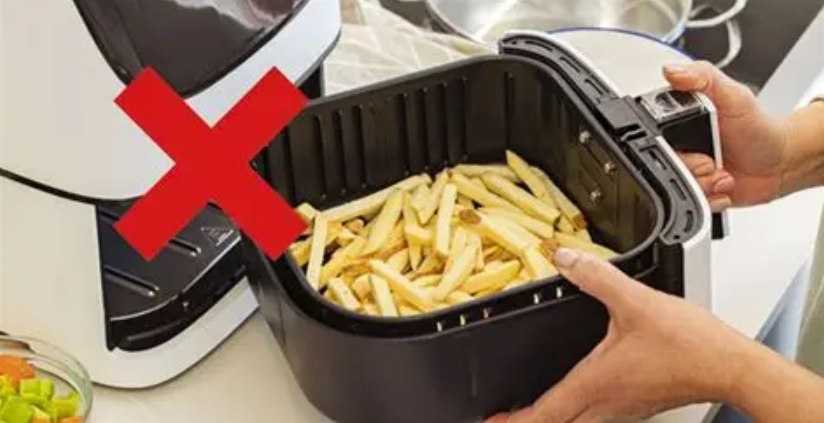
An oversized liner can bunch up, cover areas unnecessarily, and interfere with airflow.
Measure the basket before buying if you’re unsure about the correct size.
Covering the Entire Basket With a Solid Liner
This isn’t automatically dangerous or wrong, but it can reduce airflow underneath the food.
If crispiness matters, consider a perforated design instead.
Overcrowding the Food
Even with a perforated liner, too much food in the basket can prevent hot air from moving effectively.
Give the food space whenever possible.
Using the Same Liner for Every Recipe
A liner that works beautifully for sticky chicken may not be your best choice for crispy fries.
Think about the desired result before choosing whether to use one.
Ignoring Temperature Ratings
Don’t assume every parchment or silicone liner can withstand every air fryer temperature.
Check the manufacturer’s specifications and stay within the recommended range.
Preheating With Loose Parchment
Unless the manufacturer specifically indicates otherwise, don’t place an empty, lightweight parchment liner in the basket and walk away while the air fryer preheats.
The fan can move the paper.
Air Fryer Liner vs. No Liner: Which Is Better?
Neither option is universally better.
It depends on what you’re cooking.
Cook without a liner when:
- Maximum crispiness is your priority.
- You want unrestricted airflow.
- You’re cooking foods that don’t make much mess.
- You don’t mind cleaning the basket afterward.
Use a perforated liner when:
- You want easier cleanup but still care about crispiness.
- You’re cooking everyday foods.
- You want a practical middle ground.
Use a silicone or solid liner when:
- You’re cooking sticky or saucy foods.
- Cleanup is your biggest concern.
- You value reusability.
- Maximum crispiness isn’t the main goal.
This is why I wouldn’t tell every air fryer owner to buy the same liner.
The best liner is the one that matches the food you actually cook.
Are Air Fryer Liners Worth Buying?
For many people, yes.
The biggest advantage isn’t that liners make food cook better. Their real value is convenience.
If you regularly cook greasy chicken, marinated foods, or recipes that leave stubborn residue, a liner can significantly reduce the amount of cleaning you have to do.
But if you mainly bought an air fryer because you love extremely crispy fries and wings, you may find that cooking directly in the basket gives you better results.
There’s also no reason to use a liner simply because you own one.
You can keep both options available and decide based on the meal.
For example, you might cook wings directly in the basket on Friday because you want maximum crispiness, then use a liner on Saturday when you’re preparing a sticky honey-garlic chicken recipe.
That’s a much more practical approach than treating a liner as either essential or useless.
Frequently Asked Questions
Do air fryer liners block airflow?
They can. Solid liners may cover some of the basket’s ventilation holes and reduce airflow underneath the food. Perforated liners allow more air to pass through.
Do air fryer liners make food less crispy?
They can, particularly when a solid liner restricts airflow. The effect is usually more noticeable with foods such as fries and chicken wings that depend heavily on airflow for crisping.
Do air fryer liners increase cooking time?
They may slightly affect cooking time in some situations, but there isn’t a universal adjustment. Food quantity, temperature, thickness, and air fryer design also have a major influence.
Are perforated air fryer liners better?
They can be a better choice when airflow and crispiness are important. The holes allow more hot air to reach the food compared with a completely solid liner.
Are silicone air fryer liners better than parchment?
Not necessarily. Silicone is reusable and easy to wash, while parchment is convenient and disposable. For cooking performance, the liner’s design and airflow characteristics matter more than the material alone.
Conclusion: Do Air Fryer Liners Affect Cooking Performance?
Yes, air fryer liners can affect cooking performance, but how much they affect your food depends on the liner’s design and how you use it.
A solid liner can restrict some of the airflow beneath food, which may affect browning and crispiness. A perforated liner generally provides a better balance because hot air can move through the holes.
Silicone liners are excellent for reusability and easier cleanup, particularly when cooking greasy or sticky foods. Parchment liners are convenient and disposable, while perforated parchment is often a better choice when you want to preserve more airflow.
But here’s the most important point: you don’t have to choose between using a liner and getting good food.
Use the liner when cleanup and food sticking are the bigger concerns. Skip it when maximum airflow and crispiness matter most.
If you’re buying one specifically to minimize the effect on cooking performance, I’d start with a properly sized perforated liner. It offers a sensible middle ground between keeping your basket cleaner and allowing the air fryer to do what it was designed to do.
And if you already have a liner that you love, there’s no need to replace it simply because it isn’t perforated. Pay attention to your actual cooking results. If your food is browning well, cooking evenly, and reaching the texture you want, that’s a much better measure of performance than the liner’s marketing label.