
Air fryers have quickly moved from being a kitchen trend to an everyday cooking essential. They promise crispy food with less oil, faster cooking times, and easier cleanup. But once you decide to buy one, another question pops up almost immediately: should you choose a digital air fryer or a manual knob model?
This comparison—digital air fryers vs manual knob models—is one of the most searched topics among first-time buyers and even people upgrading their old units. On the surface, both types look similar and use the same hot air circulation technology. The real difference lies in how you control the cooking process and how much convenience or simplicity you want in your kitchen.
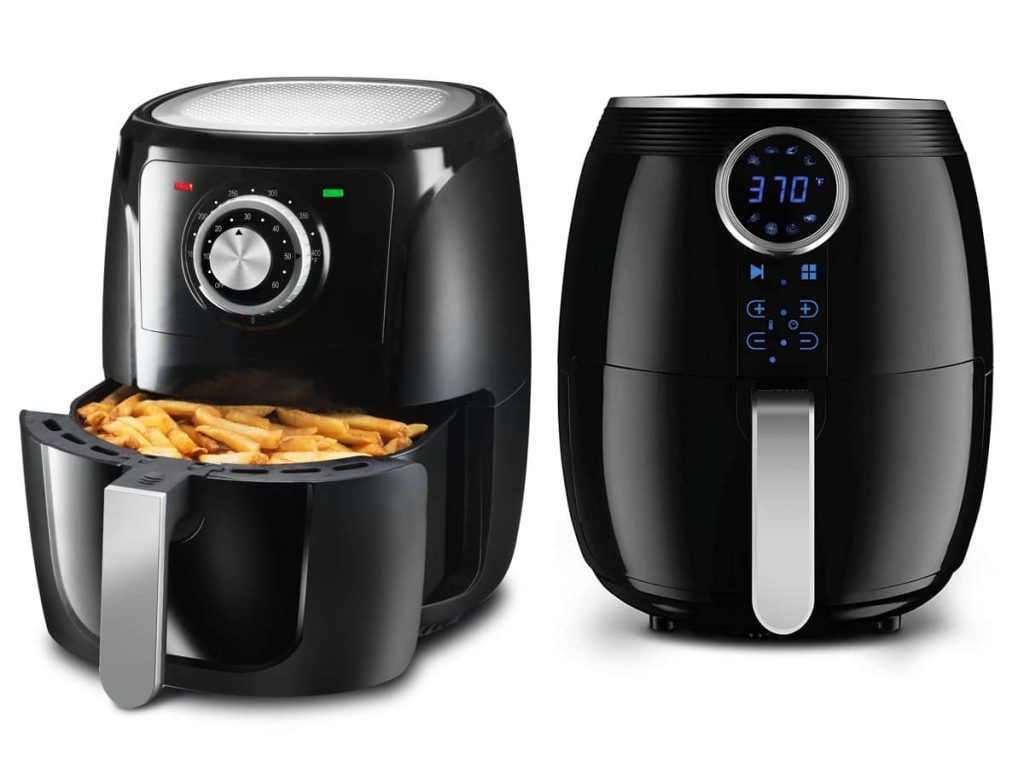
A digital air fryer uses buttons or a touchscreen, often with preset cooking programs for popular foods like fries, chicken, or vegetables. A manual knob air fryer, on the other hand, relies on simple dials for temperature and time, keeping things straightforward and mechanical. Neither option is automatically better—it all depends on your cooking habits, budget, and comfort level with kitchen gadgets.
Some buyers prefer digital air fryers because they offer precise temperature control and remove guesswork. Others stick with manual air fryers because they are easier to use, more durable, and usually more affordable. Understanding these differences before buying can save you money and frustration.
In this guide, we’ll break down the differences between digital air fryer vs manual air fryer models. You’ll learn how they compare in terms of ease of use, cooking results, durability, features, and value for money. By the end, you’ll know exactly which air fryer control type makes the most sense for your kitchen.
Understanding Air Fryer Control Types
Before comparing performance, price, or durability, it necessary to clearly understand how air fryer controls work. The biggest difference between digital air fryers and manual knob models is not the cooking technology itself, but how you interact with the appliance during everyday use.
Both types use a heating element and a powerful fan to circulate hot air around your food. What changes is how you tell the air fryer what temperature to cook at and how long to cook.
What Is a Digital Air Fryer?
A digital air fryer uses electronic controls, usually in the form of push buttons or a touchscreen panel. These controls allow you to set exact cooking temperatures and times, often shown clearly on an LED or LCD display.
Most digital air fryers also include preset cooking programs. These presets are designed for common foods such as fries, chicken wings, fish, steak, or even baked goods. Instead of guessing the right settings, you simply choose a preset and let the air fryer handle the rest.
Another advantage of digital air fryer controls is consistency. Because temperature and time are electronically regulated, results are easier to repeat. If a recipe works once, you can usually get the same outcome again without much adjustment.
However, digital air fryers rely on electronic components like control boards and display screens. While modern models are generally reliable, these parts can wear out over time, especially in humid kitchen environments.
Best suited for:
- Users who want precise control
- People who cook a variety of foods
- Beginners who prefer guided cooking
What Is a Manual Knob Air Fryer?
A manual knob air fryer uses physical dials—one for temperature and one for time. There are no presets, screens, or electronic menus. You simply turn the knobs to your desired settings and start cooking.
This simplicity is exactly why many people prefer manual air fryers. With fewer electronic parts, there’s less that can malfunction. The knobs are intuitive, responsive, and easy to understand, even for someone who has never used an air fryer before.
Manual air fryers encourage hands-on cooking. You may need to check food halfway, adjust the temperature slightly, or shake the basket to get even results. For many users, this feels more natural and gives better control over the final outcome.
That said, manual air fryers rely on approximate temperature markings rather than exact numbers. This means cooking results can vary slightly until you learn how your specific model behaves.
Best suited for:
- Users who value simplicity
- Budget-conscious buyers
- People who want a durable, no-frills appliance
Digital vs Manual Controls: Why It Matters
The difference between air fryer digital controls vs manual controls affects more than just convenience. It impacts how you cook, how often you adjust settings, and how much attention your food needs while cooking.
Digital air fryers reduce guesswork and save time, while manual knob models offer reliability and hands-on control. Neither approach is wrong—it’s about choosing the control style that matches your cooking habits.
Digital Air Fryer vs Manual Air Fryer: Key Differences
When choosing between digital air fryers vs manual knob models, the real differences show up in daily use. While both cook food using hot air circulation, the experience of using them—and the results you get—can feel quite different. Below, we break down the most important areas where these two types of air fryers differ.
Control and Ease of Use
Control style is the first thing most users notice when comparing a digital air fryer vs manual air fryer.
Digital air fryers guide you through the cooking process. The touchscreen or button panel lets you select exact temperatures and cooking times, often with preset programs. This is especially helpful for beginners who don’t want to guess the right settings. You press a button, the fryer starts, and the display shows exactly what’s happening.
Manual knob air fryers, on the other hand, rely on turning dials. There’s no screen or confirmation sound—just simple mechanical control. Many users actually find this faster because there’s no menu navigation. You turn the knobs and start cooking immediately.
For people who enjoy simplicity, manual air fryers feel less intimidating. For those who prefer guidance and precision, digital models feel more user-friendly.
Cooking Precision and Results
Cooking precision is one of the biggest advantages of digital air fryers. Because temperature and time are electronically controlled, these models tend to deliver more consistent results. This is especially useful for foods like baked items, frozen snacks, or delicate proteins that can overcook easily.
Manual air fryers still cook food well, but precision depends on experience. The temperature markings on knobs are approximate, so you may need a few tries to learn the sweet spot for certain foods. Once you’re familiar with your model, results can be just as good, but it requires more attention.
For everyday foods like fries, chicken wings, or reheated leftovers, the difference in results is often minimal.
Features and Cooking Programs
This is where digital air fryer comparison clearly stands out. Digital models usually include multiple preset programs designed for common foods. Some even offer additional functions like reheating, baking, or dehydrating.
These features can be helpful, but they’re not always necessary. Many users end up using only two or three presets regularly.
Manual knob air fryers skip all extras and focus on core cooking performance. There are no presets, no extra modes, and no learning curve. If you cook the same types of food often, manual air fryers are more than capable.
Durability and Maintenance
Durability is an area where manual knob air fryers often shine. With fewer electronic components, there’s less risk of failure over time. Knobs are generally easy to replace and less sensitive to heat or moisture.
Digital air fryers contain circuit boards, displays, and sensors. While modern models are built to last, repairs can be costly if something goes wrong after the warranty expires.
In terms of cleaning, both types are similar. Baskets and trays are usually non-stick and dishwasher-safe.
Price and Value for Money
When comparing digital vs analog air fryer prices, manual knob models are almost always cheaper. They offer solid performance at a lower cost, making them a popular choice for budget buyers.
Digital air fryers cost more because of added features and electronics. For users who will actually use those features, the extra cost can be justified. For others, it may feel unnecessary.
Summary of Key Differences
The choice between digital and manual air fryers comes down to what you value more: convenience and precision, or simplicity and durability. Both options can deliver great cooking results—it’s the user experience that truly differs.
Pros and Cons Breakdown
Looking at features alone doesn’t always tell the full story. The real value of an air fryer shows up in everyday use—how often you cook, how much attention you want to give your food, and how long you expect the appliance to last. This pros and cons breakdown highlights the practical strengths and limitations of both digital air fryers vs manual knob models.
Digital Air Fryer Pros and Cons
Digital air fryers are designed for convenience and consistency. They appeal to users who like modern kitchen appliances with guided cooking options.
Pros of Digital Air Fryers
- One major advantage of digital air fryers is precision. You can set exact temperatures and cooking times, which helps prevent overcooking or undercooking. This is especially useful when cooking foods that require specific heat levels, such as baked goods or frozen meals.
- Preset cooking programs are another big plus. These presets remove guesswork by automatically selecting the right settings for common foods. For busy households, this makes meal prep faster and more predictable.
- Digital displays also improve visibility. Being able to see the remaining cook time at a glance makes it easier to manage multiple dishes at once.
Cons of Digital Air Fryers
- The biggest downside is cost. Digital air fryers are usually more expensive than manual models. If you don’t use the presets often, you may end up paying for features you rarely touch.
- Another concern is long-term reliability. Digital air fryers rely on electronic components like control boards and touch panels. While they’re generally safe and reliable, repairs can be expensive once the warranty ends.
Manual Knob Air Fryer Pros and Cons
Manual knob air fryers focus on simplicity and durability. They’re often recommended for users who want a reliable, no-frills appliance.
Pros of Manual Knob Air Fryers
- Manual air fryers are easy to use. Turning a dial feels intuitive, even for first-time users. There’s no learning curve or menu navigation.
- They’re also more durable. With fewer electronic parts, there’s less that can fail over time. This makes manual knob air fryers a solid long-term investment.
- Price is another strong advantage. Manual models are usually more affordable, making them ideal for budget-conscious buyers.
Cons of Manual Knob Air Fryers
- The lack of presets means you’ll need to monitor cooking more closely. Temperature settings are approximate, so results can vary until you get familiar with your air fryer.
- Manual air fryers also offer fewer features. If you enjoy experimenting with different cooking modes, you may find them limiting.
Which One Has the Edge?
- In the digital air fryer pros and cons vs manual air fryer pros and cons comparison, there’s no clear winner. Digital models offer convenience and precision, while manual knob models deliver simplicity, durability, and better value for money.
- Your choice depends on how much control you want and how involved you like to be during cooking.
Comparison Table: Digital vs Manual Air Fryers
A side-by-side comparison makes it easier to see how digital air fryers vs manual knob models stack up in real-life use. While both types cook food using the same hot air technology, the experience they offer can be quite different.
Digital Air Fryer vs Manual Knob Air Fryer Comparison
| Feature | Digital Air Fryer | Manual Knob Air Fryer |
| Control Type | Buttons or touchscreen | Physical dials |
| Temperature Accuracy | High and precise | Approximate |
| Preset Programs | Yes | No |
| Ease of Use | Guided and beginner-friendly | Simple and direct |
| Durability | Moderate (more electronics) | High (fewer parts) |
| Maintenance | Easy, but repairs can be costly | Easy and low-cost |
| Price Range | Higher | Lower |
| Best For | Precision cooking & variety | Everyday basic cooking |
What This Comparison Really Means
Controls and usability:
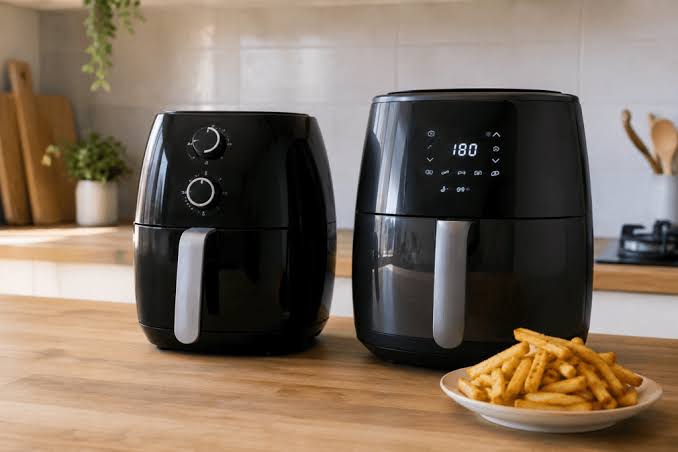
Digital air fryers feel more modern and guided. The display tells you exactly what temperature you’re using and how much time is left. Manual knob air fryers skip the display but feel faster to operate—turn the knobs and start cooking.
Cooking precision:
If you follow recipes closely, digital air fryers are more reliable. Manual air fryers still cook evenly, but you’ll need experience to get the best results consistently.
Features:
Digital models win on features, especially preset cooking programs. Manual knob models focus purely on cooking performance without extras.
Durability and long-term value:
Manual air fryers tend to last longer because there are fewer electronic parts to fail. This makes them attractive to buyers who want a dependable appliance for years.
Price:
Manual knob air fryers are usually the better choice for shoppers on a budget. Digital air fryers justify their higher price with convenience and added functionality.
Digital vs Analog Air Fryer: Which Offers Better Value?
In the digital vs analog air fryer debate, value depends on usage. If you cook different meals often and enjoy preset programs, a digital air fryer offers better day-to-day convenience. If you cook simple meals and want reliability at a lower cost, a manual knob air fryer delivers excellent value.
Which Air Fryer Is Better for You?
Choosing between digital air fryers and manual knob models isn’t about which one is “better” overall—it’s about which one fits your lifestyle, cooking habits, and budget. Below, we break it down by common buyer types so readers can make a confident choice.
Best for Beginners
If you’re new to air frying, a digital air fryer often feels more approachable. The preset cooking programs guide you through common foods like fries, chicken, or frozen snacks without much trial and error. You don’t need to worry about guessing temperatures or cooking times.
That said, beginners who prefer simplicity may still enjoy manual knob air fryers. The controls are easy to understand, and there’s no menu to navigate. However, beginners may need a few attempts to learn the right settings.
Best pick: Digital air fryer for guidance; manual air fryer for simplicity.
Best for Busy Homes
For busy households, convenience matters. Digital air fryers save time by removing guesswork. You select a preset, press start, and move on to other tasks while your food cooks.
Manual air fryers require a bit more attention. You may need to check food halfway or adjust settings, which can be inconvenient during busy cooking periods.
Best pick: Digital air fryer for hands-off cooking.
Best for Budget Buyers
Manual knob air fryers shine when it comes to affordability. They deliver solid cooking performance without extra features that drive up the price. For shoppers looking for a cheap manual air fryer, these models offer excellent value.
Digital air fryers cost more, and the extra features may not be worth it if you cook simple meals most of the time.
Best pick: Manual knob air fryer for value and durability.
Best for Precision Cooking
If accuracy matters to you, digital air fryers are the better option. Precise temperature control helps with baking, roasting, and cooking delicate foods. Results are easier to repeat, which is helpful if you follow recipes.
Manual air fryers can still produce great results, but they rely more on experience and adjustments.
Best pick: Digital air fryer for consistent, precise results.
Best for Long-Term Reliability
For users focused on longevity, manual knob air fryers are often the safer choice. Fewer electronic components mean fewer potential failures over time.
Digital air fryers can last for years, but repairs tend to be more expensive if something goes wrong.
Best pick: Manual knob air fryer for durability.
Final Takeaway for Buyers
In the digital air fryer vs manual air fryer debate:
- Choose digital for convenience, presets, and precision
- Choose manual for simplicity, affordability, and durability
Knowing how you cook is more important than chasing features.
Common Buying Mistakes to Avoid
When comparing digital air fryers vs manual knob models, many buyers focus too much on features and overlook how they actually cook. Avoiding these common mistakes can help you choose an air fryer that fits your needs and lasts longer.
Paying for Features You Won’t Use
One of the biggest mistakes is buying a digital air fryer loaded with presets you rarely use. While presets look impressive, many users end up using only one or two regularly. If you mainly cook simple meals, those extra features may not justify the higher price.
Manual knob air fryers avoid this problem by focusing on basic cooking performance. If you don’t need presets, simpler controls may be the smarter choice.
Ignoring Long-Term Durability
Many buyers don’t consider how long an air fryer will last. Digital air fryers rely on electronic components, which can fail over time—especially in hot or humid kitchens. Repairs are often costly.
Manual knob air fryers tend to last longer because they have fewer electronic parts. If durability matters to you, this is an important factor to consider.
Choosing Complexity Over Comfort
Some users buy digital air fryers because they look modern, not because they fit their cooking style. Touchscreens and menus can feel overwhelming if you prefer quick, hands-on cooking.
Always choose the control style you’re most comfortable using daily.
Overlooking Basket Size and Power
Control type isn’t everything. Basket size and wattage affect cooking results just as much. A small basket or low wattage air fryer may struggle regardless of whether it’s digital or manual.
Not Matching the Air Fryer to Your Lifestyle
A busy household benefits more from digital air fryers with presets. A single user or occasional cook may find a manual knob model more practical.
Key Reminder
The best air fryer isn’t the one with the most features—it’s the one that fits how you cook.
Frequently Asked Questions
Which is better, digital or manual air fryer?
Neither is universally better. Digital air fryers offer convenience, while manual models focus on simplicity and durability.
Are digital air fryers more reliable?
Manual air fryers are often more durable due to fewer electronic components.
Do manual air fryers cook faster?
Cooking speed is similar for both types. Results depend more on power and food quantity.
Is a digital air fryer worth buying?
Yes, if you value presets, precision, and ease of use.
Conclusion
The debate between digital air fryers and manual knob models comes down to personal preference, budget, and cooking habits. Both types use the same air frying technology and can produce crispy, delicious food with less oil.
If you value convenience, precision, and preset programs, a digital air fryer is the better choice. It’s ideal for busy households, beginners who want guidance, and users who cook a wide range of meals.
If you prefer simplicity, durability, and affordability, a manual knob air fryer makes more sense. It’s reliable, easy to use, and perfect for everyday cooking without extra features.
In the end, the best air fryer is the one that fits seamlessly into your kitchen routine and makes cooking easier—not more complicated.