
Air fryers have become one of the most popular kitchen appliances because they make it easy to cook crispy foods with less oil. As more people use air fryers for everyday meals, one question keeps coming up: can you put aluminum foil in an air fryer?
The short answer is yes, you can use aluminum foil in an air fryer. However, there are important safety rules and best practices you need to follow. Using foil incorrectly can block airflow, affect cooking performance, and in some cases even create safety concerns.
To find out exactly how aluminum foil performs in an air fryer, we reviewed manufacturer recommendations, examined expert advice, and tested foil with several common foods. The results were surprisingly positive, but they also revealed situations where foil should be avoided.
In this guide, you’ll learn when aluminum foil in an air fryer is safe, which foods benefit from it, common mistakes to avoid, and whether alternatives like parchment paper might be a better choice.
The Short Answer: Can You Put Aluminum Foil in an Air Fryer?
Yes, aluminum foil is generally safe to use in most air fryers.
Unlike a microwave, where metal can cause sparks, air fryers use circulating hot air to cook food. Because of this design, aluminum foil does not automatically create a problem when used correctly.
Most major air fryer manufacturers allow the use of foil as long as it does not interfere with airflow or come into contact with the heating element.
That said, “safe” does not mean “always recommended.” Whether aluminum foil helps or hurts your cooking results depends largely on how you use it.
When Aluminum Foil Is Safe to Use
You can safely use air fryer aluminum foil when:
- Food is placed on top of the foil to keep it secure
- Air can still circulate around the basket
- The foil is kept away from heating elements
- Only part of the basket is covered
- Manufacturer instructions permit foil use
When used properly, foil can make cleanup easier and help contain sauces, marinades, and juices.
When You Should Avoid Using Foil
Avoid using aluminum foil in an air fryer when:
- The basket is completely covered
- Air vents are blocked
- Foil is loose and can move during cooking
- The foil touches the heating element
- You’re cooking foods that require maximum airflow for crispiness
In these situations, foil may reduce cooking performance or create unnecessary risks.
How Air Fryers Work and Why Airflow Matters
Understanding how an air fryer works helps explain why foil must be used carefully.
Air fryers cook food by circulating extremely hot air around the basket. A heating element generates heat while a powerful fan distributes that heat evenly around the food.
This rapid air movement is what creates the crispy texture many people love.
The Role of Hot Air Circulation
Unlike traditional frying, where food cooks in oil, air fryers rely on continuous airflow.
Hot air reaches every surface of the food, helping moisture evaporate while browning the exterior.
This process is why foods like:
- French fries
- Chicken wings
- Mozzarella sticks
- Breaded chicken
develop a crispy finish inside an air fryer.
How Aluminum Foil Can Affect Airflow
One of the biggest concerns with using aluminum foil in an air fryer is airflow restriction.
If foil covers too much of the basket, hot air cannot circulate freely underneath the food.
This can lead to:
- Uneven cooking
- Soggy bottoms
- Longer cooking times
- Reduced crispiness
Our testing found that foods placed on fully covered foil sheets often developed less browning compared to foods cooked directly in the basket.
Why Proper Placement Matters
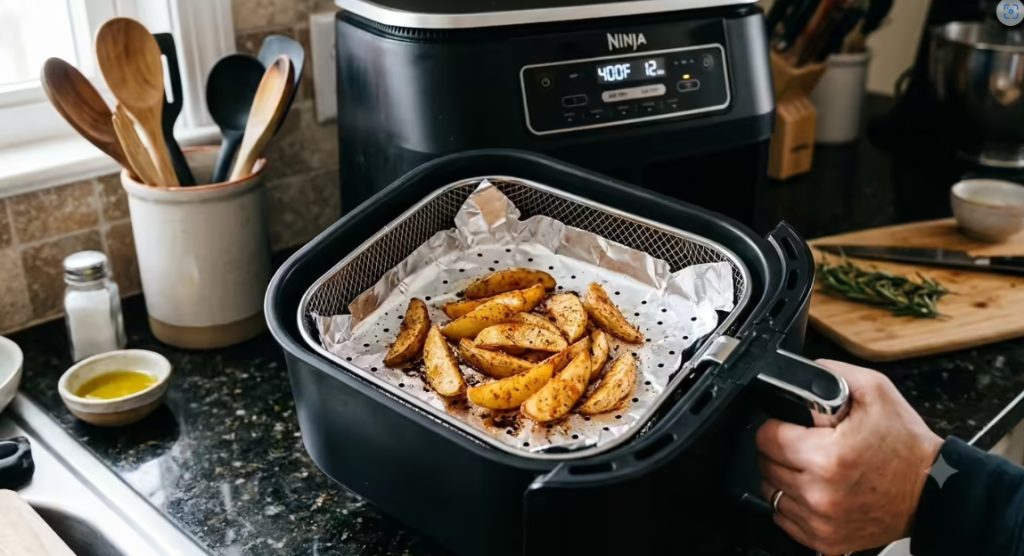
The key to successful air fryer foil safety is proper placement.
Instead of lining the entire basket, use only enough foil to support the food you’re cooking.
Leave open space around the edges whenever possible. This allows hot air to continue moving through the basket and maintain cooking efficiency.
Think of foil as a cooking aid, not as a complete basket liner.
We Tested Aluminum Foil in an Air Fryer: Here’s What Happened
To see whether using aluminum foil in an air fryer actually makes sense, we tested several common foods that home cooks regularly prepare.
The goal was to evaluate:
- Crispiness
- Cooking consistency
- Ease of cleanup
- Overall convenience
Test 1: Chicken Wings
Chicken wings are one of the most popular air fryer foods.
When cooked directly in the basket, the wings achieved excellent crispiness on all sides.
When cooked on foil, cleanup became much easier because grease remained on the foil instead of the basket.
However, the underside of the wings was slightly less crispy.
Result: Foil improved cleanup but reduced crispiness slightly.
Test 2: Salmon Fillets
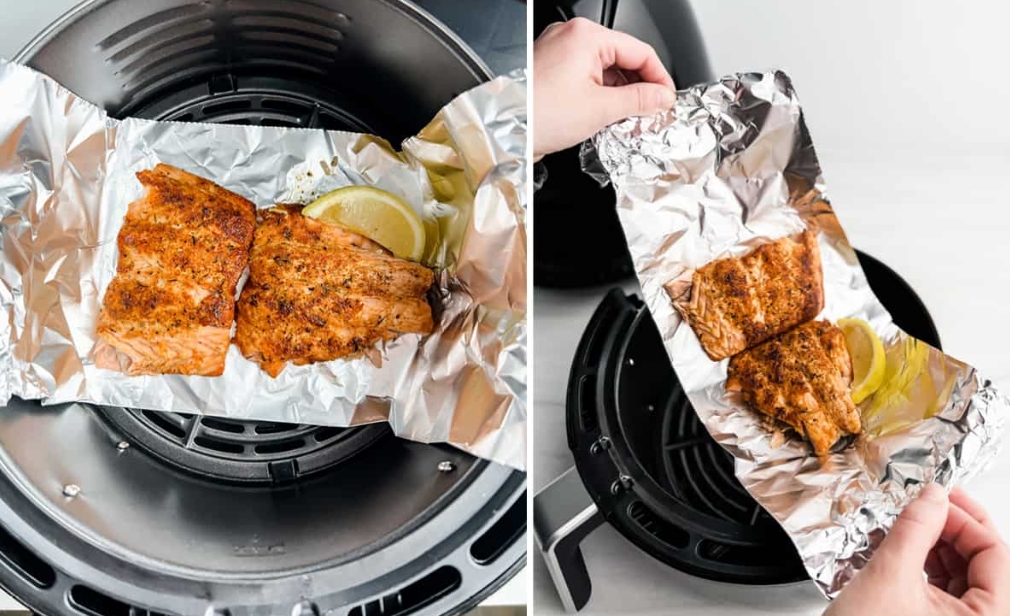
Salmon performed extremely well with foil.
The foil helped contain juices while preventing sticking.
Cleanup took only seconds, and the fish remained moist throughout cooking.
Result: Excellent use case for aluminum foil.
Test 3: Vegetables
Mixed vegetables showed mixed results.
Vegetables with high moisture content benefited from easier cleanup.
However, roasted vegetables that depend on direct hot air exposure lost some browning when placed on foil.
Result: Good for convenience but not always ideal for maximum roasting performance.
Overall Test Results
After multiple cooking sessions, several patterns became clear.
What We Liked
- Easier cleanup
- Less sticking
- Better handling of marinades
- Ideal for delicate foods
- Reduced basket scrubbing
What We Didn’t Like
- Slightly reduced airflow
- Less crispiness for some foods
- Potential for uneven cooking if overused
Our conclusion was simple: aluminum foil in an air fryer works best when used strategically rather than for every recipe.
Benefits of Using Aluminum Foil in an Air Fryer
There are several reasons many air fryer owners keep aluminum foil nearby.
Easier Cleanup
This is the biggest advantage.
Grease, sauces, and food residue stay on the foil instead of baking onto the basket.
For messy foods, cleanup time can be reduced significantly.
Helps Prevent Sticking
Certain foods naturally stick to cooking surfaces.
Foil creates a protective barrier that can make removing food easier, especially when cooking fish or marinated proteins.
Ideal for Delicate Foods
Foods that may fall apart during cooking often benefit from a foil base.
Examples include:
- Fish fillets
- Stuffed peppers
- Soft vegetables
- Certain baked goods
Great for Saucy Recipes
Barbecue chicken, glazed salmon, and marinated meats often release juices during cooking.
Foil helps contain these liquids while reducing mess inside the appliance.
Protects the Basket
Regular use of foil may help reduce wear and tear on basket coatings by limiting direct exposure to sticky ingredients and aggressive cleaning.
Risks of Using Aluminum Foil in an Air Fryer
Although foil offers several benefits, it is not perfect.
Reduced Airflow
Airflow is the foundation of air fryer cooking.
Too much foil can interfere with circulation and reduce performance.
Uneven Cooking
When hot air cannot reach all surfaces evenly, food may cook inconsistently.
This is particularly noticeable with larger portions.
Less Crispy Results
Foods that depend on airflow for crispiness often perform better without foil.
French fries are a good example.
Foil Can Move During Cooking
Lightweight foil sheets can shift if they are not secured by food.
This is especially important during preheating.
Not Suitable for Every Recipe
Some recipes simply work better without foil.
When maximum browning and crispiness are the goal, cooking directly in the basket is often the better option.
How to Use Aluminum Foil in an Air Fryer Safely
If you decide to use aluminum foil in an air fryer, following a few simple rules can help you get better cooking results while avoiding common mistakes.
Always Weigh Down the Foil
One of the biggest air fryer foil safety concerns is loose foil.
Because air fryers use powerful fans, lightweight foil can move around during cooking if it is not secured properly.
Always place food directly on top of the foil. This keeps it in place and prevents it from being blown toward the heating element.
Never Cover the Entire Basket
Many people assume lining the entire basket with foil will make cleanup easier.
While that sounds convenient, it can create airflow problems.
Air fryers are designed with vents and openings that allow hot air to circulate around the food. Covering the entire basket blocks this circulation and may result in uneven cooking.
Instead, use only enough foil to support the food you are cooking.
Leave Space Around the Edges
For the best results, leave gaps around the sides of the basket whenever possible.
This allows hot air to travel around the food and helps maintain the crisp texture air fryers are known for.
Keep Foil Away from the Heating Element
The heating element is usually located at the top of the air fryer.
Foil should never come into direct contact with it.
Although aluminum foil is heat-resistant, touching the heating element can cause damage, create smoke, or affect cooking performance.
Check Your Manufacturer’s Instructions
While most air fryers allow foil use, every model is slightly different.
Before using foil regularly, check your owner’s manual for any specific recommendations.
Following manufacturer guidelines is always the safest approach.
Foods That Work Well With Aluminum Foil in an Air Fryer
Not every recipe benefits from foil, but certain foods perform extremely well when cooked on it.
Fish and Seafood
Fish is one of the best candidates for aluminum foil in an air fryer.
Salmon, tilapia, cod, and shrimp often release juices while cooking.
Foil helps contain these juices while making cleanup much easier.
It also reduces the chance of delicate fish sticking to the basket.
Chicken Breasts
Marinated chicken breasts can leave behind sticky residue.
A foil base helps catch drippings and prevents sauces from burning onto the basket.
Stuffed Vegetables
Stuffed peppers, zucchini boats, and similar dishes often contain fillings that can spill during cooking.
Foil provides extra support while keeping the basket cleaner.
Baked Potatoes
Many people wrap baked potatoes in foil before cooking.
In an air fryer, foil can help retain moisture and create a softer potato skin.
However, if you prefer crispy skin, cooking without foil is usually better.
Foods With Sauces or Marinades
Recipes that include:
- BBQ sauce
- Honey garlic glaze
- Teriyaki sauce
- Sticky marinades
often benefit from foil because it catches drips and simplifies cleanup.
Foods You Should Not Cook With Aluminum Foil
Although foil has its advantages, some foods perform much better without it.
French Fries
French fries rely heavily on airflow for crispiness.
Using foil underneath fries can trap moisture and reduce browning.
For the crispiest fries, cook directly in the basket.
Breaded Foods
Breaded chicken, fish sticks, and similar foods often need airflow on all sides.
Foil may prevent the underside from becoming crispy.
Frozen Snacks
Foods like:
- Mozzarella sticks
- Pizza rolls
- Spring rolls
- Chicken nuggets
typically cook best when hot air can circulate freely around them.
Foods That Need Maximum Crispiness
Any recipe where texture is the priority should generally be cooked without foil.
Examples include:
- Crispy wings
- Onion rings
- Tater tots
- Hash browns
Acidic Foods
This is a commonly overlooked issue.
Foods containing large amounts of acid can react with aluminum foil.
Examples include:
- Tomatoes
- Lemon-based dishes
- Citrus marinades
- Vinegar-heavy sauces
While occasional use is unlikely to cause major problems, parchment paper is often a better choice for acidic foods.
Aluminum Foil vs Parchment Paper in an Air Fryer
Many air fryer owners wonder whether foil or parchment paper is the better option.
The answer depends on what you’re cooking.
Airflow Comparison
Perforated parchment paper generally allows better airflow than foil.
Because airflow is essential for crispy food, parchment often has an advantage here.
Cleanup Comparison
Both options make cleanup easier.
However, foil usually handles grease and sauces more effectively.
Heat Resistance
Aluminum foil can tolerate very high temperatures and is less likely to tear.
Parchment paper is also heat-resistant but should always be used according to its temperature limits.
Best Uses for Aluminum Foil
Foil works best for:
- Fish
- Marinated meats
- Saucy recipes
- Delicate foods
Best Uses for Parchment Paper
Parchment paper works best for:
- Cookies
- Pastries
- Breaded foods
- Foods that benefit from better airflow
Which One Should You Choose?
If your goal is easy cleanup and sauce control, aluminum foil is often the better option.
If your goal is maximum crispiness and airflow, parchment paper usually wins.
Many experienced air fryer owners keep both on hand and choose based on the recipe.
Common Mistakes People Make When Using Aluminum Foil in an Air Fryer
Even experienced cooks occasionally misuse foil.
Here are the most common mistakes to avoid.
Lining the Entire Basket
This is probably the most frequent error.
Covering every opening restricts airflow and can hurt cooking performance.
Using Too Much Foil
More foil does not mean better protection.
Use only the amount necessary for the recipe.
Preheating With Loose Foil
Never place foil in an empty basket during preheating.
Without food holding it down, the foil can move around inside the appliance.
Blocking Air Vents
Air fryer vents exist for a reason.
Blocking them can lead to uneven cooking and poor results.
Ignoring the User Manual
Some users assume every air fryer works the same way.
Taking a few minutes to review your appliance’s instructions can prevent mistakes and improve cooking performance.
Can Aluminum Foil Damage an Air Fryer?
This is another question many first-time owners ask.
The good news is that properly used foil is unlikely to damage your appliance.
What Manufacturers Generally Recommend
Most manufacturers allow foil as long as:
- Airflow remains unobstructed
- The foil is secured
- The heating element is not touched
When Damage Can Occur
Problems typically happen when foil is used incorrectly.
Potential issues include:
- Restricted airflow
- Overheating
- Contact with heating elements
- Excessive smoke production
Signs You’re Using Foil Incorrectly
Watch for:
- Uneven cooking
- Longer cooking times
- Burning smells
- Reduced crispiness
- Foil shifting during operation
If you notice these issues, adjust your foil placement or remove it entirely.
Can You Use Aluminum Foil in Different Air Fryer Brands?
In most cases, yes.
Popular brands generally permit foil use when proper safety practices are followed.
Ninja Air Fryers
Many Ninja air fryer owners use foil successfully for fish, chicken, and easy cleanup.
Philips Air Fryers
Philips models typically support foil use as long as airflow is maintained.
Cosori Air Fryers
Foil can be useful for containing marinades and reducing basket cleanup.
Instant Air Fryers
Instant air fryer users often use foil for delicate foods and saucy recipes.
Always Check Your Manual
Regardless of brand, your owner’s manual remains the best source for model-specific guidance.
No two air fryers are exactly alike.
Alternatives to Aluminum Foil in an Air Fryer
Although aluminum foil is useful for many recipes, it isn’t always the best option. Depending on what you’re cooking, another air fryer accessory may give you even better results.
Here are some of the best alternatives to aluminum foil in an air fryer.
Perforated Parchment Paper
Perforated parchment paper is one of the most popular alternatives because it’s designed specifically for air fryers.
Unlike regular parchment paper, it has small holes that allow hot air to circulate around the food. This helps maintain the crispy texture that air fryers are known for.
Best for:
- Chicken wings
- French fries
- Vegetables
- Breaded foods
- Frozen snacks
Pros
- Excellent airflow
- Non-stick surface
- Easy cleanup
- Disposable after use
Cons
- Not ideal for recipes with lots of liquid
- Must always be weighed down by food
Silicone Air Fryer Liners
Reusable silicone liners have become increasingly popular among air fryer owners.
These flexible mats sit inside the basket and catch grease while allowing air to circulate through raised ridges or built-in holes.
Because they’re reusable, they’re also an eco-friendly option.
Best for:
- Everyday cooking
- Family meals
- Reheating leftovers
- Reducing basket cleanup
Pros
- Reusable
- Dishwasher safe
- Durable
- Helps protect the basket coating
Cons
- Slightly reduces airflow compared to cooking directly in the basket
- Costs more upfront than foil
Reusable Air Fryer Liners
Reusable liners are available in silicone, mesh, and other heat-resistant materials.
They work well for people who use their air fryer several times a week and want to reduce waste.
Many are designed with perforations to improve airflow.
Cooking Directly in the Basket
Sometimes, the best option is not using any liner at all.
Cooking directly in the basket provides the best airflow, allowing hot air to reach every side of the food.
If your priority is achieving the crispiest fries, wings, or breaded chicken, skip the foil and let the air fryer do what it does best.
Expert Tips for Better Results When Using Foil
Using aluminum foil correctly isn’t difficult, but a few simple techniques can make a noticeable difference.
Use Only What You Need
Instead of covering the entire basket, tear off a piece that’s just large enough for your food.
This leaves plenty of room for hot air to circulate.
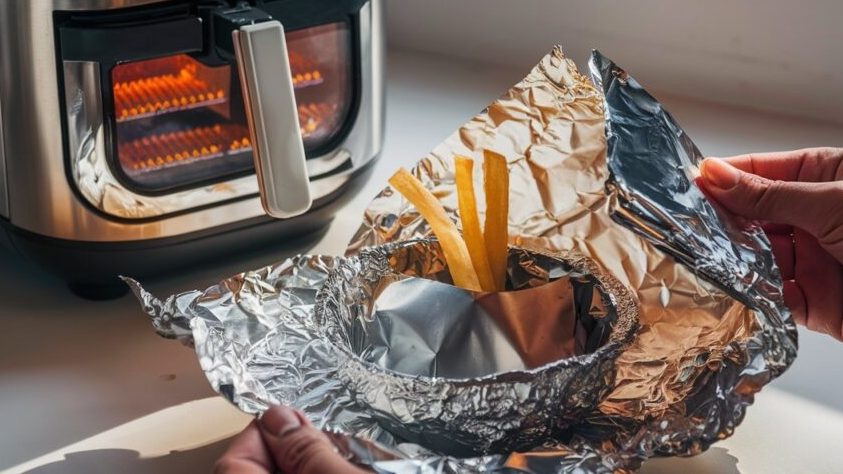
Shape the Foil Like a Tray
For foods with sauces or juices, fold up the edges of the foil slightly.
This creates a shallow tray that keeps liquids contained without spilling into the basket.
Leave the Sides Open
Avoid pressing foil tightly against the sides of the basket.
Leaving open space improves airflow and promotes more even cooking.
Don’t Wrap Food Too Tightly
If you completely wrap food in foil, the hot air can’t reach the surface.
The food may cook through, but it won’t develop the crispy exterior that makes air fryers so effective.
Check Food Halfway Through Cooking
Whenever you’re using aluminum foil in an air fryer, it’s a good idea to check the food halfway through cooking.
This allows you to:
- Rotate the food if needed
- Ensure the foil hasn’t shifted
- Check for even browning
- Adjust cooking time if necessary
Adjust Cooking Time When Needed
Because foil can slightly reduce airflow, some recipes may require an extra minute or two of cooking time.
Don’t rely only on the timer—use the appearance and internal temperature of the food to determine when it’s done.
Pros and Cons of Using Aluminum Foil in an Air Fryer
Like most cooking tools, aluminum foil has both advantages and disadvantages.
Pros
- Makes cleanup much easier
- Prevents sticky foods from clinging to the basket
- Helps contain sauces and marinades
- Ideal for delicate foods like fish
- Can reduce wear on the non-stick basket
- Readily available and inexpensive
Cons
- Can block airflow if used incorrectly
- May reduce crispiness for some foods
- Not recommended for every recipe
- Can move around if not weighed down
- Less suitable for acidic foods
- Requires proper placement for safe use
Overall, the benefits outweigh the drawbacks when foil is used correctly and only when appropriate.
Who Should Use Aluminum Foil in an Air Fryer?
Aluminum foil isn’t necessary for every meal, but it can be a helpful tool in the right situations.
You may benefit from using foil if you:
- Frequently cook marinated meats
- Want faster cleanup after cooking
- Prepare delicate fish or seafood
- Cook foods that release a lot of juices
- Want to protect your air fryer basket from baked-on residue
However, you may want to avoid foil if your goal is maximum crispiness.
Recipes like fries, chicken wings, onion rings, and breaded foods usually turn out better when cooked directly in the basket, where hot air can circulate freely.
Frequently Asked Questions
Can aluminum foil block airflow in an air fryer?
It can. Covering the entire basket or blocking the vents restricts hot air circulation, which may lead to uneven cooking and less crispy food.
Is parchment paper better than aluminum foil?
Neither is better for every recipe. Parchment paper is often preferred for foods that need maximum airflow, while aluminum foil is ideal for containing sauces, juices, and marinades.
Can you use aluminum foil in a Ninja, Cosori, or Philips air fryer?
In many cases, yes. These brands generally allow foil when it’s used correctly, but it’s always best to check the user manual for your specific model.
Can you wrap food completely in aluminum foil?
You can, but wrapping food tightly limits airflow. The food may cook through, but it won’t become as crispy as food exposed directly to circulating hot air.
Does aluminum foil affect cooking time?
It can. Because foil slightly reduces airflow, some recipes may take a little longer to cook. Check your food regularly and adjust the cooking time if needed.
Conclusion: Can You Put Aluminum Foil in an Air Fryer?
So, can you put aluminum foil in an air fryer?
Yes. In most cases, aluminum foil is safe to use in an air fryer when it’s placed correctly and doesn’t block airflow.
Our review found that foil is especially useful for cooking fish, marinated meats, baked potatoes, and other foods that can create a mess inside the basket. It also makes cleanup faster and helps prevent sticking.
However, foil isn’t the best choice for every recipe. Foods that rely on strong air circulation for a crispy finish—such as fries, wings, and breaded snacks—usually cook better without it.
The safest approach is simple: use foil only when it improves the recipe, secure it with food, avoid covering the entire basket, and always follow the instructions for your specific air fryer model.
Used wisely, aluminum foil can be a valuable kitchen tool that makes air fryer cooking cleaner, easier, and more convenient.