
Air fryers have become one of the most popular kitchen appliances, making it easier than ever to prepare crispy, delicious meals with little or no oil. They cook food quickly, are easy to use, and can handle everything from fries and chicken wings to vegetables and desserts. However, like any electrical appliance that generates high heat, they should always be used correctly.
The good news is that air fryers are generally very safe when used according to the manufacturer’s instructions. Most modern models include built-in safety features such as automatic shut-off, overheat protection, cool-touch handles, and non-slip feet. Even with these features, accidents can still happen if the appliance is used carelessly or not maintained properly.
Simple mistakes—such as overcrowding the basket, blocking the air vents, placing the air fryer too close to a wall, or forgetting to clean away grease—can lead to smoke, unpleasant odors, uneven cooking, overheating, or, in rare cases, even a fire. Fortunately, these problems are usually easy to prevent by following a few basic air fryer safety tips.
Whether you’ve just purchased your first air fryer or you’ve been using one for years, understanding how to use an air fryer safely can help protect both your appliance and your home. A few small habits, like choosing the right location, cleaning it regularly, and using the correct accessories, can also extend the life of your air fryer and improve cooking results.
In this guide, you’ll learn the most important air fryer safety precautions every owner should know. We’ll cover common mistakes to avoid, practical maintenance tips, ways to reduce the risk of overheating or smoke, and simple habits that make cooking safer and more enjoyable. By the end of this article, you’ll have a complete air fryer safety guide you can follow every time you cook.
Why Air Fryer Safety Matters
Air fryers are designed to make cooking easier, faster, and healthier, but they still operate by circulating extremely hot air at temperatures that can reach 400°F (200°C) or higher. This high heat is what gives food its crispy texture, but it also means the appliance deserves the same level of care as an oven or stovetop.
Understanding air fryer safety isn’t about being afraid to use the appliance—it’s about using it correctly so you can enjoy years of reliable performance without unnecessary risks.
Are Air Fryers Safe to Use?
Yes. For most households, air fryers are considered one of the safest countertop cooking appliances available.
Many models include several built-in safety features, such as:
- Automatic shut-off when the cooking cycle ends
- Overheat protection to reduce the risk of damage
- Cool-touch handles that help prevent burns
- Non-slip feet for added stability
- Safety sensors that pause cooking when the basket is removed
These features are designed to make everyday cooking safer, especially for beginners. However, they cannot prevent every accident. User habits still play a major role in safe operation.
For example, placing the appliance on an unstable surface, blocking the air vents, using damaged power cords, or cooking with excessive grease can create avoidable problems. That’s why learning a few basic air fryer safety tips is just as important as choosing a quality appliance.
Common Air Fryer Hazards
Although serious incidents are uncommon, there are a few issues every owner should be aware of.
Burns from Hot Surfaces
The basket, cooking tray, and the inside of the air fryer become extremely hot during use. Hot steam also escapes when you open the basket, which can cause minor burns if you’re not careful.
Smoke During Cooking
One of the most common concerns owners experience is smoke coming from the air fryer. This usually isn’t a sign that the appliance is defective. Instead, it’s often caused by:
- Grease buildup from previous cooking
- Excess oil dripping onto the heating element
- Fatty foods releasing grease
- Burnt food particles left in the basket
Regular cleaning greatly reduces this problem.
Overheating
Proper airflow is essential for an air fryer to work efficiently. Blocking the air intake or exhaust vents, placing the appliance against a wall, or covering it while it’s running can cause the unit to overheat.
Following proper air fryer safety precautions helps prevent unnecessary strain on the appliance and improves cooking performance.
Electrical Problems
Like any countertop appliance, damaged power cords, overloaded outlets, or unsafe extension cords can increase electrical risks. Always inspect your air fryer before use and plug it directly into a suitable wall outlet whenever possible.
Fire Risk
Air fryer fires are rare, but they can happen if grease accumulates over time, flammable objects are placed too close to the appliance, or serious electrical faults develop.
The good news is that regular maintenance, proper ventilation, and following basic air fryer safety practices dramatically reduce the likelihood of these issues.
By understanding these potential hazards, you’ll be better prepared to avoid common mistakes and enjoy safe, worry-free cooking every time you use your air fryer.
15 Air Fryer Safety Tips Every Owner Should Know
Knowing how to use an air fryer safely doesn’t require complicated rules. In fact, most safety issues can be avoided by following a few simple habits every time you cook. These air fryer safety tips will help you prevent burns, reduce the risk of smoke or overheating, and keep your appliance working efficiently for years.
1. Place Your Air Fryer on a Stable, Heat-Resistant Surface
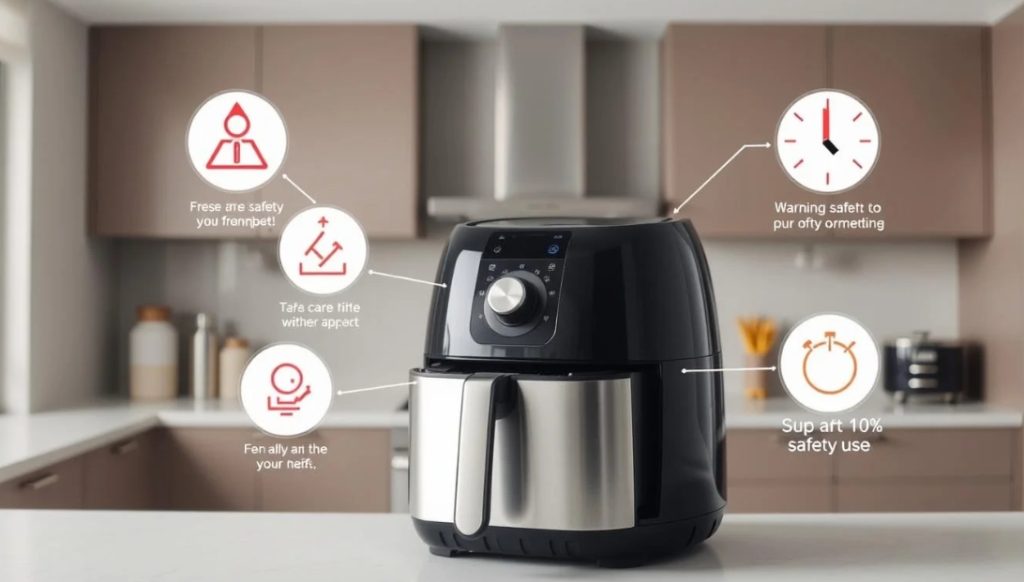
One of the first air fryer safety precautions is choosing the right location for your appliance. Since air fryers generate a significant amount of heat, they should always be placed on a flat, sturdy, and heat-resistant surface.
Good options include:
- Granite countertops
- Quartz countertops
- Tile surfaces
- Solid wood countertops
- Other stable kitchen worktops designed for appliances
Avoid placing your air fryer on:
- Plastic tables
- Vinyl-covered surfaces
- Tablecloths
- Unstable shelves
- Soft or uneven surfaces
A stable surface prevents the appliance from tipping over while the basket is being pulled out. It also protects your countertop from unnecessary heat exposure and helps ensure the air fryer operates safely.
If your countertop becomes noticeably hot during cooking, consider using a heat-resistant mat designed for kitchen appliances.
2. Leave Enough Space Around the Air Fryer
Air fryers rely on proper airflow to cook food efficiently. The appliance pulls in cool air through intake vents and releases hot air through exhaust vents. Blocking this airflow can reduce cooking performance and increase the risk of overheating.
As a general rule, leave at least 5 to 6 inches (13–15 cm) of open space on all sides of the air fryer, especially around the back where hot air is usually expelled.
Avoid placing your air fryer:
- Directly against a wall
- Under low-hanging kitchen cabinets
- Inside enclosed cupboards while operating
- Next to curtains or other flammable materials
- Beside other heat-producing appliances
Proper air fryer ventilation helps the appliance maintain a safe operating temperature while also improving cooking results.
3. Read the User Manual Before Your First Use
Many people skip the instruction manual and start cooking immediately. While most air fryers work similarly, every model has its own features, recommended cooking methods, and maintenance instructions.
Taking just a few minutes to read the manual can help you understand:
- Maximum cooking temperatures
- Recommended accessories
- Cleaning instructions
- Safety warnings
- How to preheat your specific model
- Proper basket placement
- Error codes and troubleshooting tips
Some manufacturers also recommend running the air fryer empty for a few minutes before cooking food for the first time. This helps remove any manufacturing odors that may be present in a new appliance.
Following the manufacturer’s recommendations is one of the easiest ways to practice good air fryer safety from day one.
4. Never Overfill the Basket
It’s tempting to fill the basket completely, especially when cooking for a family. However, overcrowding is one of the most common mistakes air fryer owners make.
Air fryers cook by circulating hot air around the food. When the basket is packed too tightly, the hot air cannot move freely.
Overfilling the basket can lead to:
- Uneven cooking
- Soggy food
- Longer cooking times
- Food sticking together
- Increased smoke from trapped grease
Instead, arrange food in a single layer whenever possible. If you’re preparing a large meal, cook in smaller batches. Although it may take a little longer, you’ll get crispier, more evenly cooked food and reduce strain on the appliance.
This simple habit is one of the best examples of how to use an air fryer safely while also improving your cooking results.
5. Don’t Put Unsafe Materials Inside the Air Fryer
Not everything that fits inside an air fryer is safe to cook with. Since the appliance uses rapidly circulating hot air, some materials can melt, burn, or even create a fire hazard.
Never place these items inside your air fryer:
- Plastic containers that aren’t labeled oven-safe
- Styrofoam trays or cups
- Wax paper
- Regular paper bags
- Plastic wrap
- Wooden utensils left inside during cooking
- Glass dishes that are not oven-safe
Instead, use accessories specifically designed for high-temperature cooking, such as:
- Oven-safe ceramic dishes
- Oven-safe glass cookware
- Silicone baking molds rated for high heat
- Metal baking pans that fit your air fryer
- Air fryer-safe parchment paper
- Aluminum foil when used correctly and according to your manufacturer’s recommendations
Using the proper accessories not only improves cooking performance but also helps prevent damage to your appliance.
Whenever you’re unsure about an accessory, check whether it’s rated for oven use. If it isn’t designed to withstand high temperatures, it’s best to keep it out of the air fryer.
6. Clean Your Air Fryer After Every Use
One of the easiest yet most overlooked air fryer safety tips is cleaning your appliance after each use. While it may be tempting to leave the basket until later, leftover grease and food particles can quickly build up and create problems.
Grease buildup can cause:
- Smoke during cooking
- Unpleasant burning odors
- Reduced cooking performance
- Bacteria growth on leftover food residue
- Extra strain on the heating element
Fortunately, cleaning an air fryer only takes a few minutes.
How to Clean It Safely
- Unplug the air fryer and let it cool completely.
- Remove the basket and cooking tray.
- Wash removable parts with warm water, mild dish soap, and a soft sponge.
- Wipe the inside of the cooking chamber with a damp cloth.
- Dry all parts thoroughly before reassembling.
Avoid using:
- Steel wool
- Abrasive scrubbers
- Harsh chemical cleaners
- Metal utensils that can scratch the nonstick coating
Keeping your air fryer clean not only improves food quality but also helps prevent smoke and overheating, making it an important part of air fryer cleaning safety.
7. Avoid Using Too Much Oil
Although air fryers require much less oil than traditional deep fryers, using too much oil can actually create safety issues.
When excess oil drips onto the heating element or collects at the bottom of the basket, it can produce smoke, unpleasant odors, and grease splatter.
For most recipes, you only need:
- A light spray of cooking oil
- About one teaspoon of oil
- Or no oil at all for naturally fatty foods
Foods like chicken wings, bacon, and sausages release their own fat during cooking, so adding extra oil is often unnecessary.
Instead of pouring oil directly onto the food, lightly coat it using an oil mister or brush. This helps achieve crispy results without creating excess grease inside the appliance.
Using oil wisely is one of the simplest air fryer safety precautions that also makes cleanup much easier.
8. Never Leave Your Air Fryer Unattended
Air fryers are designed to cook automatically, but that doesn’t mean they should be left completely unattended.
While most modern models include automatic shut-off features, unexpected issues can still occur, such as:
- Excessive smoke from fatty foods
- Food burning if cooking time is too long
- Unusual noises
- Electrical faults
- Overheating caused by blocked vents
This doesn’t mean you need to stand in front of your air fryer the entire time. However, you should remain nearby so you can respond quickly if something seems unusual.
It’s especially important to monitor foods that produce a lot of grease, including:
- Bacon
- Burgers
- Sausages
- Duck
- Chicken thighs with skin
Staying close while cooking is a simple habit that improves overall air fryer safety and helps prevent small problems from becoming bigger ones.
9. Keep the Air Intake and Exhaust Vents Clear
Every air fryer depends on proper airflow to cook food evenly and regulate internal temperature.
Most models draw cool air through intake vents and release hot air through exhaust vents. Blocking these openings restricts airflow and forces the appliance to work harder.
Blocked vents may lead to:
- Overheating
- Longer cooking times
- Poor cooking performance
- Automatic shut-offs
- Reduced appliance lifespan
Before each use, check that nothing is blocking the vents.
Avoid placing the air fryer:
- Against the wall
- Inside a cabinet while running
- Too close to other appliances
- Under towels or covers
Also, clean dust and grease from the exterior vents occasionally using a soft cloth or small brush.
Good airflow is essential for preventing air fryer overheating and ensuring consistent cooking performance.
10. Inspect the Power Cord Regularly
Your air fryer’s power cord is just as important as the appliance itself. A damaged cord can increase the risk of electrical shock, overheating, or even fire.
Before plugging in your air fryer, take a quick look at the cord.
Check for:
- Cracks in the insulation
- Frayed wires
- Burn marks
- Loose connections
- Bent or damaged plugs
If you notice any damage, stop using the appliance until it has been repaired or replaced according to the manufacturer’s recommendations.
Plug Your Air Fryer into a Suitable Outlet
For the safest operation:
- Plug directly into a wall outlet whenever possible.
- Avoid overloaded power strips.
- Do not use lightweight extension cords unless the manufacturer specifically says they are safe.
- Keep the cord away from hot surfaces and sharp edges.
- Never pull the appliance by its power cord.
A quick cord inspection only takes a few seconds, but it can help prevent avoidable electrical hazards.
These air fryer safety tips focus on everyday habits that make a real difference. Cleaning your appliance, using the right amount of oil, monitoring it while cooking, keeping the vents clear, and checking the power cord regularly all contribute to safer cooking and a longer-lasting air fryer.
11. Handle the Basket Carefully to Avoid Burns
One of the most common injuries associated with air fryers is minor burns caused by touching hot surfaces or escaping steam. During cooking, the basket, cooking tray, and the inside of the appliance become extremely hot.
When you pull out the basket to shake food or check if it’s done, a burst of hot steam may escape. If your hands or face are too close, you could get burned.
Tips for Safe Basket Handling
- Always hold the basket by its handle.
- Pull the basket out slowly to avoid a sudden release of hot steam.
- Place the hot basket on a heat-resistant surface, not directly on a tablecloth or plastic surface.
- Use oven mitts if you’re handling hot accessories or baking pans inside the air fryer.
- Keep children and pets away while the basket is hot.
Also, avoid touching the heating element inside the cooking chamber after use. Even if the appliance is turned off, it can remain hot for several minutes.
Taking a few extra seconds to handle the basket carefully is a simple but important air fryer safety precaution.
12. Replace Damaged Accessories Immediately
Air fryer accessories don’t last forever. Over time, baskets, trays, racks, and nonstick coatings can wear out from regular use.
Ignoring damaged accessories can affect both safety and cooking performance.
Inspect your accessories regularly for signs of wear, including:
- Peeling or flaking nonstick coating
- Rust spots
- Cracks or warping
- Loose or broken handles
- Bent cooking racks
- Damaged silicone feet on trays
If you notice any of these problems, replace the damaged part with a compatible replacement from the manufacturer or a trusted supplier.
Using damaged accessories can lead to uneven cooking, food sticking, or difficulty handling hot parts safely.
To extend the life of your accessories:
- Wash them with a soft sponge.
- Avoid using metal utensils.
- Do not stack heavy cookware on top of them.
- Store them carefully to prevent dents and scratches.
Good maintenance is an essential part of long-term air fryer safety.
13. Cook Greasy Foods with Extra Care
Foods with a high fat content naturally release grease as they cook. While this is perfectly normal, the extra grease can collect in the bottom of the basket and sometimes create smoke.
Foods that need extra attention include:
- Bacon
- Sausages
- Burgers
- Pork belly
- Lamb chops
- Chicken thighs with skin
To reduce smoke and improve air fryer fire prevention, follow these tips:
- Don’t overcrowd the basket.
- Remove excess grease between batches if necessary.
- Clean the basket after cooking fatty foods.
- Avoid adding extra oil to naturally fatty ingredients.
- Monitor the cooking process, especially during longer cooking times.
If you notice excessive smoke, pause the cooking cycle, allow the appliance to cool slightly, and check whether grease has accumulated at the bottom of the basket.
Proper grease management helps keep your kitchen cleaner and reduces unnecessary wear on your air fryer.
14. Keep Your Air Fryer Away from Water
Since an air fryer is an electrical appliance, keeping it away from water is an important part of air fryer safety.
While the removable basket and tray are designed to be washed, the main unit contains electrical components that should never be submerged.
Follow These Safety Tips
- Never immerse the main air fryer unit in water.
- Do not rinse the appliance under a running tap.
- Wipe the exterior with a soft, damp cloth only.
- Make sure all removable parts are completely dry before putting them back.
- Keep the power cord and plug dry at all times.
Also, avoid placing the air fryer next to a sink where it could be splashed during everyday kitchen tasks.
If water accidentally gets inside the appliance, unplug it immediately and allow it to dry completely before using it again. If you suspect water has reached the electrical components, have the unit inspected before plugging it back in.
These simple habits help reduce the risk of electrical damage and improve the overall lifespan of your appliance.
15. Unplug Your Air Fryer After Every Use
Many people leave their air fryer plugged in all the time, even when it’s not in use. While this may seem convenient, unplugging the appliance after cooking is a smart safety habit.
Unplugging your air fryer can help:
- Reduce the risk of electrical faults.
- Protect the appliance during power surges.
- Save a small amount of standby electricity.
- Prevent accidental activation.
- Give you peace of mind when leaving home.
Before unplugging, always allow the cooking cycle to finish and let the cooling fan stop if your model has one. Then switch the appliance off and remove the plug by gripping the plug itself rather than pulling on the cord.
This simple step takes only a few seconds but is one of the easiest air fryer safety tips to follow.
Air Fryer Dos and Don’ts
Now that you know the essential air fryer safety precautions, it’s helpful to summarize them into a quick list of habits you should always follow—and mistakes you should avoid.
Things You Should Always Do
Building good habits will keep your air fryer running safely and efficiently for years.
✔ Read the user manual before using a new air fryer.
✔ Place the appliance on a stable, heat-resistant countertop.
✔ Leave enough space around the air fryer for proper ventilation.
✔ Preheat the air fryer if the recipe or manufacturer recommends it.
✔ Clean the basket, tray, and cooking chamber after each use.
✔ Use accessories that are designed to withstand high temperatures.
✔ Check the power cord regularly for signs of wear or damage.
✔ Cook food in a single layer whenever possible for better airflow.
✔ Monitor foods that release large amounts of grease.
✔ Unplug the appliance after use once it has finished cooling.
Following these simple habits improves both cooking performance and overall air fryer safety.
Things You Should Never Do
Just as important as knowing what to do is knowing what to avoid.
❌ Don’t block the air intake or exhaust vents.
❌ Don’t overcrowd the basket.
❌ Don’t place the air fryer against a wall or beneath low cabinets while it’s operating.
❌ Don’t use plastic containers, wax paper, or other materials that aren’t heat-safe.
❌ Don’t ignore smoke, burning smells, or unusual noises.
❌ Don’t use a damaged power cord or loose electrical outlet.
❌ Don’t immerse the main unit in water.
❌ Don’t scratch the nonstick coating with metal utensils.
❌ Don’t leave the air fryer running while you’re away from home.
❌ Don’t forget regular cleaning after cooking greasy foods.
By making these dos and don’ts part of your routine, you’ll reduce the chances of accidents and keep your air fryer performing at its best for years to come.
Common Air Fryer Safety Mistakes
Even experienced air fryer owners can develop habits that reduce cooking performance or create unnecessary safety risks. Most of these mistakes are easy to avoid once you know what to look for.
Here are some of the most common air fryer safety mistakes and the simple steps you can take to prevent them.
Skipping Regular Cleaning
One of the biggest mistakes is putting the air fryer away without cleaning it after each use.
Small pieces of food and grease can quickly build up inside the basket and cooking chamber. Over time, this buildup may cause:
- Smoke while cooking
- Burning smells
- Food that tastes burnt
- Poor airflow
- Reduced cooking performance
How to avoid it:
Wash the basket and tray after every use, especially after cooking greasy foods like bacon, burgers, or chicken wings. Wipe the inside of the cooking chamber regularly to remove grease splatters.
A clean air fryer is not only safer but also cooks food more evenly.
Overcrowding the Basket
Many people try to cook too much food at once to save time. Unfortunately, this often has the opposite effect.
When the basket is overcrowded:
- Hot air cannot circulate properly.
- Food cooks unevenly.
- Some pieces remain soggy.
- Cooking times increase.
- More grease becomes trapped inside.
How to avoid it:
Arrange food in a single layer whenever possible. If you’re cooking for several people, prepare multiple smaller batches instead of one overloaded basket.
Blocking the Air Vents
Air fryers need constant airflow to maintain the correct cooking temperature.
Placing the appliance against a wall or surrounding it with other objects can block the intake or exhaust vents.
This may lead to:
- Overheating
- Longer cooking times
- Automatic shut-offs
- Reduced appliance lifespan
How to avoid it:
Always leave at least 5–6 inches (13–15 cm) of space around the air fryer, particularly behind the unit where hot air is usually released.
Using the Wrong Accessories
Not every dish or container is safe to use in an air fryer.
Materials like plastic, Styrofoam, wax paper, or non-heat-resistant glass can melt, crack, or create dangerous situations when exposed to high temperatures.
How to avoid it:
Only use accessories labeled as oven-safe or specifically designed for air fryers. If you’re unsure, check the manufacturer’s recommendations before placing any cookware inside the appliance.
Ignoring Smoke or Burning Smells
Some users assume smoke is a normal part of air fryer cooking. While a small amount of steam is expected, continuous smoke or a strong burning smell usually indicates a problem.
Possible causes include:
- Grease buildup
- Burnt food residue
- Too much oil
- Fat dripping onto the heating element
How to avoid it:
Turn off the air fryer if you notice excessive smoke. Allow it to cool, inspect the basket and cooking chamber, and clean away any grease or food residue before using it again.
Using Metal Utensils on the Basket
The nonstick coating inside most air fryer baskets helps prevent food from sticking and makes cleaning easier. However, metal utensils can scratch this coating over time.
Damaged coatings may:
- Cause food to stick.
- Make cleaning more difficult.
- Shorten the life of the basket.
How to avoid it:
Use silicone, wooden, or heat-resistant plastic utensils designed for nonstick cookware.
Leaving the Appliance Plugged In All the Time
While many people leave their air fryer plugged into the outlet between uses, unplugging it when you’re finished is a simple safety habit.
Leaving the appliance connected unnecessarily may expose it to electrical surges or accidental activation.
How to avoid it:
After cooking and once the appliance has cooled, unplug it by holding the plug rather than pulling the cord.
Using an Air Fryer Near Flammable Materials
Kitchen towels, paper towels, curtains, and wooden utensils stored too close to the air fryer can become hazardous if exposed to hot exhaust air.
How to avoid it:
Keep the area around your air fryer clear and free from anything that could catch fire or block ventilation.
Forgetting to Check the Power Cord
Power cords can become damaged through daily use, especially if they are bent sharply, trapped behind appliances, or exposed to heat.
How to avoid it:
Inspect the cord regularly. If you notice fraying, cracks, or burn marks, stop using the appliance until it has been repaired or replaced.
What to Do If Your Air Fryer Starts Smoking
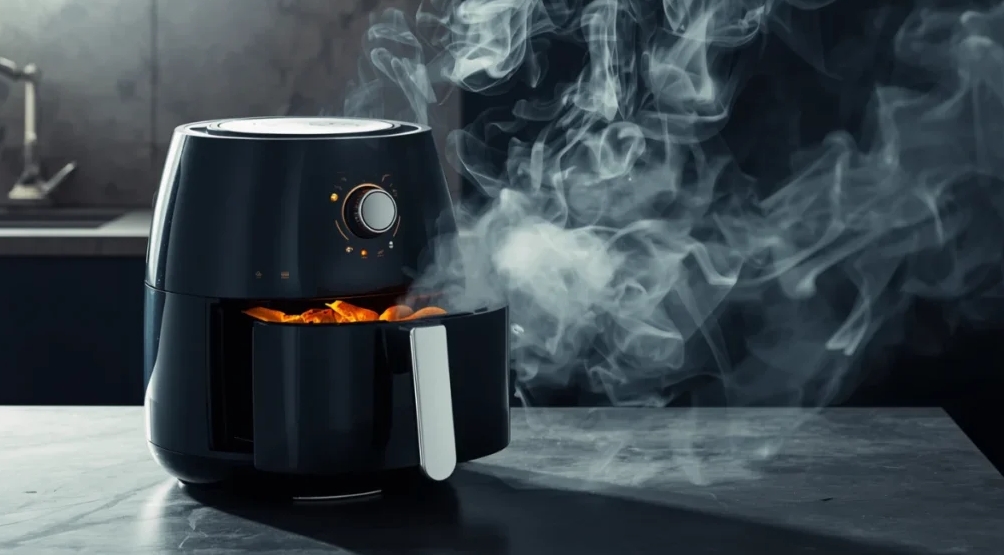
Seeing smoke coming from your air fryer can be alarming, but it doesn’t always mean the appliance is damaged. In many cases, the cause is something simple, such as grease buildup or excess oil.
Knowing how to respond calmly can help keep you and your kitchen safe.
Step 1: Turn Off the Air Fryer
As soon as you notice excessive smoke, switch off the appliance.
If it’s safe to do so, unplug it from the wall outlet. Avoid touching hot surfaces with bare hands.
Step 2: Let the Appliance Cool
Do not immediately remove the basket or attempt to clean the air fryer while it’s still hot.
Allow it to cool completely before inspecting the inside.
Step 3: Identify the Cause
Once the appliance has cooled, check for common causes such as:
- Grease buildup
- Burnt food particles
- Excess cooking oil
- Fat dripping from meat
- Food touching the heating element
- An overcrowded basket
In most cases, cleaning the appliance thoroughly solves the problem.
Step 4: Clean Before Using It Again
Remove the basket and tray, wash them with warm soapy water, and wipe away grease from the cooking chamber.
If smoke continues after cleaning, stop using the appliance until you’ve identified the cause.
Step 5: Watch for Signs of Electrical Problems
If you notice any of the following, discontinue use immediately:
- Sparks
- A strong electrical burning smell
- Melted plastic around the cord
- Visible damage to the power cord
- Smoke coming from inside the main unit rather than the basket
These signs may indicate an electrical fault that requires professional inspection or replacement of the appliance.
Air Fryer Fire Prevention Tips
Although air fryer fires are uncommon, following a few simple habits can significantly reduce the risk.
Keep Your Air Fryer Clean
Grease and food residue are among the most common causes of smoke. Cleaning the appliance after every use helps prevent buildup that could overheat during future cooking sessions.
Give the Appliance Plenty of Space
Always allow enough room around the air fryer for proper airflow. Avoid placing it under cabinets or against walls where hot exhaust air can become trapped.
Monitor Greasy Foods
Foods like bacon, burgers, and sausages release large amounts of fat. Check the basket during cooking and empty excess grease between batches if needed.
Use the Correct Accessories
Only use cookware and accessories that are safe for high-temperature cooking. Avoid plastic containers, wax paper, or anything that could melt or burn.
Keep Flammable Items Away
Store paper towels, dishcloths, wooden utensils, and other combustible materials away from the appliance while it’s operating.
Never Ignore Warning Signs
If your air fryer repeatedly overheats, produces excessive smoke after cleaning, or develops a burning electrical smell, stop using it until you’ve found the cause. Continuing to use a malfunctioning appliance can increase the risk of damage or fire.
By following these practical air fryer safety tips, you can enjoy the convenience of air frying while minimizing potential hazards and extending the life of your appliance.
Air Fryer Safety Checklist
Before you start cooking, take a minute to go through this quick checklist. These simple steps can help prevent common problems such as smoke, overheating, uneven cooking, and unnecessary wear on your appliance.
Before Cooking
✔ Place the air fryer on a flat, heat-resistant countertop.
✔ Leave at least 5–6 inches (13–15 cm) of space around the appliance for proper airflow.
✔ Make sure the air intake and exhaust vents are not blocked.
✔ Check that the power cord and plug are in good condition.
✔ Ensure the basket and cooking tray are clean and free of old grease or food residue.
✔ Use only oven-safe or air fryer-safe accessories.
✔ Avoid overcrowding the basket so hot air can circulate properly.
✔ Keep paper towels, dishcloths, and other flammable materials away from the appliance.
✔ Read the recipe instructions and set the correct cooking temperature and time.
During Cooking
✔ Stay nearby while the air fryer is running.
✔ Monitor foods that release large amounts of grease, such as bacon or burgers.
✔ Pull out the basket carefully to avoid hot steam.
✔ Shake or flip food when needed for even cooking.
✔ If you notice unusual smoke, burning smells, or strange noises, stop cooking and inspect the appliance after it has cooled.
After Cooking
✔ Switch off the air fryer and allow it to cool.
✔ Unplug the appliance when you’re finished using it.
✔ Wash the basket and tray with warm, soapy water.
✔ Wipe the cooking chamber to remove grease splatters.
✔ Dry all removable parts completely before storing or reassembling the air fryer.
Following this air fryer safety checklist every time you cook can help keep your appliance working efficiently while reducing the risk of accidents.
Frequently Asked Questions
Are Air Fryers Safe to Leave Unattended?
No. Although most modern air fryers have automatic shut-off and overheat protection, it’s still best to stay nearby while cooking. Monitoring the appliance allows you to respond quickly if you notice smoke, unusual smells, or any signs of malfunction.
Can an Air Fryer Catch Fire?
Yes, but it is uncommon. Most air fryer fires are linked to improper use rather than defects in the appliance itself. Grease buildup, blocked air vents, damaged power cords, or placing the air fryer too close to flammable materials can increase the risk.
Regular cleaning and following basic air fryer safety tips greatly reduce the chance of a fire.
Can I Use Parchment Paper in an Air Fryer?
Yes, but only parchment paper designed for oven or air fryer use. It should always be weighed down with food to prevent it from lifting into the heating element.
Never use wax paper, as it is not designed for high cooking temperatures.
How Often Should I Clean My Air Fryer?
For the best performance and safety, clean the basket and tray after every use. Wipe the inside of the cooking chamber regularly, especially after cooking greasy foods.
A deeper cleaning every few weeks helps remove hidden grease and food residue.
What Should Never Go Inside an Air Fryer?
Avoid placing these items inside your air fryer:
- Plastic containers
- Styrofoam
- Wax paper
- Plastic wrap
- Non-oven-safe glass
- Paper bags
- Any material not designed for high temperatures
Using only heat-safe accessories helps protect both your food and your appliance.
How Can I Prevent My Air Fryer from Overheating?
To reduce the risk of overheating:
- Keep the air vents clear.
- Leave enough space around the appliance.
- Avoid blocking the exhaust vent.
- Clean away grease regularly.
- Don’t overload the basket.
- Follow the manufacturer’s cooking guidelines.
These habits improve airflow and help your air fryer operate efficiently.
Conclusion
Air fryers are one of the safest and most convenient kitchen appliances available today, but like any appliance that uses high heat, they should be used responsibly. Fortunately, staying safe doesn’t require complicated rules—just a few consistent habits.
By following these air fryer safety tips, you can reduce the risk of burns, smoke, overheating, and electrical issues while also improving your cooking results. Simple practices such as placing your air fryer on a heat-resistant surface, leaving enough space for ventilation, cleaning it after every use, avoiding overcrowding, and using only heat-safe accessories can make a significant difference.
Regular maintenance is just as important as safe operation. Checking the power cord, inspecting accessories for wear, and removing grease buildup will help extend the life of your air fryer and keep it performing at its best.
Whether you’re new to air frying or have been using one for years, making these air fryer safety precautions part of your routine will help you cook with greater confidence. A well-maintained air fryer not only delivers better-tasting meals but also provides peace of mind every time you use it.
With proper care and attention, your air fryer can remain a reliable kitchen companion for many years, helping you prepare delicious meals safely, efficiently, and with less effort.